
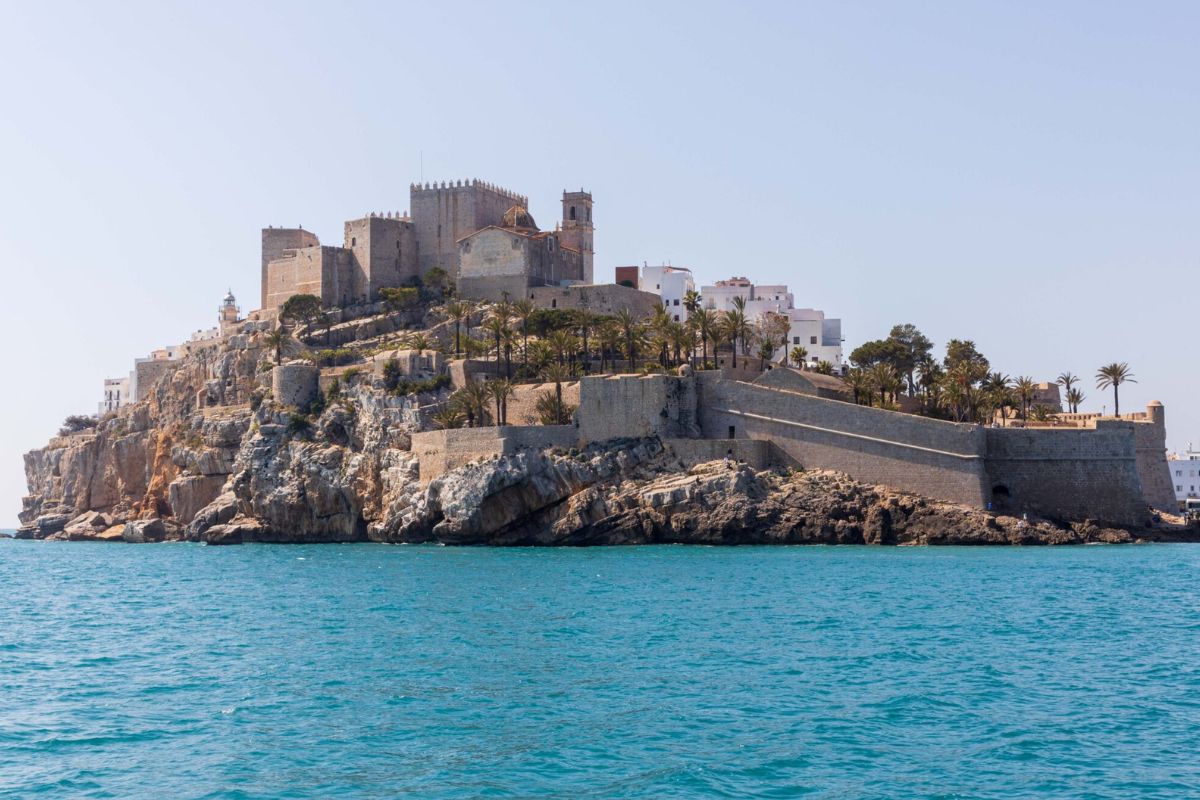
The Castle of Peñíscola, also known as the Castle of Pope Luna, is one of the most iconic medieval fortresses on Spain’s Mediterranean coast. Perched atop a rocky headland that juts into the sea, it dominates the skyline of the historic town below. The castle was built by the Knights Templar between 1294 and 1307 on the ruins of an earlier Islamic alcazaba.
Plan your visit to Castillo de Peñíscola
This structure is not only architecturally impressive but also deeply rooted in European history. In the 15th century, it served as the residence of Pope Benedict XIII—better known as Pope Luna—during the Western Schism. His presence transformed the castle into a papal seat, adding religious and political significance to its legacy.
Today, the Castle of Peñíscola attracts thousands of visitors each year. With its blend of Templar origins, papal history, and military adaptations, it offers a journey through centuries of power, devotion, and resilience by the sea.
Location of Castillo de Peñíscola
The castle is located in the town of Peñíscola, in the province of Castellón, within Spain’s autonomous Valencian Community. Its position is striking, situated on a massive rocky outcrop that extends into the Mediterranean Sea, it connects to the mainland by a narrow isthmus. This natural formation once gave the fortress near-island status, making it ideal for defense.
From the top of the castle, you can enjoy panoramic views of the sea, Peñíscola’s sandy beaches, and the nearby Serra d’Irta Natural Park. Surrounding the base of the headland is the town’s old quarter, a picturesque maze of cobblestone streets, whitewashed houses, and fortified walls that enhance the site’s medieval atmosphere.
Peñíscola is approximately 150 kilometers north of Valencia and 230 kilometers south of Barcelona. The town is easily reachable by car and public transport. Besides its historical attractions, it is also known for its fishing port, vibrant local culture, and pristine beaches, making it a well-rounded destination for history enthusiasts and holidaymakers alike.
History of Castillo de Peñíscola
The Castle of Peñíscola has a rich and layered history that spans over two millennia. The site was originally inhabited by Iberians and later by Romans. During the Islamic period, it became a fortified alcazaba, guarding the coast and controlling maritime access.
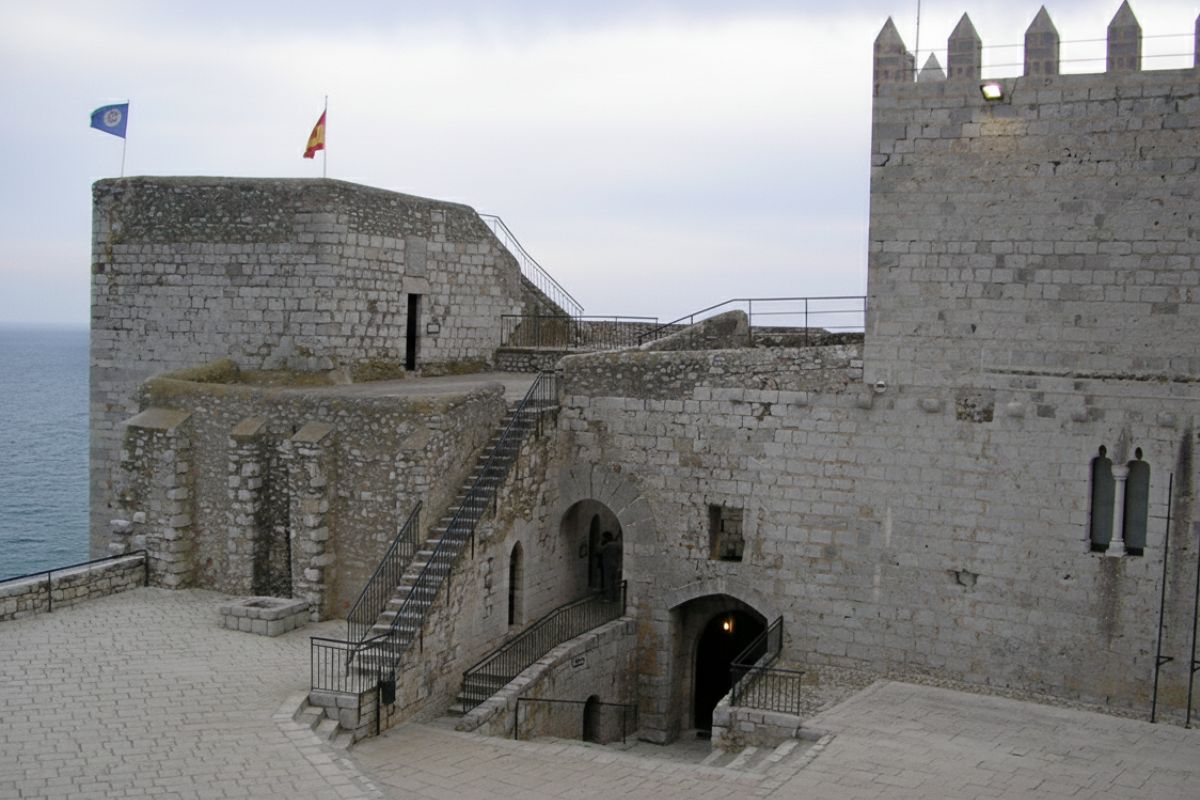
After the Christian reconquest in the 13th century, the area was incorporated into the Crown of Aragon. In 1294, King James II granted the fortress to the Knights Templar, who began building the current castle on the remains of the Muslim structure. Completed by 1307, the Templar fortress featured thick stone walls, vaulted interiors, and a chapel, designed for both defense and spiritual life.
Following the suppression of the Templar Order, the castle briefly passed to the Order of Montesa. However, its most renowned chapter began in the early 15th century, when Pope Benedict XIII, known as Pope Luna, established his residence there during the Western Schism. From Peñíscola, he continued to claim legitimacy as the head of the Catholic Church. He refused to abdicate even as support for him faded across Europe.
To accommodate his papal court, the castle was transformed into a fortified seat of power. It included a throne room, library, private chambers, and a basilica. Despite political isolation, Pope Luna held the castle until his death in 1423.
In the 16th century, under Philip II of Spain, the fortress underwent major renovations to adapt to new military technologies. Italian engineers reinforced its bastions and ramparts to withstand artillery fire, integrating it into Spain’s coastal defense network.
The castle saw conflict during the War of Spanish Succession and the Peninsular War, changing hands multiple times. Though damaged, it remained structurally intact.
Current status
Today, the Castle of Peñíscola stands as one of the most visited heritage sites in the Valencian region. Declared a historic-artistic monument in 1931, it is meticulously maintained and fully open to the public. Visitors can explore the inner courtyards, defensive towers, the papal chambers, the Templar church, and the panoramic terraces. Informational displays, multimedia presentations, and guided tours help bring the castle’s long and varied history to life.
The site also hosts cultural events year-round, including medieval reenactments, concerts, art exhibitions, and seasonal festivals. These activities breathe new life into the ancient halls and attract a diverse range of visitors. Though it is not managed by FAI, the castle is overseen by regional and local authorities who are committed to its preservation and promotion. Accessibility improvements, including ramps and updated visitor paths, allow broader audiences to engage with the site.
Castles near Castillo de Peñíscola
Frequently asked questions
Was the Castillo de Peñíscola used in Game of Thrones?
Yes, the castle served as a filming location for the city of Meereen in the television series. The Templar fortress and its sea views provided the dramatic backdrop for several scenes.
Who was Pope Luna at Castillo de Peñíscola?
Pope Benedict XIII, known as Papa Luna, lived in exile at the castle in the 15th century after being declared an antipope during the Western Schism. The Gothic Hall served as his audience chamber and the castle became one of only three papal seats in history.
What is included in a ticket to Castillo de Peñíscola?
Entry includes access to the castle itself, the Artillery Park with its gardens facing the sea, and permanent exhibitions. A free audio guide app is available for download on iOS and Android devices.
When is Castillo de Peñíscola closed?
The castle is closed on 1 and 6 January, 7–9 September, 9 October, and 25 December. It is open daily the rest of the year with extended hours from Easter Sunday to 15 October (09:30–21:30) and shorter winter hours (10:30–17:30).
How old is Castillo de Peñíscola?
The castle was built by the Knights Templar between 1294 and 1307 on the site of a former Moorish fortification. Later it was strengthened by Philip II for coastal defence against pirate raids.
Featured listings