
Montjuïc Castle rises 173 metres above Barcelona’s port, a star-shaped fortress that has watched over the Catalan capital since the seventeenth century. Builders first raised it in 1640 during the War of the Reapers, when Catalonia challenged Spain’s Felipe IV. The castle has witnessed some of the most turbulent chapters in Barcelona’s history. From its ramparts, visitors command a 360-degree panorama stretching from the port and Mediterranean Sea to the Baix Llobregat region. The city council has managed the fortress as a Barcelona municipal facility since 2007.
Plan your visit to Montjuïc Castle
Location of Montjuïc Castle
The castle sits on the highest point of Montjuïc hill at an altitude of 170 metres. Its address is Carretera de Montjuïc, 66, 08038 Barcelona, España. Visitors can reach it by cable car, funicular, bus, or by walking, cycling, or driving up from Plaça d’Espanya. The most convenient public transport option is Metro Line L3 to Parallel station. From there, change for the Funicular de Montjuïc. The Barcelona cable car from near the Montjuïc funicular station offers spectacular views and takes just five to eight minutes to reach the castle. Bus 150 drops visitors right at the castle entrance. For those who prefer to walk, the climb through landscaped gardens and viewpoints takes twenty to thirty minutes uphill.
History of Montjuïc Castle
Builders hastily raised the original medieval fortress for defensive purposes in only thirty days following the Reaper’s Revolt in June of 1640. This stone and clay construction faced its test in the Battle of Montjuïc the following year. The fighting continued as part of the Thirty Year’s War between France and Spain. The Spanish recaptured several cities, yet Catalan forces defeated them at the Battle of Montjuïc, led by Francesc de Tamarit. Fifty years later, in 1694, workers erected new bastions and battlements, and the fortress became a castle.
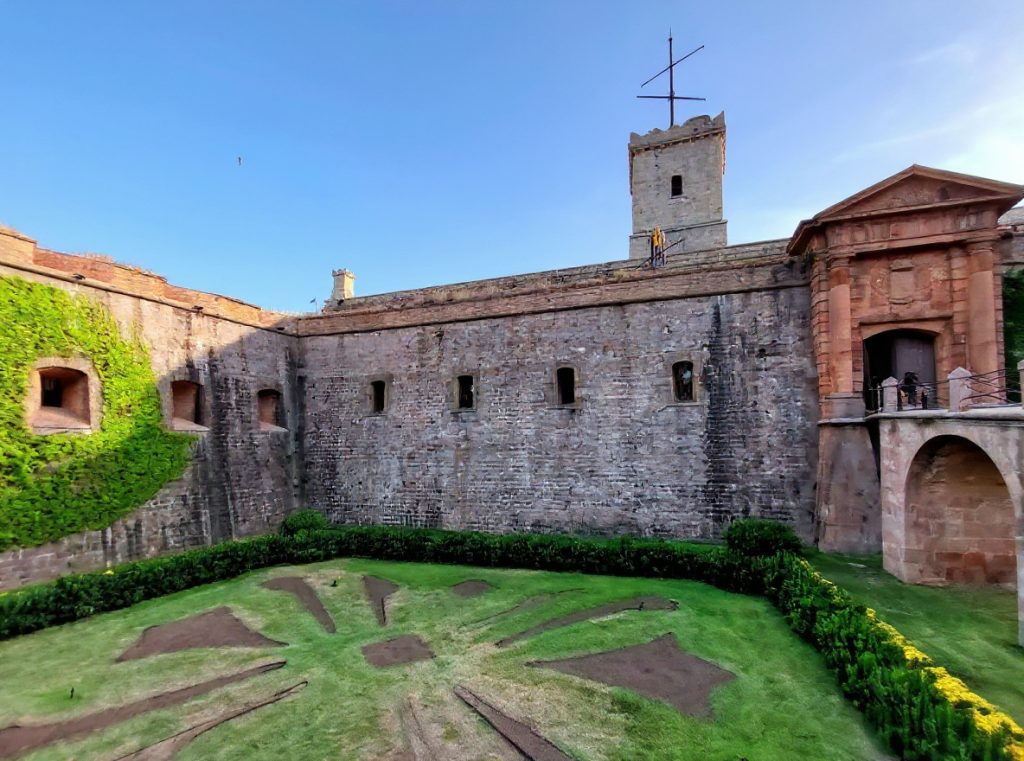
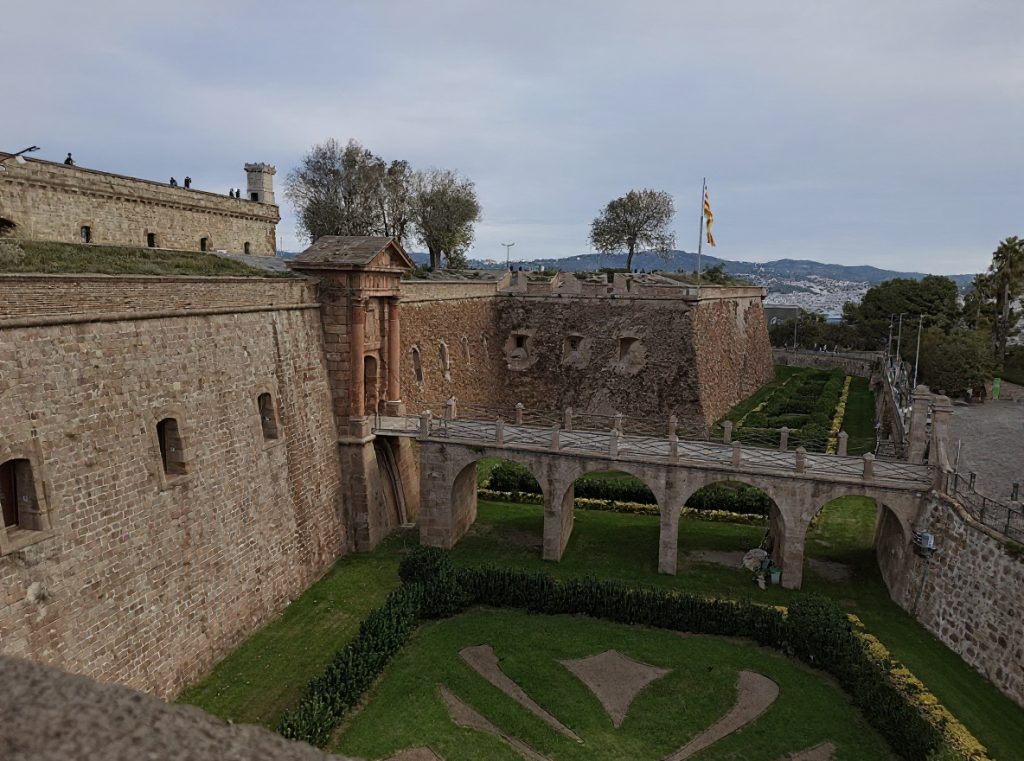
In the Siege of Barcelona in 1705, the British 6th Regiment of Foot captured the fortress, led by Lt.-Col William Southwell. This action paved the way for the siege of Barcelona itself. Southwell afterwards became Governor of the castle. Following Barcelona’s fall in 1714 ending the War of the Spanish Succession, builders rebuilt the castle between 1751 and 1779. Spanish engineer and architect Juan Martín Cermeño demolished the old fort in 1751, creating the current structure. The Bourbons constructed the new fortress in the form of a starred pentagon with large moats, bastions, and buttresses. The castle held 120 cannons.
During the Napoleonic Wars, the French Army entered Barcelona, and, on orders from Napoleon, they captured the castle without firing a shot. The troops guarding the castle had orders not to fight the French. Throughout the 19th century, the castle once again had military importance in the repression of insurrectionist movements. Troops bombarded Barcelona from the fortress up to three times. Authorities also used it to imprison unionists, anarchists and revolutionaries, as well as during the Setmana Tràgica in 1909.
Current status
Later in the twentieth century, the castle became a military museum. In June 1963, Francisco Franco opened the Military Armor Museum there. The museum permanently closed its doors in 2009. In April 2007, the government transferred the castle to Barcelona City Council. Following discussions over the next months, the castle became a municipal facility. In 2010 the City Council started a project of restoration and waterproofing of the roof and a watchtower.
Admission is free for children under sixteen, on Sundays after 3pm, and every first Sunday of the month. The admission ticket gives access to temporary exhibitions as well as to the permanent one. The castle hosts various cultural activities year-round, including seminars, exhibitions, children’s activities and open-air cinema screenings and concert cycles. Within the grounds, the Montjuïc Castle Interpretation Centre offers a permanent exhibition that explores the history of the monument in detail. Green grass and multicoloured flowerbeds now fill its moats. The grounds even feature a statue that commemorates French scientist Pierre-André Méchain’s contribution to the metric system of measurement. He made his discoveries from the tower of the castle.
From the watchtower and terraces, Barcelona unfolds in every direction. The port spreads below while cruise ships and sailboats glide across the Mediterranean. On clear days the horizon stretches endlessly. The fortress that once aimed cannons at the city it controlled has become a place where Catalans and visitors alike gather. They come to contemplate the sea, the mountains, and the layers of history written into these ancient stones.
Castles near Montjuïc Castle
Frequently asked questions
Can you visit Montjuïc Castle for free?
Yes, admission is free every Sunday from 15:00 onwards and all day on the first Sunday of each month. Visitors under 16 years old always enter free.
How do I get to Montjuïc Castle by public transport?
Take metro L2 or L3 to Paral·lel station, then the funicular to Parc de Montjuïc, followed by the cable car to the castle entrance. Alternatively, bus 150 runs direct from Plaça Espanya to the castle.
What can you see at Montjuïc Castle?
The castle features a permanent interpretation centre covering its military history, dungeons accessible by guided tour, ramparts with artillery, and a watchtower. The main draw is the 360-degree panoramic views over Barcelona's port, the Mediterranean and the city centre.
Does Montjuïc Castle admission include the cable car?
No, the €12 castle admission covers only entry to the fortress and its exhibitions. The Montjuïc cable car (Telefèric de Montjuïc) requires a separate ticket.
Is Montjuïc Castle suitable for visitors with mobility issues?
Most areas are accessible, but the upper terrace can only be reached by stairs. The cobblestone pavement can be challenging for wheelchairs, and there is little shade on the exposed ramparts.
Featured listings