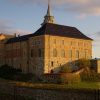

Commanding the plains of Cerdanyola from a small promontory, Castell de Sant Marçal unites medieval origins with 19th-century romantic vision. The fortress sits on a hilltop that controls the entire plain of Cerdanyola, just 15 kilometres from Barcelona. Authorities declared it a Cultural Asset of National Interest in 1949. The castle embodies seven centuries of continuous family ownership. Today it serves as a venue for events while retaining the dignity of its long history.
Plan your visit to Castell de Sant Marçal
Location of Castell de Sant Marçal
The castle sits 15 kilometres from Barcelona city centre, about 20 minutes by car. It stands halfway between Sant Cugat del Vallès and Cerdanyola del Vallès. The fortress occupies the road linking these two towns in the Vallès Occidental comarca of Catalonia. Visitors travelling by motorway take exit 21 from the AP-7 towards Cerdanyola and the Autonomous University. The castle’s elevated position provides sweeping views across the surrounding plain. Medieval lords once monitored this terrain for approaching threats. Barcelona’s international airport lies approximately 30 kilometres south, so the site welcomes visitors from across Europe. The proximity to major Catalan cities combines with rural tranquillity. Sant Cugat, famous for its Romanesque monastery, sits just minutes away. Local roads wind through the gentle hills of the Vallès. Vineyards and estates punctuate the landscape there.
History of Castell de Sant Marçal
The first documentary reference dates to 1042. At that time an existing church dedicated to Saint Marçal served the parish of Sant Martí de Cerdanyola. Historians assert builders raised the castle during the first third of the 11th century. Documents clearly mention it in the first half of the 12th century. Then Ramón Berenguer IV, Count of Barcelona, included it among possessions he donated to his seneschal, Ramón Guillem de Montcada. In 1225 the senescal sold the castle to Ramón de Plegamans. His son, Marimón de Plegamans, founded the Marimón family, one of the most distinguished of the period.
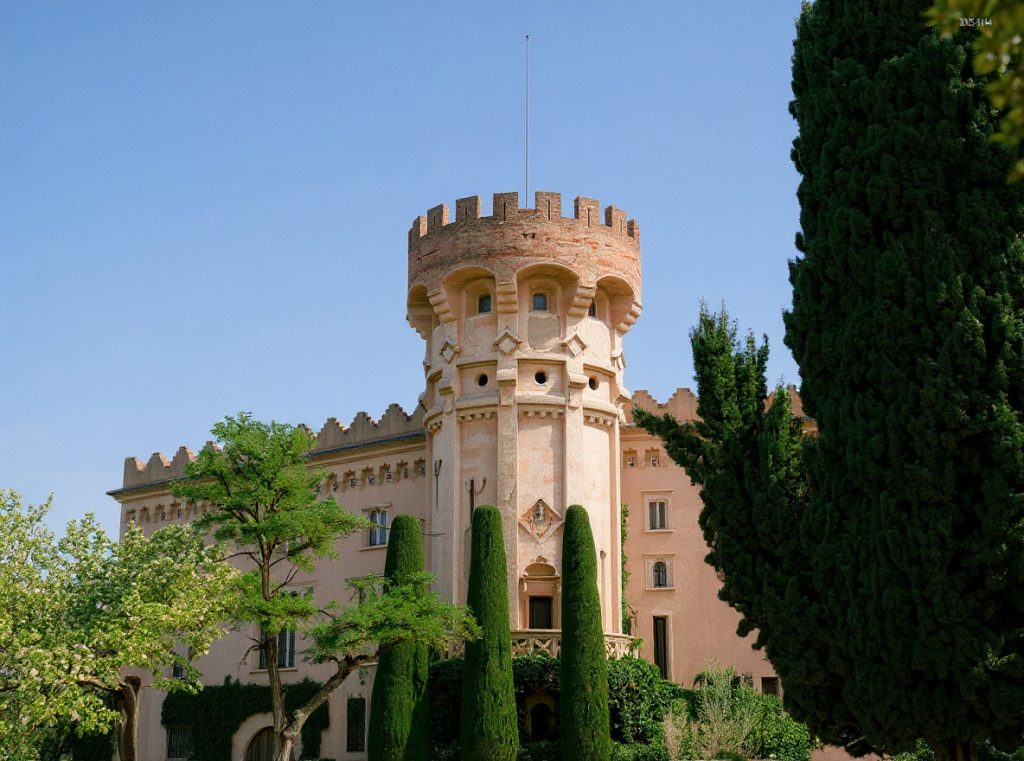
In 1640 peasants burned the castle during the Reapers’ War. Around 1680 workers reconstructed the Gothic chapel, which they dedicated to Saint Marçal. The title of Marquis of Cerdanyola went to Feliu de Marimon in 1690. This rewarded his service to the Spanish Crown in Italy. During the 19th and 20th centuries the castle passed through different hands until reaching the current Trénor family. In 1895 the Arròspide family commissioned Cayetano Buïgas to adapt the building as a second residence. Buïgas designed the Columbus Monument in Barcelona, so he brought considerable prestige to the project. His adaptation respected the original structure while covering the building with fantastic decoration. This decoration drew inspiration from Romanesque and Gothic architecture. The 19th-century intervention gave the castle its current romantic appearance.
Current status
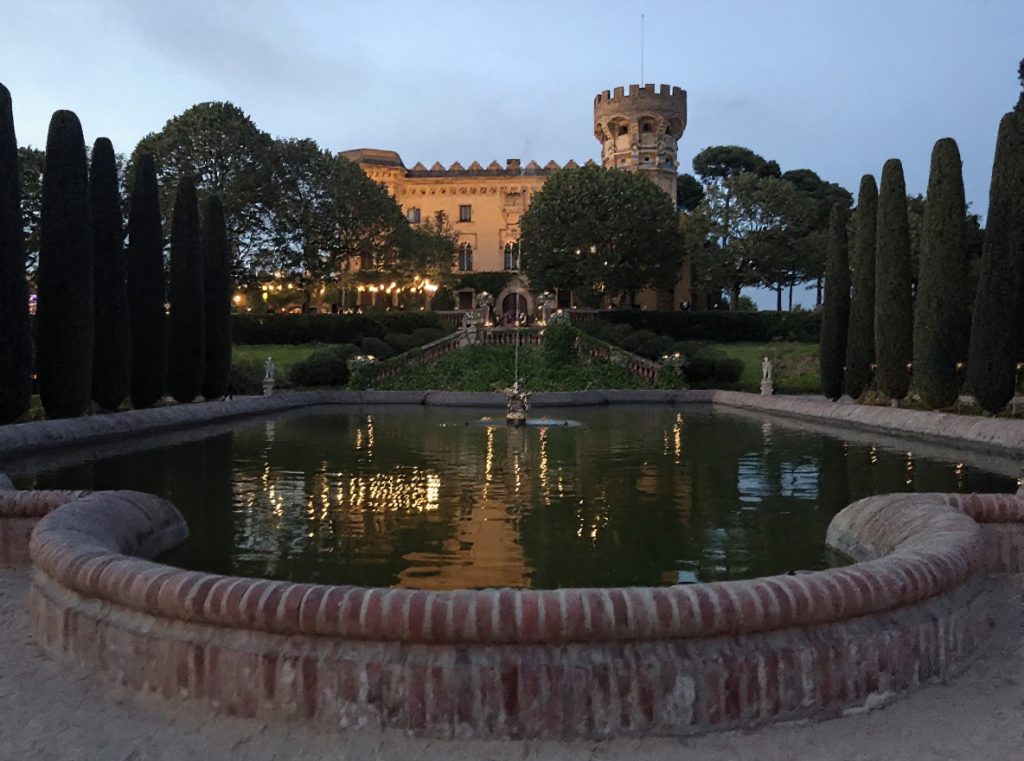
The XXII Marquis of Cerdanyola owns the castle now. The same family has held it after 700 years. Originally the castle had a square plan with central courtyard, a tower and a Gothic chapel. A moat surrounded it. Visitors can see the base and part of the moat today in a good stretch. Landscaping enhances these features. Over the past thirty years, a huge effort has restored the building, both outside and inside. Work has also expanded and improved the gardens and ponds. The private castle now operates as a venue for weddings and corporate events, with capacity for up to 800 guests.
The restored wine cellar serves as an appetiser space in winter. It also functions as an intimate venue for smaller gatherings. Landscape architect Luis González Camino redesigned the gardens. He created carefully planned vistas and secluded corners among the chestnut trees and ponds. Guided visits occasionally take place through arrangements with Cerdanyola’s tourism office. These allow the public limited access to the castle’s exterior and grounds. The fortress embodies Cerdanyola’s heritage, its towers rising above the plain much as they have for nine centuries. It connects contemporary Catalonia to its medieval past.
Castles near Castell de Sant Marçal
Frequently asked questions
Can I visit Castell de Sant Marçal as a tourist?
No, Castell de Sant Marçal is a private events venue that hosts weddings and corporate functions. It is not open to the general public for sightseeing or casual visits.
What is the history of Castell de Sant Marçal?
The castle dates from the 10th century and was originally a square fortified building with a central courtyard, tower and Gothic chapel. In 1895 architect Gaietà Buïgas redesigned it as a private residence with Romanesque and Gothic-inspired decoration.
How far is Castell de Sant Marçal from Barcelona city centre?
The castle is located in Cerdanyola del Vallès, approximately 15 km from Barcelona. It takes about 20 minutes by car or 38 minutes by train from Plaça Catalunya.
What facilities does Castell de Sant Marçal offer for events?
The venue features a greenhouse-style hall designed by Lázaro Rosa-Violán with capacity for up to 450 guests, a renovated cellar, historic castle spaces, and landscaped gardens with ornamental ponds. Events can be held both indoors and outdoors.
Is there parking available at Castell de Sant Marçal?
Yes, the castle has on-site parking for guests attending private events. The venue is accessible by car via the AP-7 motorway, exit 21 towards Cerdanyola and Universitat Autònoma.
Featured listings