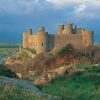

Perched atop a dramatic rocky crag overlooking Cardigan Bay, Harlech Castle commands the coastline of North Wales with its formidable medieval fortifications. Edward I built this concentric castle between 1283 and 1290 under the guidance of Master James of St George, the chief architect of the king’s Iron Ring of Castles in northern Wales. The fortress cost around £8,190, about 10 percent of Edward’s total Welsh castle expenditure. Cadw now owns this UNESCO World Heritage Site, which draws visitors to its ruined ramparts year-round.
Plan your visit to Harlech Castle
Location of Harlech Castle
Harlech Castle stands on a rocky hill overlooking the Irish Sea in Gwynedd, North Wales. It lies on the coast of Cardigan Bay within the western edge of Snowdonia National Park. Harlech sits off the A496 north from Barmouth, so visitors follow signs to the castle into the town centre where car parking awaits. From the north, travellers turn off the A487 road to Porthmadog at Maentwrog onto the A496 for Harlech. Then they take the B4573 into the town. The town lies on Tremadog Bay in the Snowdonia National Park. The fortress once sat on a seaside cliff face but now rests half a mile inland. New housing has appeared in the low town and in the high town around the shopping street, church and castle.
History of Harlech Castle
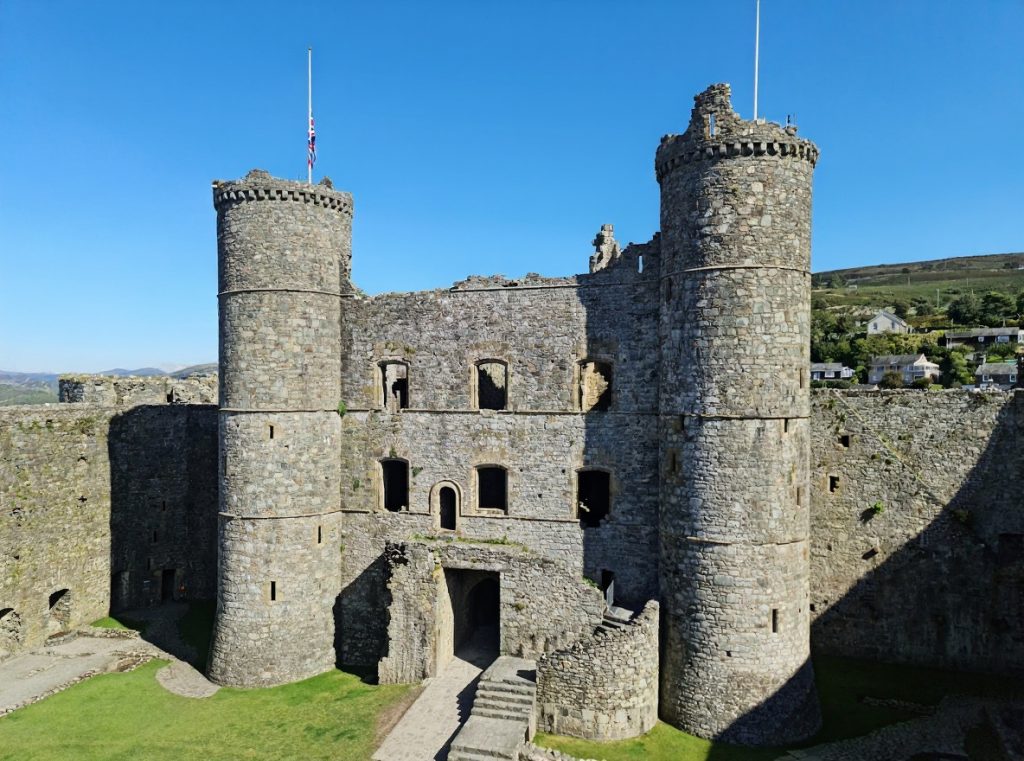
In 1282, English king Edward I invaded Wales for the second time. He pushed opponents westward and occupied all northern territories. Construction of Harlech Castle began in 1283. Work started in April 1283 and took about six years to complete. The project involved around 950 workers, including masons, quarriers, labourers and other craftsmen. By the winter of 1283, workers had constructed the first 15 feet of the inner walls. This allowed defenders to protect the castle in the event of an attack. A small, planned town had grown up alongside the castle as well. Master James of Saint George managed 546 workers, 115 stonemasons, 30 blacksmiths, 22 carpenters and 227 masonry workers. Most of the castle reached completion by the end of 1289.
In 1290, Edward I appointed Master James of St George as constable of Harlech Castle. Master James held this position for the next three years. He lived at Harlech Castle while completing the design and construction here as well as other castles of the Iron Ring. During the rising of Madog ap Llywelyn between 1294 and 1295, Harlech Castle faced its first test. Welsh forces cut it off by land, yet because of the castle’s coastal location against the sea, boats from Ireland resupplied it. The garrison held out, so the Welsh gave up on the siege. The unique “Way from the Sea”, a fortified stairway of 108 steps, allowed sea-borne supplies to reach the garrison. This enabled Harlech to resist successfully.
In 1404, Owain Glyndŵr captured the castle in his revolt against English rule. He used it as a centre for governance and possibly held his parliament there. The castle remained in his hands until 1409, when forces led by Henry V, then Prince of Wales, retook it by siege and heavy artillery.
Current status
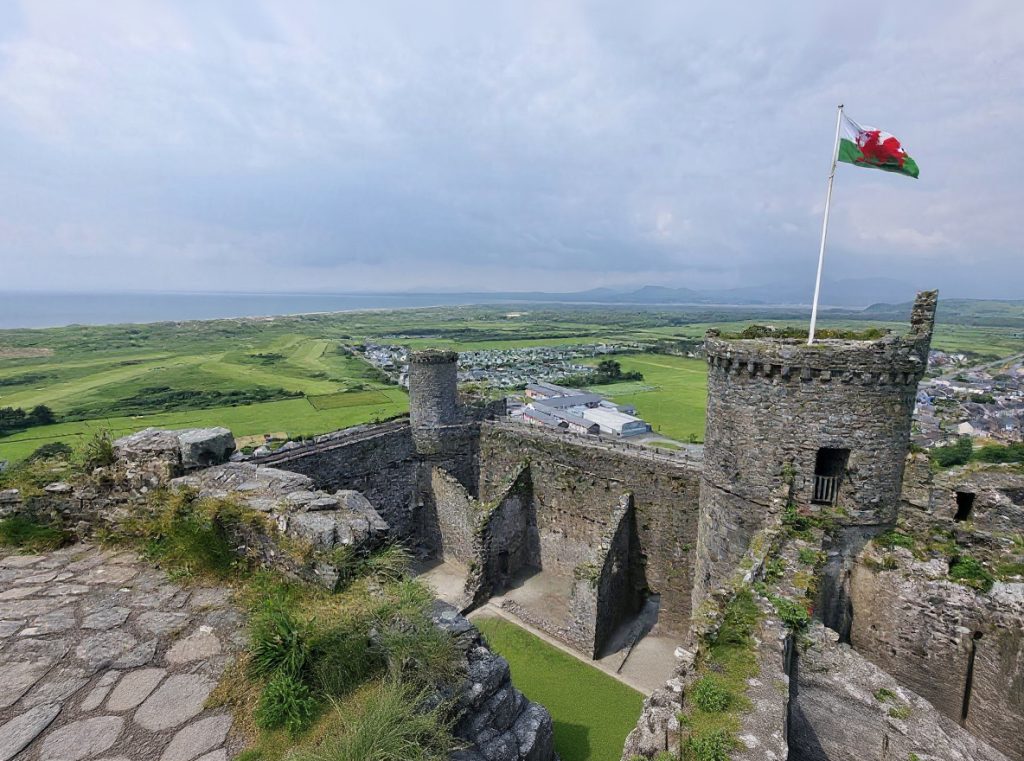
In 1969, Cadw took over the castle and turned it into a tourist attraction. The organisation currently runs it. In 1986, authorities together designated Edward’s castles in Wales a UNESCO World Heritage Site. Harlech Castle still attracts many visitors today. Workers completed Harlech from ground to battlements in just seven years under the guidance of gifted architect Master James of St George. Its classic “walls within walls” design makes the most of daunting natural defences. An incredible floating footbridge now allows visitors to enter this great castle as Master James intended – for the first time in 600 years.
The visitor centre features a gift shop, exhibition, accessible toilets and Caffi Castell. Visitors can grab a coffee or a bite to eat there, with amazing views of the castle and Eryri. The castle closes on 24, 25, 26 December and 1 January, with last admission 30 minutes before closing. During extreme weather conditions Cadw may need to close monuments at short notice. Against fierce competition from Conwy, Caernarfon and Beaumaris, this castle probably claims the most spectacular setting of any of Edward I’s castles in North Wales. All four hold designation as a World Heritage Site. The fortress continues to stand watch over the town. Its weathered sandstone walls mark seven centuries of Welsh history.
Castles near Harlech Castle
Frequently asked questions
When was Harlech Castle built?
Harlech Castle was built between 1283 and 1290 by King Edward I during his conquest of Wales. Master James of St George designed and oversaw construction, completing it in just seven years.
Is Harlech Castle a UNESCO World Heritage Site?
Yes, Harlech Castle is part of the UNESCO World Heritage Site 'Castles and Town Walls of King Edward in Gwynedd', designated alongside Beaumaris, Conwy and Caernarfon. It is recognised as one of the finest examples of late 13th-century and early 14th-century military architecture in Europe.
What is the 'Way from the Sea' at Harlech Castle?
The 'Way from the Sea' is a fortified staircase of 108 steps that descends steeply down the rock face from the castle to the former shoreline. It allowed defenders to receive supplies by ship during sieges.
Can you access all areas of Harlech Castle?
A lift at the visitor centre provides access to the main courtyard level. However, the upper towers and wall-walks involve steep, narrow medieval stairs and are not accessible to wheelchair users.
What was the longest siege at Harlech Castle?
During the Wars of the Roses, Harlech Castle endured a seven-year siege from 1461 to 1468, the longest in British history. The castle was the last Lancastrian stronghold to fall to Yorkist forces.
Featured listings