
Caernarfon Castle stands as one of the greatest medieval fortresses in Europe. King Edward I of England built it on the banks of the River Seiont in north-west Wales. Furthermore, UNESCO recognises it as a World Heritage Site. The castle forms part of a group of Edwardian fortresses that changed Wales forever. However, Caernarfon stands out for its sheer scale and dramatic architecture.
Plan your visit to Caernarfon Castle
Edward I designed Caernarfon not just as a military stronghold, but also as a royal palace. Moreover, the castle served as the administrative centre of English rule in Wales. Its polygonal towers, coloured stonework, and eagle statues echo the walls of Constantinople. Therefore, Caernarfon is as much a symbol of power as it is a fortress.
Location of Caernarfon Castle
Caernarfon Castle sits in the historic town of Caernarfon in Gwynedd, north-west Wales. The address is Castle Ditch, Caernarfon, LL55 2AY. In addition, the castle stands right on the waterfront, where the River Seiont meets the Menai Strait. Therefore, visitors enjoy stunning views of the water and the surrounding mountains.
The town of Caernarfon is easy to reach by road and public transport. Furthermore, the castle is just steps from the town centre. Visitors can park at the waterfront car park directly adjacent to the castle. The surrounding town walls, also built by Edward I, still encircle the medieval town centre.
History of Caernarfon Castle
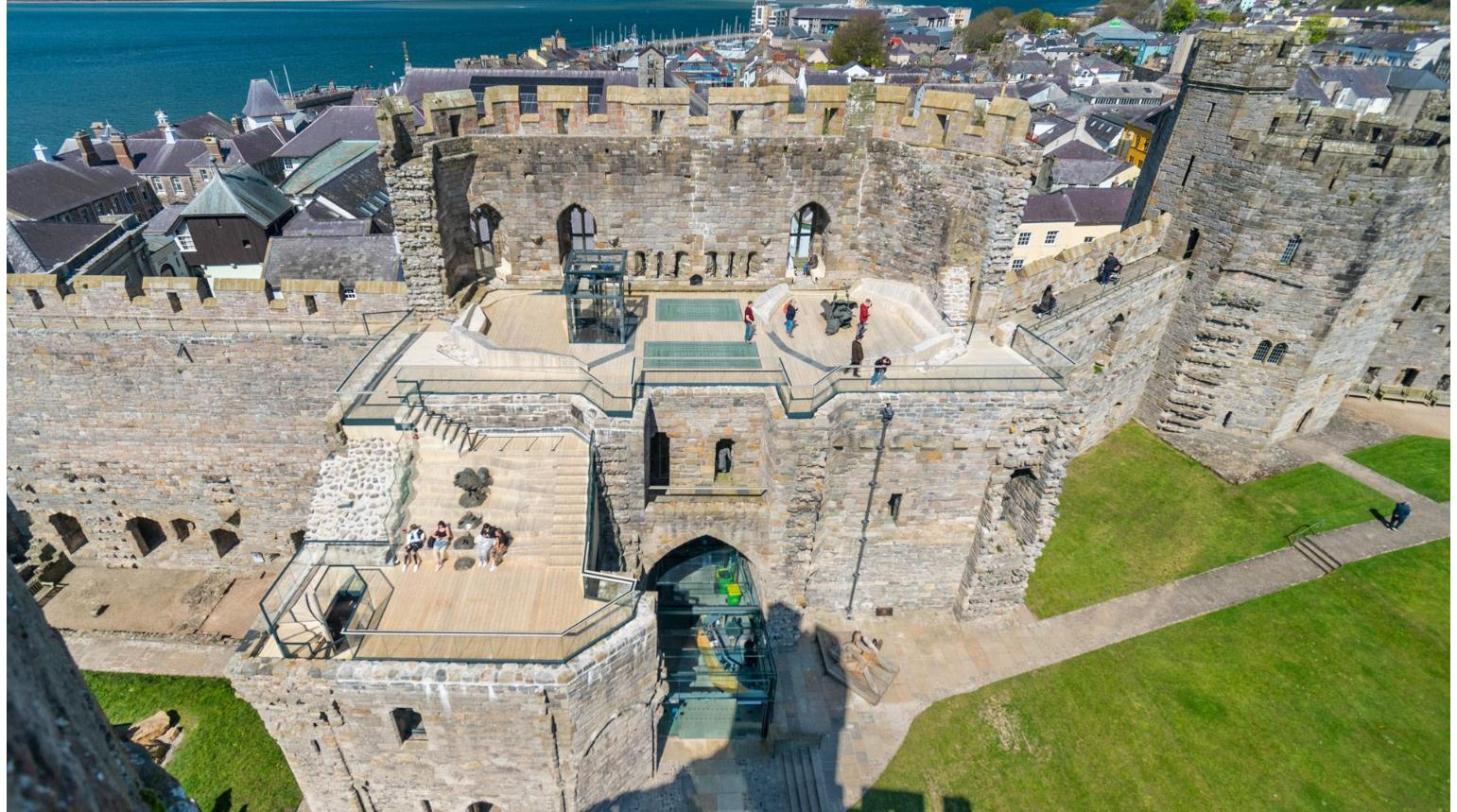
Construction of Caernarfon Castle began in 1283. King Edward I ordered the build after his military conquest of Wales. However, the project was enormous. Military architect Master James of St George designed the entire fortress. Furthermore, the work involved building not only the castle, but also the town walls and a quay.
The project took 47 years to complete and cost a staggering £25,000. In addition, Edward I chose Caernarfon deliberately. The site had strong symbolic meaning, connected to Roman history and Welsh legend. In 1284, Edward presented his newborn son at Caernarfon as the first Prince of Wales. Moreover, this tradition continued in 1969, when Prince Charles received the title of Prince of Wales here.
The castle saw conflict in the early 15th century. Owain Glyndwr, a Welsh nobleman, led uprisings against English rule. However, the castle withstood these attacks. After the Tudor period, Caernarfon gradually fell into disuse as a military site. Nevertheless, it remained an important symbol of Welsh history.
Current Status
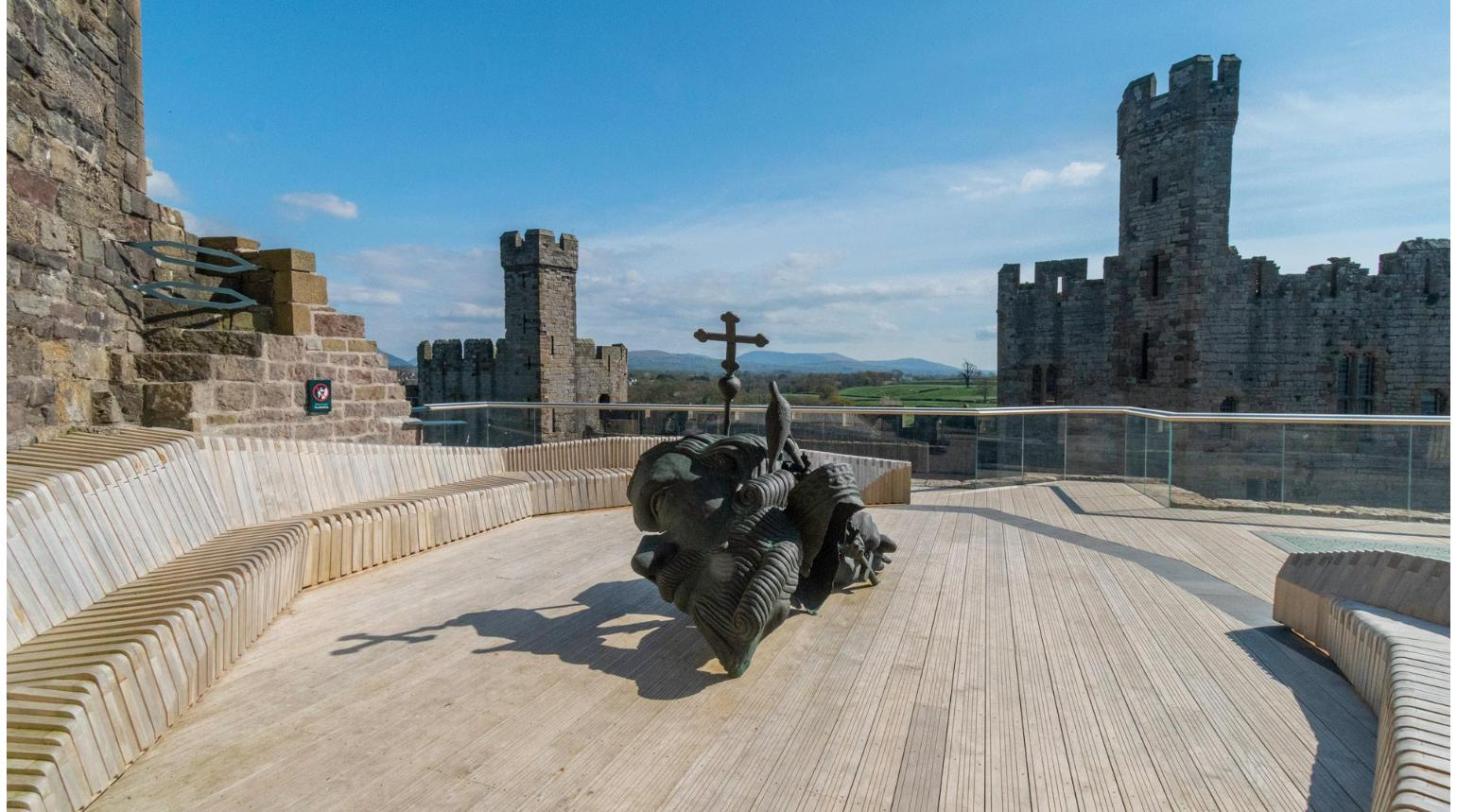
Today, Cadw manages Caernarfon Castle on behalf of the Welsh Government. Furthermore, the castle is one of Wales’s most popular tourist attractions. Visitors can explore the towers, walk the walls, and enjoy panoramic views over the town and water. In addition, the castle houses the Royal Welch Fusiliers Museum, free with castle admission.
The castle is open year-round, with varying hours by season. Moreover, Cadw members can enter free of charge. The castle regularly hosts events, including medieval reenactments and seasonal activities for families. Therefore, it offers something for visitors of all ages throughout the year.
A new lift within the King’s Gate now provides improved access to upper levels of the castle. In addition, a pop-up kiosk serves hot and cold refreshments during the warmer months. However, visitors who need evacuation assistance should contact the castle in advance to arrange support.
Castles near Caernarfon Castle
Frequently asked questions
Is Caernarfon Castle part of a UNESCO World Heritage Site?
Yes, Caernarfon Castle is part of the 'Castles and Town Walls of King Edward in Gwynedd' World Heritage Site designated in 1986. The site also includes Conwy, Beaumaris, and Harlech castles.
What is inside Caernarfon Castle?
The castle has multiple towers including the Eagle Tower, the King's Gate, battlements you can walk, and the Royal Welch Fusiliers Museum. The museum covers over 300 years of the regiment's history and is included in standard admission.
Can I take a guided tour of Caernarfon Castle?
Yes, custodian-led tours run at 11:00 and 15:00 and cost an additional £5 per person, available on a first-come basis. The 45-minute tour covers the history of this UNESCO site.
Is Caernarfon Castle accessible for visitors with mobility issues?
The King's Gate has a lift to reach some upper levels, but most of the castle involves steep, narrow spiral staircases and uneven terrain. Contact the castle at 01286 677617 to arrange assistance.
What is special about Caernarfon Castle's architecture?
Unlike typical Norman castles, Caernarfon has polygonal towers and banded stonework inspired by the walls of Constantinople. Edward I designed it as a fortress-palace to symbolise his conquest of Wales in 1283.
Featured listings