
Commanding a limestone outcrop above the Vistula River, Wawel Castle ranks as Poland’s most historically significant monument. This fortified royal residence served as the seat of Polish monarchs for five centuries. Now the complex functions as one of the country’s premier art museums. The castle rises 228 metres above sea level and dominates the skyline of Kraków’s Old Town. It represents the cultural heart of the Polish nation.
Plan your visit to Wawel Castle
Tue–Sun 09:00–17:00
Location of Wawel Castle
Wawel Castle sits at Wawel 5, 31-001 Kraków, Poland, at the southern end of the Old Town. The hill overlooks the Vistula River. A pleasant 10-15 minute walk from the Main Market Square brings visitors to the hill. You can reach it via Grodzka Street or Kanonicza Street. The castle occupies Wawel Hill, a Jurassic limestone formation that nature created roughly 150 million years ago. Two separate entrances from Podzamcze Street and Bernardyńska Street give access to the castle grounds. Entering the grounds of Wawel Hill costs nothing and remains open from 6.00am until late evening. Trams and buses serve stops near the castle, though most visitors walk from central Kraków. The castle forms part of the Historic Center of Kraków, a UNESCO World Heritage Site.
History of Wawel Castle
At the end of the first millennium, Wawel began to play a role as a centre of political power. It served as the main stronghold of the Vistula tribe in the 9th century. The first historical ruler of Poland, Mieszko I of the Piast family (c. 965–992), chose it as one of his seats. His successors, Bolesław Chrobry (992–1025) and Mieszko II (1025–1034), also ruled from here. The first pre-Romanesque and Romanesque religious buildings appeared on the hill. These included a stone cathedral after the Bishopric of Kraków emerged in 1000. Wawel became a significant political and administrative centre of the state during the reign of Casimir the Restorer (1034–1058).
In 1306, the Duke of Kuyavia, Ladislaus the Short (1306–1333), entered Wawel. He was crowned in 1320 in Kraków Cathedral, the first coronation of a Polish ruler on Wawel Hill that sources recorded. In the 14th century, King Casimir III the Great initiated construction of a fortified royal residence on Wawel Hill. King Casimir III the Great established the castle and enlarged it over the centuries. Builders expanded it into a number of structures around a Polish Renaissance courtyard. The Gothic castle took shape during this period, when workers added defensive towers and walls.
The rebuilding of Wawel Castle (1507–36) in Kraków began under the Italian Francesco della Lore. Bartolommeo Berecci of Florence continued the work. The Renaissance period under Sigismund I the Old (reigned 1507–1536) saw a major transformation of the castle. Architects converted it into a Renaissance-style royal residence. The castle faced multiple setbacks, including serious fires in 1499 and 1595. After these disasters, builders rebuilt it. The Renaissance arcaded courtyard became the architectural centrepiece. Polish kings continued to use Wawel until the capital moved to Warsaw in the early 17th century.
Current status
After Poland regained independence in 1918, restorers meticulously returned Wawel to its former glory. Today the castle serves as a historic site, museum, and cultural symbol of Polish heritage in Krakow. The historic castle houses the Wawel Royal Castle National Art Collection. Officials inaugurated the collection in 1930 and introduced its current name in 1994. For centuries the residence of kings and the symbol of Polish statehood, the castle now ranks as one of the country’s premier art museums. With over 3.47 million visitors in 2025, Wawel Castle attracts more guests than any other art museum in Poland.
The museum contains five separate sections: Crown Treasury and Armoury, State Rooms, Royal Private Apartments, Lost Wawel and the Exhibition of Oriental Art. Several permanent exhibitions present the collections of the Wawel Royal Castle. These exhibitions evoke the historic appearance of the royal residence in the 16th, 17th, and 18th centuries. The museum holds important collections of Italian Renaissance paintings, Flemish tapestries, Ottoman tents, and period furniture. Entering the specific interiors requires tickets, such as the Castle museums, the Cathedral, or the Dragon’s Den. Visitors book timed-entry tickets through the official website.
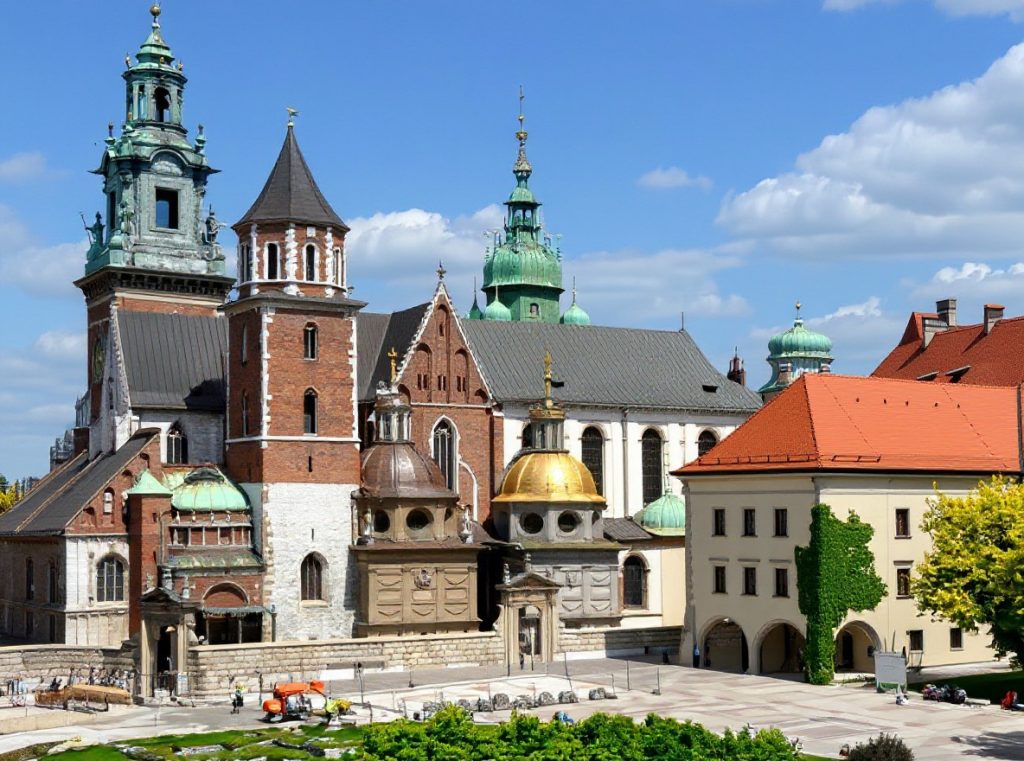
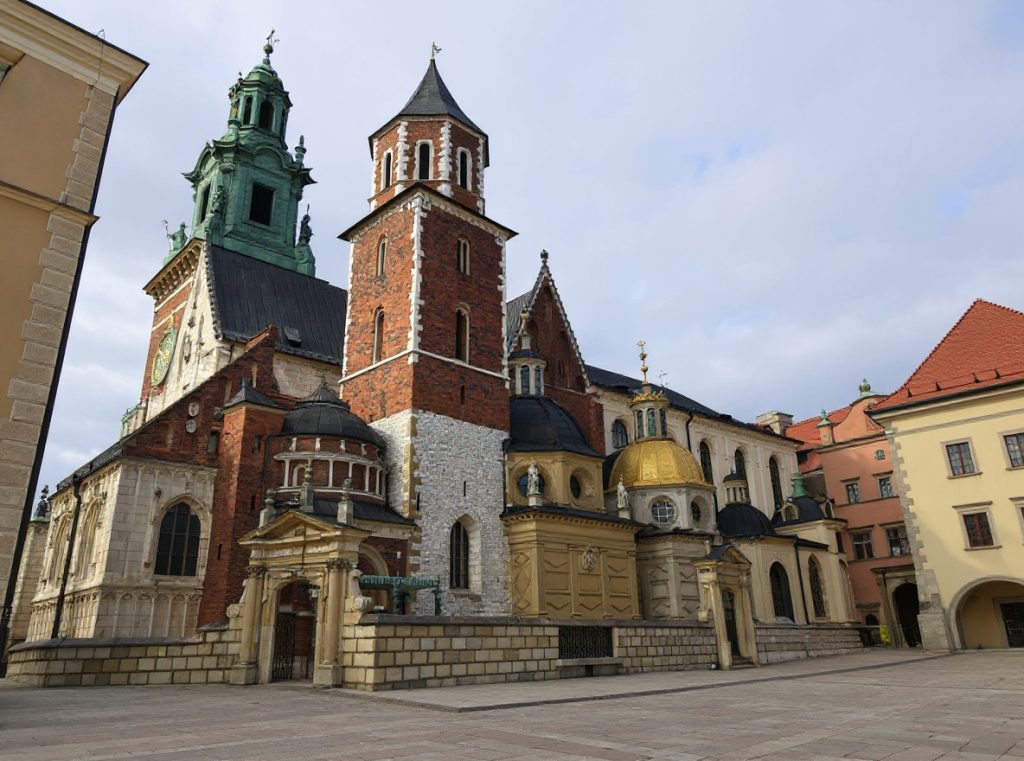
The castle complex remains central to Polish national identity. Wawel Cathedral on the hill continues as the coronation church and royal necropolis where Polish monarchs rest. The limestone hill, the Renaissance courtyard with its tiered arcades, and the royal chambers preserve centuries of artistic achievement. From the ramparts, views sweep across Kraków and the winding Vistula, just as they did when kings ruled from these halls.
Castles near Wawel Castle
Frequently asked questions
Can I visit Wawel Castle grounds for free?
Yes, the courtyard and grounds of Wawel Castle are free to enter and accessible until dusk. Individual exhibitions inside the castle require separate timed tickets starting at 47 zł.
Are there free admission days at Wawel Castle?
Selected exhibitions offer free entry on Mondays with limited timed tickets collected at the ticket office on the day. No advance reservations are accepted for free admission days, and only individual tours without guides are permitted.
What exhibitions can I see at Wawel Castle?
Wawel Castle offers multiple exhibitions including the State Rooms, Royal Private Apartments, Crown Treasury, Armoury, Lost Wawel, and seasonal attractions like the Dragon's Den and Royal Gardens. Each exhibition requires a separate timed-entry ticket.
How far in advance should I book Wawel Castle tickets?
Tickets for popular exhibitions like the Royal Private Apartments sell out quickly, especially during peak season. Online tickets are available one month in advance at bilety.wawel.krakow.pl, and advance booking is strongly recommended.
Is Wawel Cathedral included in the Wawel Castle ticket?
No, Wawel Cathedral is a separate institution with its own ticketing at katedra-wawelska.pl. The cathedral is not part of the castle museum and requires a separate ticket to visit.
Featured listings