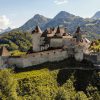

High above the Saane Valley, Gruyères Castle commands a verdant hill in Switzerland’s Canton of Fribourg. For eight centuries its square fortifications have watched over the medieval town below. Builders constructed the castle between 1270 and 1282, following the typical square plan of the fortifications in Savoy. It is a Swiss heritage site of national significance. Today the fortress holds prestigious collections that trace the castle’s evolution from a defensive stronghold to an elegant residence. It finally became one of Switzerland’s most visited museums.
Plan your visit to Gruyères Castle
Location of Gruyères Castle
The Castle of Gruyères sits in the medieval town of Gruyères, Fribourg. The castle dominates a green hill at the foot of the Moléson. It stands at the junction of the Jogne and Intyamon Valleys. The castle occupies the summit of the car-free medieval village. Visitors reach it by climbing the cobblestone main street. The town of Gruyères lies in the Fribourg Pre-Alps, about 35 kilometres south of the canton capital. Regular train services connect Gruyères to the Swiss rail network via Bulle. The journey from major cities takes under two hours. From the castle ramparts, sweeping views extend across the surrounding countryside to the Alpine peaks beyond.
History of Gruyères Castle
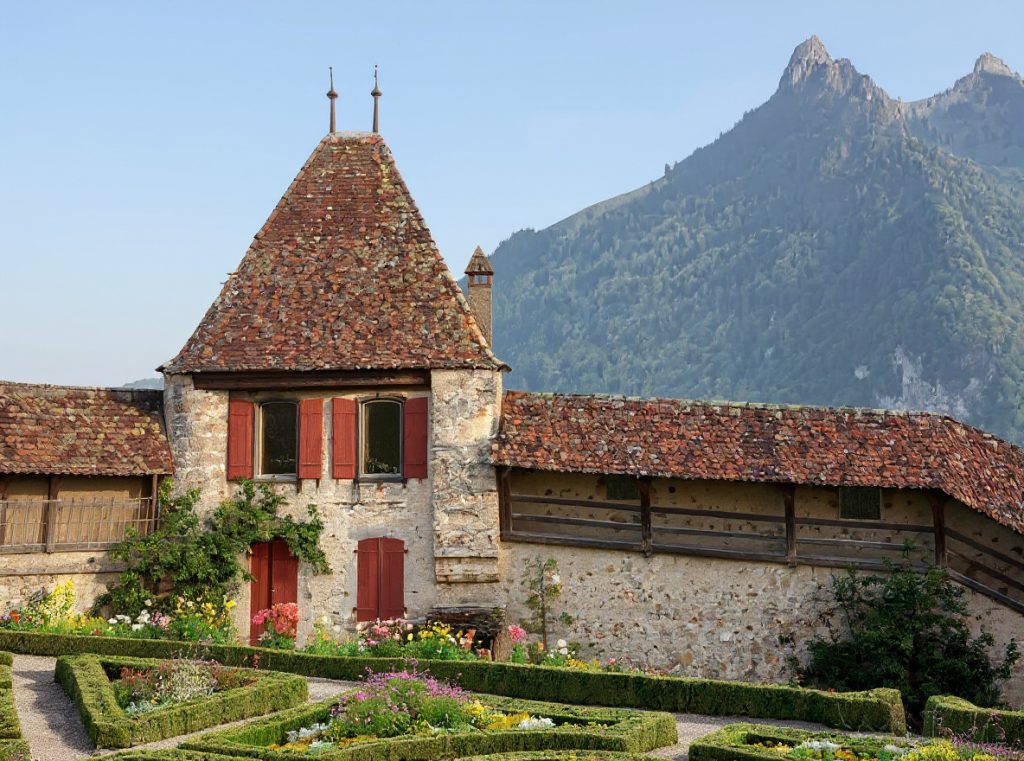
Builders constructed the castle in the 13th century. It became the main residence of one of the most important noble families in western Switzerland during the Middle Ages: the Counts of Gruyère. For nearly three centuries, nineteen successive counts ruled from this hilltop fortress. At the end of the 15th century, modernization works gave the castle the elegant appearance of a stately home. Count Louis transformed the medieval fortress during this period. He added stone galleries, large windows, and a chapel within a former defensive tower.
Michel, the last count, went bankrupt in 1554 after issuing his own coins. He died in exile. His creditors, the cantons of Fribourg and Bern, divided his earldom. From 1555 to 1798, the castle housed the bailiffs and then the prefects sent by Fribourg. During these centuries, the bailiffs commissioned elaborate wall decorations and frescoes. These reflect the artistic tastes of the Ancien Régime.
In 1849, the owners sold the castle to the Bovy and Balland families. The families used the castle as their summer residency and restored it. They established an artists’ colony there. Jean-Baptiste Camille Corot, Barthélémy Menn and many other artists painted the romantic landscapes and historicist scenes. These works still adorn the walls of the former count’s residence to this day. These Genevan families invited painters, writers and musicians to spend their summers at the castle. The artists created works that now form part of the permanent collection. The canton of Fribourg repurchased the castle in 1938. The canton made it into a museum and opened it to the public.
Current status
Since 1993, a foundation ensures the conservation as well as the highlighting of the building and the art collection. The museum takes visitors through multiple floors of the castle. Each room reveals a different chapter of its history. The castle houses three capes of the Order of the Golden Fleece. Swiss forces captured these treasures as war booty from Charles the Bold, Duke of Burgundy. They seized them at the Battle of Morat in 1476. The collection also includes medieval stained glass windows, Flemish tapestries, suits of armour, and the elaborate troubadour-style decorations of the Knights’ Hall.
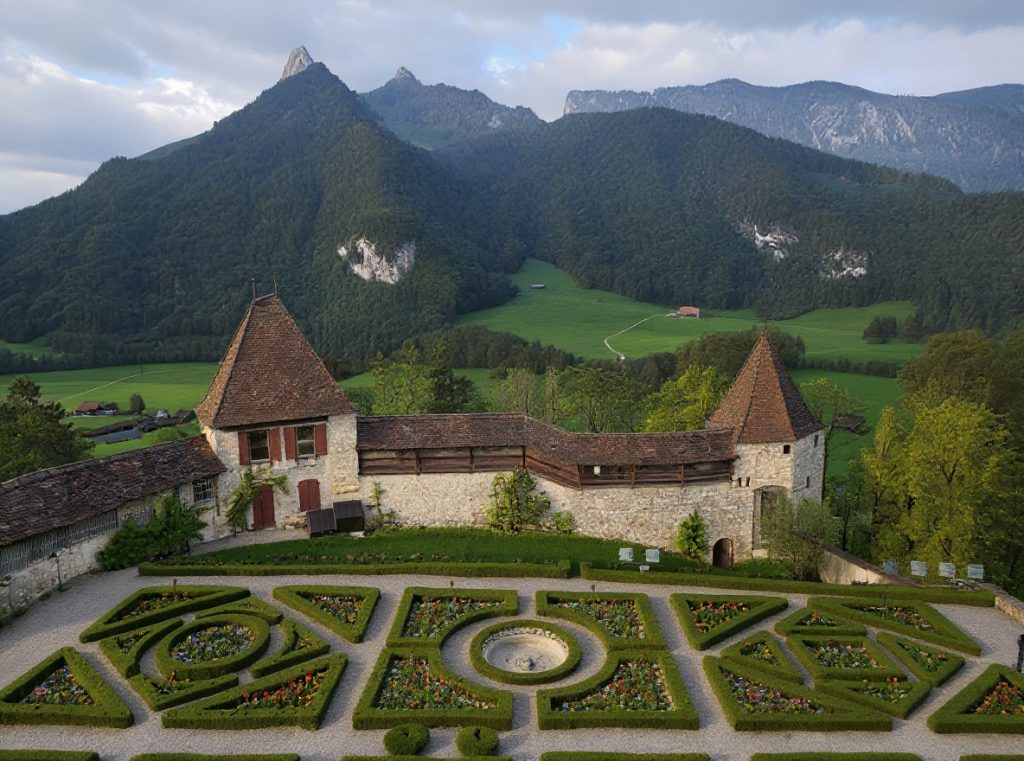
The castle opens daily throughout the year. It offers extended hours from April through October. Temporary exhibitions complement the permanent collections, while the French garden and fortification walls offer visitors outdoor spaces. Visitors can explore these when weather permits. The canton of Fribourg manages the property as a cultural institution. The canton maintains both the building’s structural integrity and its role as a repository of regional heritage. The castle draws visitors who come not only to admire its architecture and collections. They also come to experience the legends and stories that have accumulated across eight centuries on this hill above the Saane Valley.
Castles near Gruyères Castle
Frequently asked questions
Is Gruyères Castle open year-round?
Yes, Gruyères Castle is open every day including Christmas and New Year's Day. Opening hours are 09:00–18:00 from April to October and 10:00–17:00 from November to March.
Can I visit the garden at Gruyères Castle in winter?
The French garden at Gruyères Castle is open from Easter to October and closes at 17:30. During winter it can be viewed from the ramparts or the castle balcony.
Are there combined tickets for Gruyères Castle and other attractions?
Yes, combined adult tickets are available for the same day: castle and HR Giger Museum CHF 20, castle and Maison du Gruyère CHF 17, or castle and Tibet Museum CHF 18. Purchase tickets at any of the three institutions.
How do I get to Gruyères Castle from the train station?
Gruyères station is about 1.5 km below the medieval town. From the station it's a 10–15 minute uphill walk to the castle, or you can drive and park at one of three paid parking lots at the base of the town.
What payment methods does Gruyères Castle accept?
The castle accepts credit cards, euro banknotes (change given in Swiss francs), and Swiss francs. The Swiss Museum Pass and ICOM are also accepted for free entry.
Featured listings