
Perched atop a steep rocky promontory 395 metres above sea level, Książ Castle commands the wooded valleys of Lower Silesia with a presence both grand and mysterious. The largest castle in the region of Silesia, it ranks as the third-largest in Poland behind Malbork and Wawel. Gothic, Baroque, and Renaissance elements merge across more than 400 rooms. Each renovation added another layer to seven centuries of history. From medieval fortress to aristocratic palace and wartime enigma, the castle has transformed many times yet never lost its hold on the imagination.
Plan your visit to Książ Castle
Sat–Sun 10:00–17:00
Location of Książ Castle
Książ Castle sits in northern Wałbrzych in Lower Silesian Voivodeship, Poland. The castle overlooks the gorge of the Pełcznica river. Dense woodland surrounds it, forming part of the protected Książ Landscape Park, which authorities established in 1981. The city of Wrocław lies approximately 70 kilometres to the north-east. Direct rail links connect the two cities. Visitors arriving by train reach Wałbrzych’s stations, then take local bus number 8 towards Książ. The castle’s elevated position offers sweeping views across the Sudeten foothills. The address is Piastów Śląskich 1, Wałbrzych, Poland. Despite its remote feel, the site remains accessible year-round. This is a landscape where forest and stone converge.
History of Książ Castle
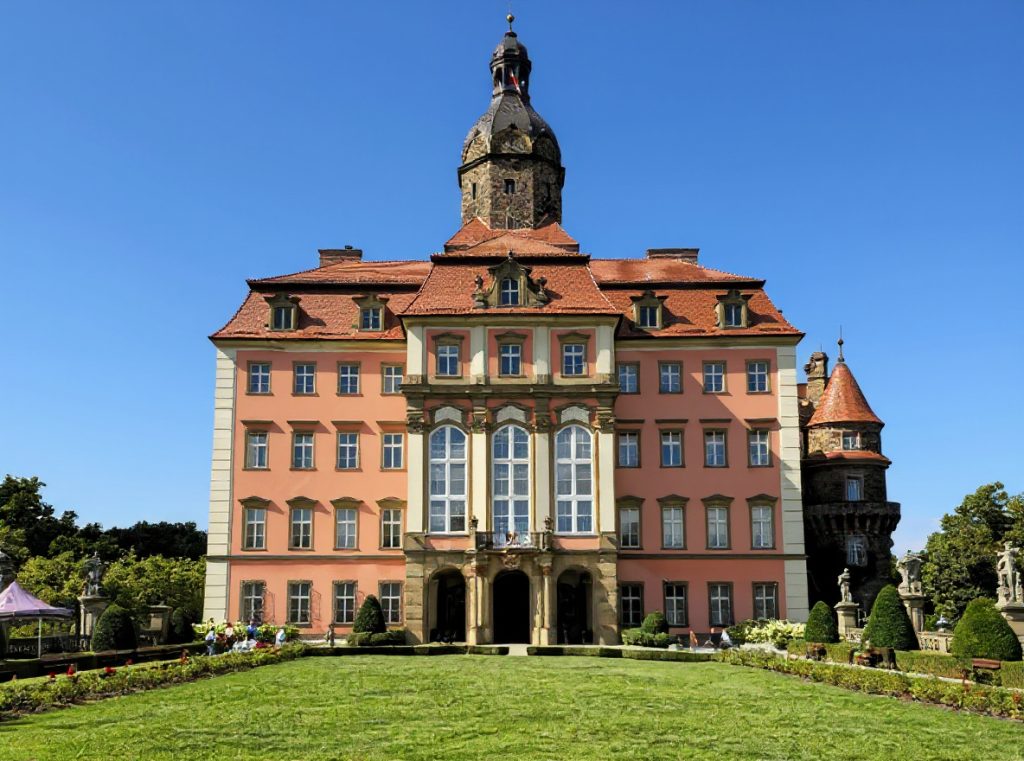
Duke Bolko I the Strict built Książ Castle between 1288 and 1292. He created it as one of several defensive strongholds guarding the Duchy of Świdnica-Jawor. The site held strategic value, its rock face a natural defence. After Bolko’s death the castle passed through turbulent centuries. In 1392 King Wenceslaus, also King of the Romans, seized the Duchy of Świdnica and obtained Książ Castle. In 1466 Hans von Schellendorf obtained the castle from the Bohemian Crown, yet ownership remained unstable. In 1509 the Bohemian Crown leased Książ to the Hochberg family. They carried out the castle’s first early modern reconstruction between 1548 and 1555, followed by Renaissance interior modifications around 1580. In 1603 or 1605 the Hochbergs received the castle as hereditary family property. For more than four centuries this aristocratic dynasty shaped Książ. They transformed the Gothic keep into an opulent residence. Builders incorporated the medieval complex into a new Baroque palace. They added a grand wing in the Baroque style. Its interiors included the Maximilian Hall, Konrad Hall, and impressive drawing rooms. These included the White, Green, Chinese and Baroque salons. The second major reconstruction took place between 1909 and 1923. Architects enlarged the castle by the north and west wings, to which they built two towers. During the Thirty Years’ War enemies partially destroyed and plundered Książ several times, yet each time the family rebuilt. The Second World War brought a darker chapter. Nazi forces seized the property in 1941. They excavated extensive tunnels beneath the rock for purposes still debated. When World War II ended Książ became part of the Republic of Poland. The Soviet army remained stationed at the castle for a year and a half, and further damage followed.
Current status
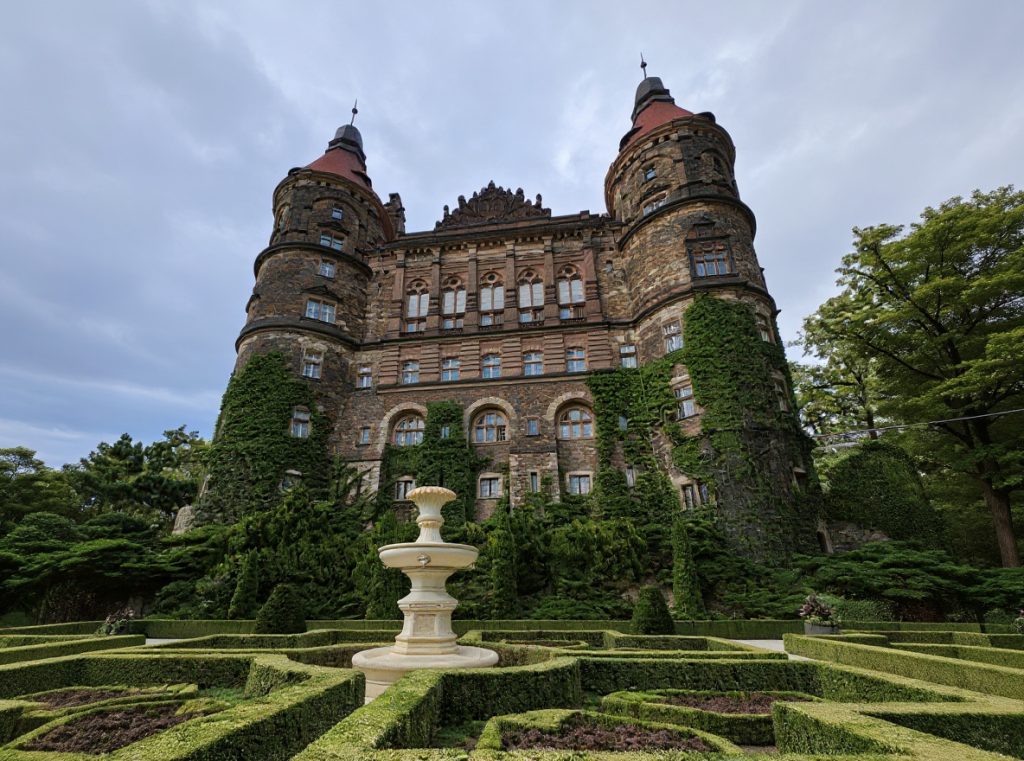
In 1991 the local government of the Wałbrzych region took over management of Książ Castle, with the Walbrzych district government becoming the owner. Since 1991 Ksiaz Castle in Wałbrzych Ltd has managed the Castle on behalf of Wałbrzych’s local government. Comprehensive renovation works began in 1974 and continue today. Specialists restore halls, facades and gardens. Visitors explore richly decorated chambers and descend into the mysterious underground corridors. Informative audio tours guide them in multiple languages. Each year the castle hosts the Festival of Flowers and Art. This cultural event features flower and hand-made crafts exhibitions. Wedding ceremonies, concerts and historical re-enactments fill the calendar. In 2018 voters chose the castle as one of the Seven Wonders of Poland. This recognition honoured both its architectural splendour and its place in the national story. Beyond the castle walls, terraced gardens cascade down the hillside. The Książ Stallion Stud Farm maintains centuries-old equestrian traditions there. Forests rise on every side, trails winding through the landscape park that shelters this monumental survivor of war and time. The rock that once bore a medieval fortress now anchors a monument to resilience. Its towers still watch over the Pełcznica gorge as they have for more than seven hundred years.
Castles near Książ Castle
Frequently asked questions
Can I visit Książ Castle without booking ahead?
Yes, you can buy tickets at the ticket office on the day. However, the underground route has fixed time slots, so booking online in advance is recommended if you want to include it.
What does the basic ticket to Książ Castle include?
The 72 zł ticket covers the castle interiors with audio guide, terraces, and the Palm House (2 km away). The underground tunnels require a separate timed ticket and guided tour.
How do I get to Książ Castle from Wrocław by public transport?
Take a train from Wrocław Główny to Wałbrzych Miasto (just over 1 hour). From there, catch bus 8 towards Książ, which stops near the castle gates.
Is the Palm House at Książ Castle worth visiting?
Yes, it is included in the standard castle ticket and features exotic vegetation. It is located about 2 km from the main castle, roughly a 25-minute walk through the grounds.
What is the underground route at Książ Castle?
The underground route is a 35–40 minute guided tour through Nazi-era tunnels beneath the castle, part of the mysterious Project Riese. Entry is at a fixed time printed on your ticket, so arrive punctually.
Featured listings