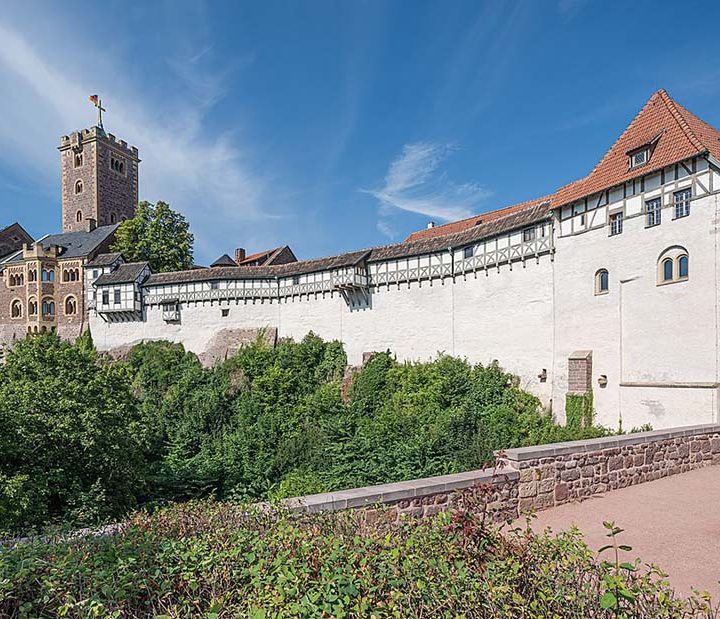
Wartburg Castle, a historical gem in Germany, stands as a testament to medieval architecture and cultural heritage. This magnificent fortress overlooks the town of Eisenach. It has witnessed over nine centuries of European history. Its preservation and rich past make Wartburg Castle significant for historians, architecture enthusiasts, and tourists alike.
Plan your visit to Wartburg Castle
Can’t wait to visit the castle? Book your Wartburg Castle tour online.
Location of Wartburg Castle
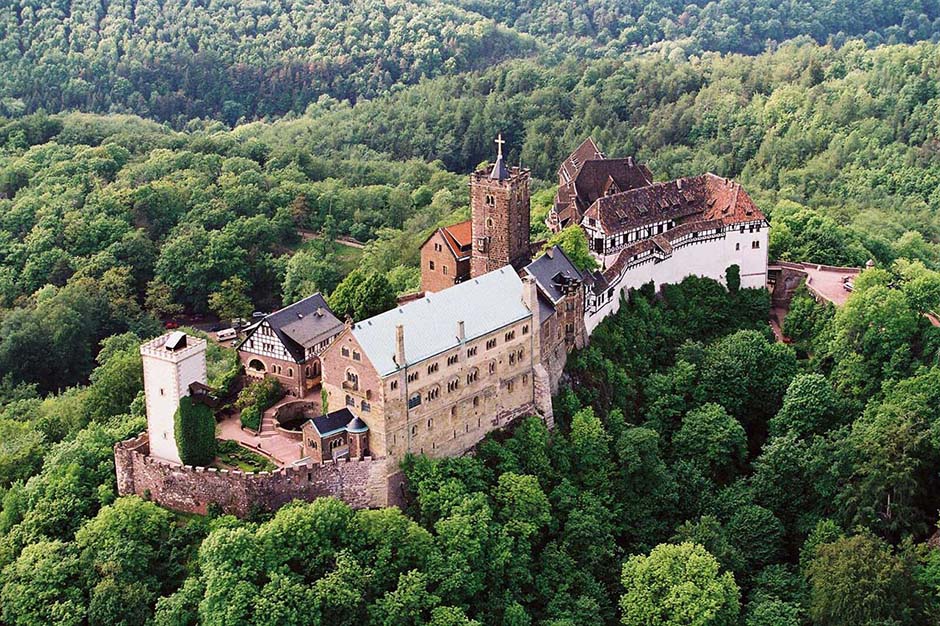
Located in the state of Thuringia in central Germany, Wartburg Castle commands a strategic position. It is situated atop a 410-meter-high hill in the Thuringian Forest. The castle’s elevation provides panoramic views of the surrounding landscape. This includes lush forests and the quaint town of Eisenach. The site is accessible via a scenic drive or a hike through forest trails. Visitors experience the region’s natural beauty during their journey.
History of Wartburg Castle
Wartburg Castle was founded in 1067 by Ludwig the Springer, a count of Schauenburg. Throughout the medieval period, the castle played a crucial role. It served as the seat of the Landgraves of Thuringia. It became a center of art and literature during Hermann I’s reign. He hosted the famous Sängerkrieg (Minstrels’ Contest) in the early 13th century.
The castle is also associated with Martin Luther, who sought refuge here from May 1521 to March 1522. During his stay, Luther translated the New Testament into German. This monumental task had profound implications for the Reformation. Wartburg Castle commemorates this period with a museum exhibit. Luther’s room and various artifacts from his time there are displayed.
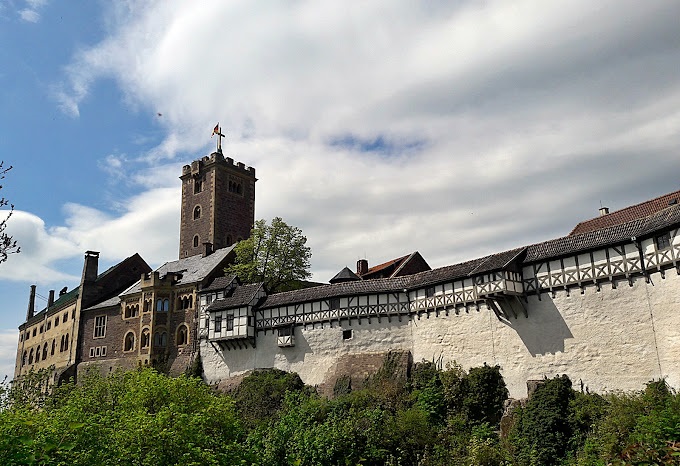
In the 19th century, the castle underwent extensive restorations. The Grand Duke of Saxe-Weimar-Eisenach, Carl Alexander, guided these restorations. The renovations aimed to preserve the castle’s medieval character while adding Romanticism elements. The architecture reflects Romanesque, Gothic, and Romantic styles. This diversity shows the various historical influences it has undergone.
Current status
Today, Wartburg Castle is a UNESCO World Heritage Site. Wartburg Castle’s outstanding cultural value and historical significance earn it recognition, and meticulous maintenance preserves it. Moreover, ongoing conservation efforts ensure its preservation. Visitors experience a rich tapestry of history, art, and architecture. Guided tours are available in multiple languages.
The castle complex includes several notable structures. The Palas, the main residential building, houses a museum. It showcases medieval art, weaponry, and furnishings. The Elisabethenkemenate, or Saint Elizabeth’s Chamber, commemorates Saint Elizabeth of Hungary. She resided at Wartburg during the early 13th century. Stunning frescoes depict her life and charitable works. These frescoes adorn the chamber walls.
Wartburg Castle also hosts various cultural events throughout the year. These include concerts, medieval festivals, and educational programs. Visitors have the unique opportunity to engage with the castle’s history. They experience the vibrant cultural traditions of the region.
In conclusion, Wartburg Castle is not merely a historical monument. It is a living repository of European heritage. Its picturesque location, storied past, and well-preserved architecture offer an unparalleled glimpse into medieval and Reformation eras. Visiting the castle invites one to explore the rich legacy of one of Germany’s most iconic fortresses.
Castles near Wartburg Castle
Frequently asked questions
What did Martin Luther do at Wartburg Castle?
Martin Luther stayed at Wartburg Castle from May 1521 to March 1522 under the alias 'Junker Jörg'. During this time, he translated the New Testament into German in just 11 weeks, a foundational work for the Reformation and modern German language.
Can you visit Wartburg Castle without a guided tour?
No, access to the interior rooms (Palas, museum, Luther's Room) requires joining a guided tour. The outer courtyards, ramparts, and grounds can be explored freely during opening hours.
How do I get from Eisenach to Wartburg Castle?
From Eisenach train station, take bus line 3 or 10, which runs approximately every 3 hours and takes 15–20 minutes. Alternatively, you can walk through the forest (45 minutes uphill) or drive to the paid car park and walk or shuttle the final stretch.
Is Wartburg Castle open in winter?
Yes, Wartburg Castle is open year-round, including winter. Opening hours are shorter from November to March (guided tours 9:30–15:30), and English tours are less frequent than in summer, so booking ahead is recommended.
Why is Wartburg Castle a UNESCO World Heritage Site?
Wartburg Castle was designated a UNESCO World Heritage Site in 1999 as an outstanding monument of the German feudal period. It is associated with key figures such as St Elisabeth of Hungary and Martin Luther, and preserves substantial medieval structures from the 12th to 15th centuries.
Featured listings