Perched on a rocky porphyry outcrop above the River Mulde, Colditz Castle commands dramatic views over the Saxon town below. The castle first appears in records from 1046 in a marriage certificate, when Henry III of the Holy Roman Empire gave the burghers permission to build the first documented settlement at the site. Saxon rulers later transformed the medieval stronghold into a Renaissance structure. During World War II it gained worldwide fame as a high-security prisoner-of-war camp for Allied officers. Yet this dramatic chapter represents only a fraction of its thousand-year history.
Plan your visit to Colditz Castle
Wed–Fri 10:00–16:00
Sat–Sun 10:00–17:00Closed December to February for individual visitors (groups by arrangement); open daily from April to October.
Location of Colditz Castle
Colditz Castle sits in the town of Colditz near Leipzig, Dresden and Chemnitz in the state of Saxony. The fortress occupies a commanding position on a hill spur overlooking the Zwickauer Mulde river. The town lies roughly 30 miles south-east of Leipzig and about 25 miles north of Chemnitz. Visitors arriving by car can reach the castle via the A4 motorway. They should exit at Grimma and follow the B107 south. An access road branches off from Tiergartenstraße and leads to a car park directly outside the main gate at Schloßgasse 1, 04680 Colditz. Train travellers can reach Colditz by regional services, though the final approach requires a climb up the steep hill to the castle entrance.
History of Colditz Castle
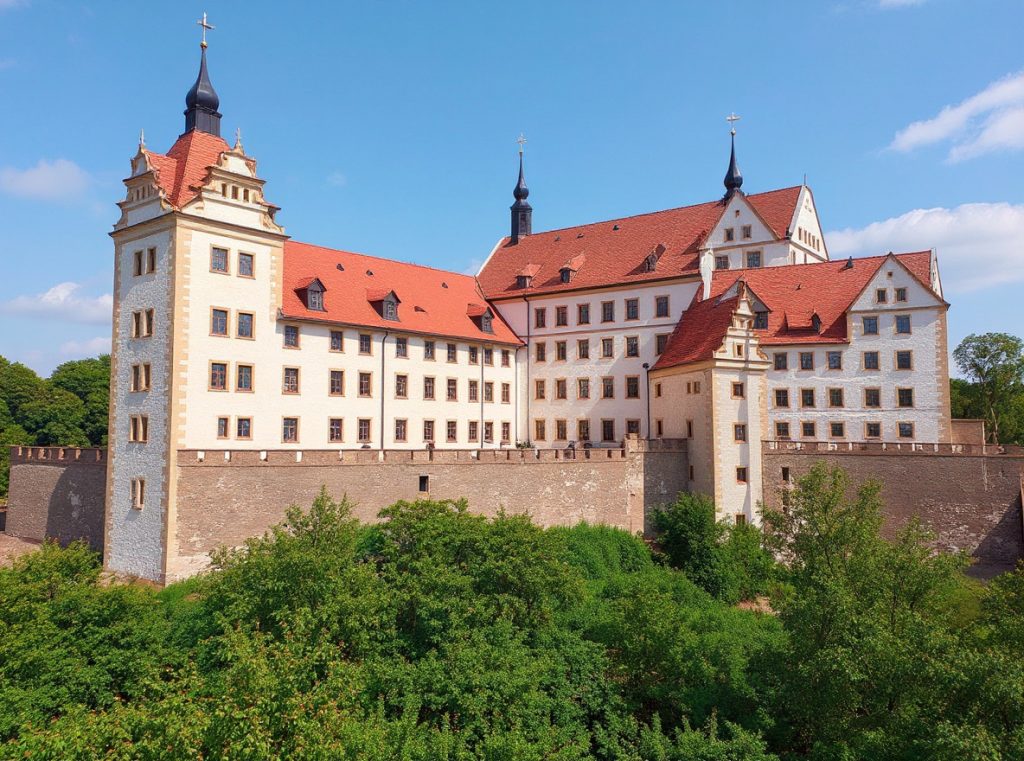
During 1158, Emperor Frederick Barbarossa made Thimo I the Lord of Colditz, and major building works began. The Lords of Colditz ruled for nearly 250 years until Thimo VIII sold the castle for 15,000 silver marks to the Wettin ruler of Saxony during 1404. The Wettins transformed the fortress into a hunting lodge and widow’s residence. Disaster struck repeatedly when the Hussites attacked Colditz during 1430 and set town and castle on fire. During 1504, the servant Clemens the baker accidentally set Colditz afire. As a result, the town hall, church, castle and much of the town burned.
In 1506, Elector Frederick the Wise had the castle rebuilt in the Renaissance style. The artist Lucas Cranach the Elder decorated the castle with paintings and designed the interior. The structure changed during the long reign of Elector Augustus of Saxony from 1553 to 1586. Workers reconstructed the complex into a Renaissance style castle from 1577 to 1591. During 1523, the castle park became one of the largest menageries in Europe, establishing Germany’s first wildlife park. After its time as a hunting residence ended, the castle became a mental hospital for the incurably insane from Waldheim during 1829. It continued in this role until 1924.
The 1930s brought darker days. When the Nazis came to power in 1933 they turned the castle into a political prison to house communists, Jews, homosexuals and others who opposed the regime. During World War II, Colditz earned international notoriety as Oflag IV-C, a maximum-security camp for Allied officer prisoners. The Germans believed the castle, situated on a rocky outcrop above the River Mulde, to be an ideal site for a high security prison. The camp held British, French, Polish, Dutch, Belgian and American officers.
Current status
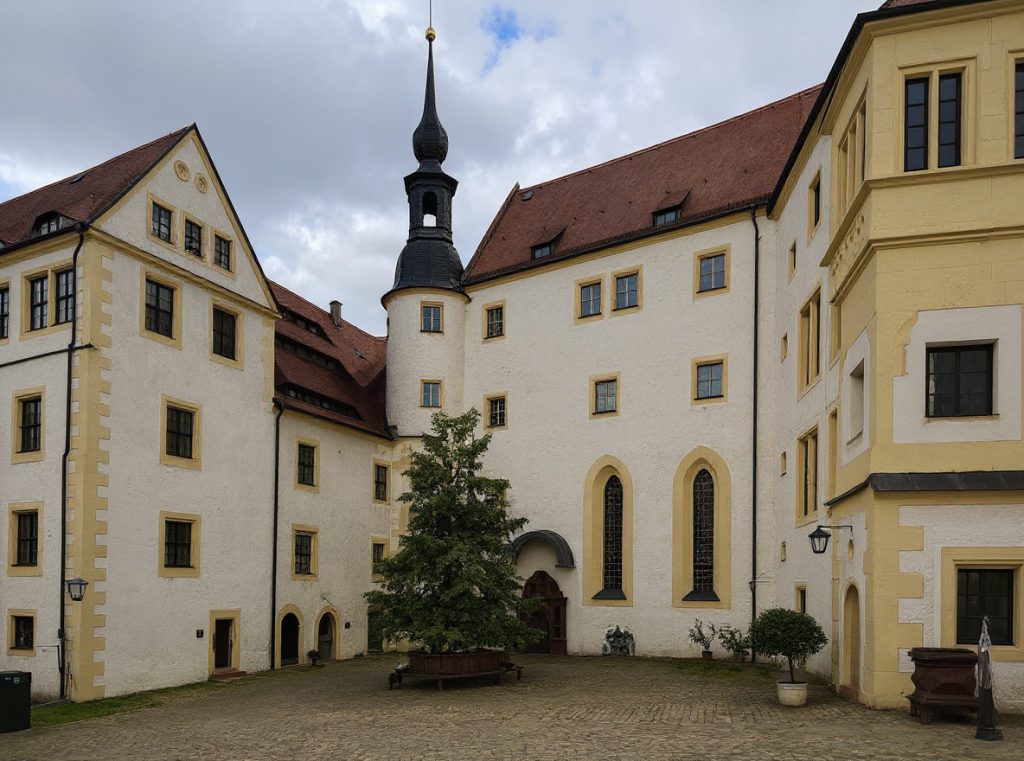
The State Palaces, Castles and Gardens of Saxony now owns Colditz Castle. After a six-month closure for renovation works, the castle reopened its doors in April 2024 with a fully redesigned visitor experience. This includes access to newly restored wings and spaces, alongside a revamped physical exhibition featuring over 300 collection objects. Today, the castle attracts many tourists, with guided tours, exhibitions and a museum dedicated to the prisoners’ lives. The museum uses HistoPad tablets to bring history to life through augmented reality.
The new permanent exhibition recounts the castle’s eventful history across different eras. It places particular emphasis on the spectacular escape attempts by Allied officers during the Second World War. Visitors can explore the prisoners’ quarters, see the famous glider replica, and walk through tunnels dug by desperate men seeking freedom. The exhibition also examines the castle’s Renaissance splendour and its darker chapter as a psychiatric hospital. Beyond the museum, the castle serves multiple purposes: a youth hostel operates within part of the complex, and the chapel hosts concerts throughout the year.
The white-gabled castle stands today as a monument to resilience and human ingenuity. Its rooms and courtyards echo with centuries of stories, from Saxon electors hunting in vast forests to Allied officers plotting their escape to freedom. The fortress above the Mulde continues to draw history enthusiasts from around the world. They all seek to understand the many lives this remarkable building has lived.
Castles near Colditz Castle
Frequently asked questions
What is Colditz Castle famous for?
Colditz Castle is best known as Oflag IV-C, a high-security German prisoner-of-war camp during the Second World War where Allied officers made some of the most daring and ingenious escape attempts of the war. The museum tells the castle's 1,000-year history from electoral residence to wartime prison camp.
Do I need a guided tour to visit Colditz Castle?
No, you can explore the museum independently with the included HistoPad multimedia guide. However, guided tours are recommended to access areas not normally open to visitors, including the Pat Reid Cellar, French tunnel, glider loft, and theatre.
Is Colditz Castle open in winter?
The museum is closed to individual visitors from December to February. During March and November, it opens Wednesday to Sunday with reduced hours (10:00–16:00 weekdays, 10:00–17:00 weekends). Group tours can be arranged year-round by advance request.
Can you see the Colditz glider at Colditz Castle?
Yes, the glider loft is accessible on extended guided tours that focus on escape attempts. The guided tours take you to exclusive locations including where prisoners built the famous glider in a secret attic workshop, though the original glider itself is not on display.
How long does it take to see Colditz Castle?
Allow 1.5 to 2 hours for the self-guided museum visit with the HistoPad. If you book a guided tour, the general tour lasts 2 hours whilst the extended 'Legendary Escapes' tours run 1.5 to 3 hours depending on the option chosen.
Popular right now
Featured listings