
Rising along the Danube River, Smederevo Fortress commands the landscape with its triangular layout and formidable defences. Despot Đurađ Branković constructed this 25-tower fort between 1428 and 1430 when he ruled Serbia during its final decades of medieval independence. The fortress covers 11.3 hectares in the centre of the modern-day city of Smederevo. This makes it one of the largest lowland fortifications in south-east Europe. Its massive stone walls and towers served as both seat of government and military stronghold, protecting the Serbian Despotate during a turbulent period of Ottoman expansion.
Plan your visit to Smederevo Fortress
Location of Smederevo Fortress
Smederevo Fortress stands 45 kilometres south-east of Belgrade on the right bank of the Danube. Smederevo’s location on the Danube, between Belgrade and Golubac, provided easy access to other points along the river. This made it strategically vital for controlling trade and military movements. The fortress occupies a flat plateau at the confluence of the Jezava and Danube rivers. Visitors can reach Smederevo easily from Belgrade by bus, with services running half-hourly and taking approximately one hour. The fortress sits integrated into the modern city centre, so pedestrians can walk directly to the site from the town. Its position on the Danube offers uninterrupted river views, especially from the walls facing the water.
History of Smederevo Fortress
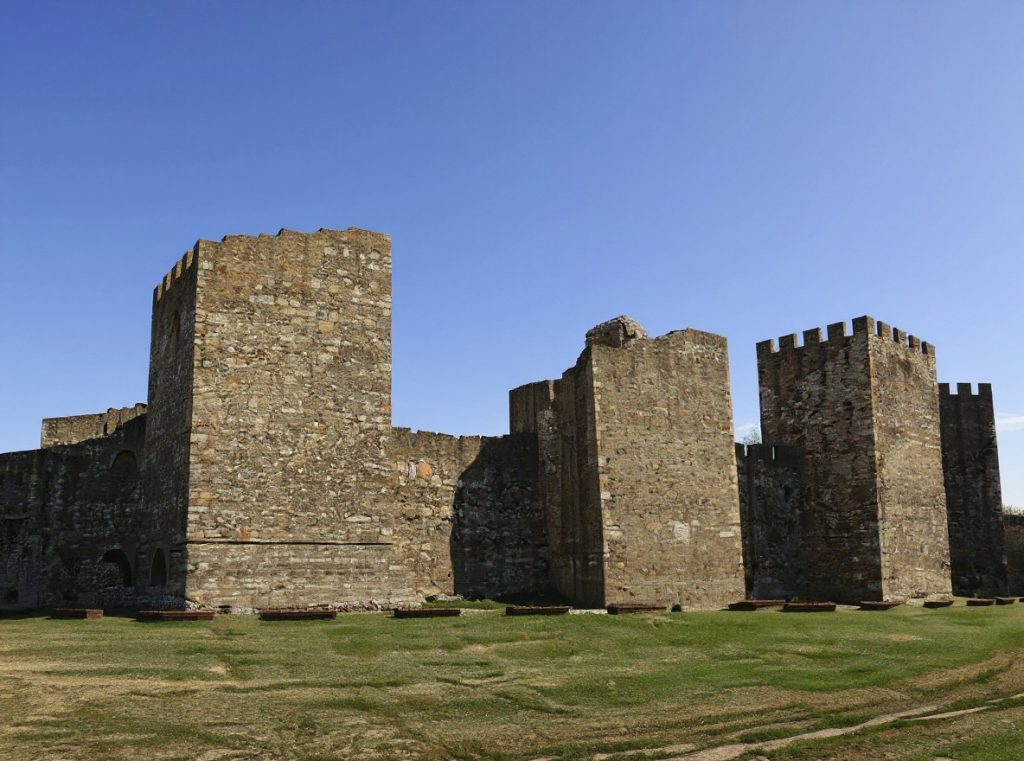
In the autumn of 1428, construction of the capital began under the direction of George Kantakouzenos, brother of Despotess Jerina. In 1430, workers completed the first part of the fortress, including a palace and enough other buildings to form an inner city. This inner section, known as the Small Town, housed the ruler’s court, administrative buildings, and a ceremonial audience hall. Between 1430 and 1439, workers erected the larger fortified suburb called the Big Town, creating a comprehensive defensive complex. High in the stone wall on the Danube side, four sets of double-arched windows appear carved in a combination of Gothic and Romanesque styles. These windows decorate the audience hall where diplomats signed important treaties.
The fortress withstood multiple sieges during its early years. During their attack in 1439, it also became the first site in Serbia to see cannonfire. Smederevo withstood the attack, even when Murad brought in cannons, demonstrating the strength of its fortifications. However, Smederevo Fortress fell under Ottoman rule in 1459, ending its brief two-decade tenure as Serbia’s capital. The Turkish conquerors subsequently reinforced the fortress by adding another polygonal tower on each of its three corners. The Ottomans held the fortress for centuries, adapting it for modern artillery warfare.
During World War II explosions and bombing heavily damaged it. In 1942 the ammunition stored here exploded, killing 3,000 people and wounding 12,000 more. This catastrophic blast destroyed much of the fortress’s interior and tilted several towers outward. Despite this devastation, the walls and towers survived in remarkable condition.
Current status
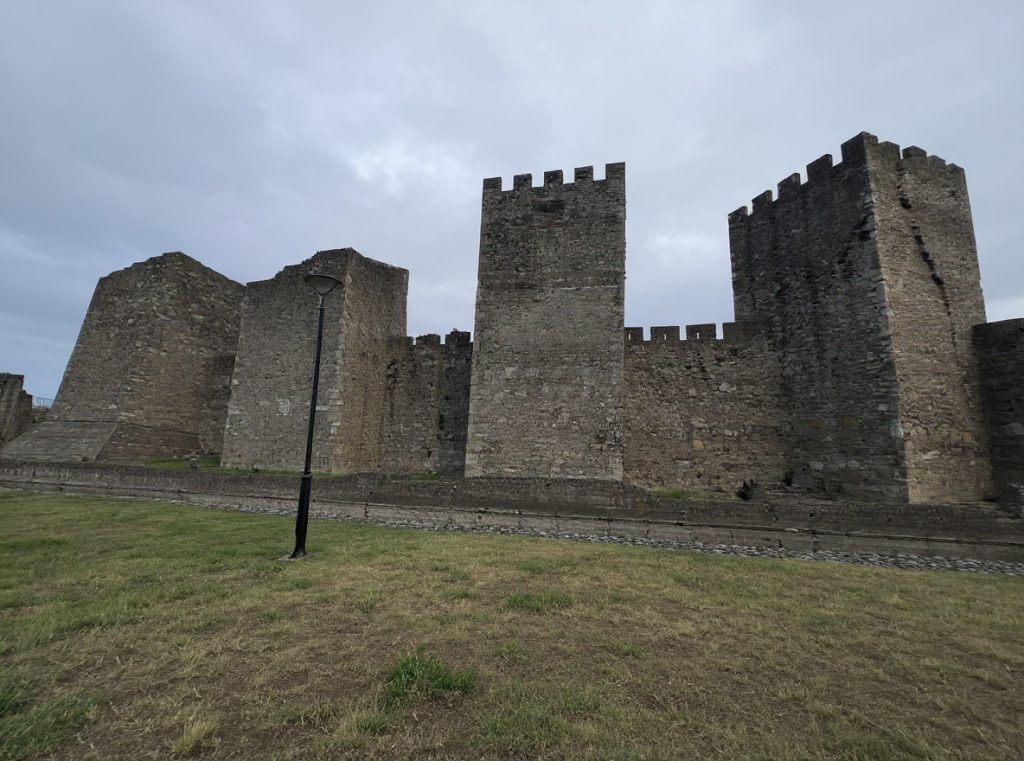
Serbia declared Smederevo Fortress a national Monument of Culture of Exceptional Importance in 1979, ensuring its protection and preservation. In 2010, authorities placed the fortress on the tentative list for possible nomination as a World Heritage Site. This recognised its outstanding historical and architectural significance. The Republic of Serbia manages the site through dedicated preservation authorities, who continue conservation work on the damaged sections. Visitors can walk freely along the massive defensive walls and climb many of the 25 towers to enjoy panoramic views of the Danube.
Today it attracts many tourists, and functions as an exclusive venue for musical, theatrical and other cultural events. The fortress now hosts a theatre festival each July, bringing cultural life back to the medieval stones. The interior grounds function as a public park where locals stroll and athletic events take place. Open year-round, the fortress welcomes history enthusiasts, architecture students, and families seeking a connection to Serbia’s medieval past. The interplay of river, stone, and sky creates an atmosphere where centuries collapse. The fortress remains what it always was: a monument to Serbian resilience and ambition.
Castles near Smederevo Fortress
Frequently asked questions
Is Smederevo Fortress free to enter?
The outer fortress grounds (Veliki grad) are free to explore year-round. Entry to the inner fortress courtyard (Mali grad) costs 250 RSD and includes access to the towers and walls with Danube views.
How do I get to Smederevo Fortress from Belgrade?
Frequent direct buses run from Belgrade BAS station to Smederevo throughout the day, with 30+ services on weekdays; journey time is 1 to 1.5 hours. The fortress is a short walk from Smederevo bus and train station.
What are the opening hours for Smederevo Fortress?
The inner fortress (Mali grad or Small Town) is open daily from 08:00 to 20:00. The outer fortress grounds are accessible throughout the day at no charge.
What is the history of Smederevo Fortress?
Smederevo Fortress was built between 1428 and 1430 by Despot Đurađ Branković as the last capital of medieval Serbia after Belgrade was returned to Hungary. It is one of the largest medieval plain fortresses in Europe, with 25 towers along the Danube and Jezava rivers.
Can I walk on the walls of Smederevo Fortress?
Yes, with paid entry to the Mali grad (Small Town) you can access the towers and walk sections of the fortress walls. The walls offer views over the Danube and the fortress complex.
Featured listings