
Rising above the coastal town of Canet de Mar, Castell de Santa Florentina commands attention with its towering crenellated walls and harmonious blend of medieval and modernist design. Guadimir de Canet built this fortress in the 11th century on the foundations of an ancient Roman villa. The stronghold has witnessed nearly a thousand years of Catalan history. In 1998, Architectural Digest featured the castle among the “most beautiful houses in the world” because of its extraordinary fusion of architectural styles. Today the castle functions as both a private residence and a cultural monument, where stone walls echo with centuries of stories.
Plan your visit to Castell de Santa Florentina
Tue–Fri 11:00–14:00
Sat 10:00–14:00, 4:00–18:00
Sun Closed
Location of Castell de Santa Florentina
The castle sits at Avinguda Doctor Marià Serra S/N, on the upper part of Canet de Mar in Barcelona province. Canet de Mar lies on Spain’s northeastern coast, 47 kilometres north of Barcelona. The castle stands just off the C-32 coastal road, only a 50-minute drive from Barcelona. Visitors arriving by train can take Rodalies Line R1 to Canet de Mar Station, then walk approximately 25 minutes to reach the castle. The Sagalés Line 627 bus connects Sant Cebrià de Vallalta, Canet de Mar, Sant Pol de Mar and Calella. The approach follows a rustic track that winds uphill through Mediterranean vegetation. This route offers glimpses of the castle’s towers before reaching the main gate.
History of Castell de Santa Florentina
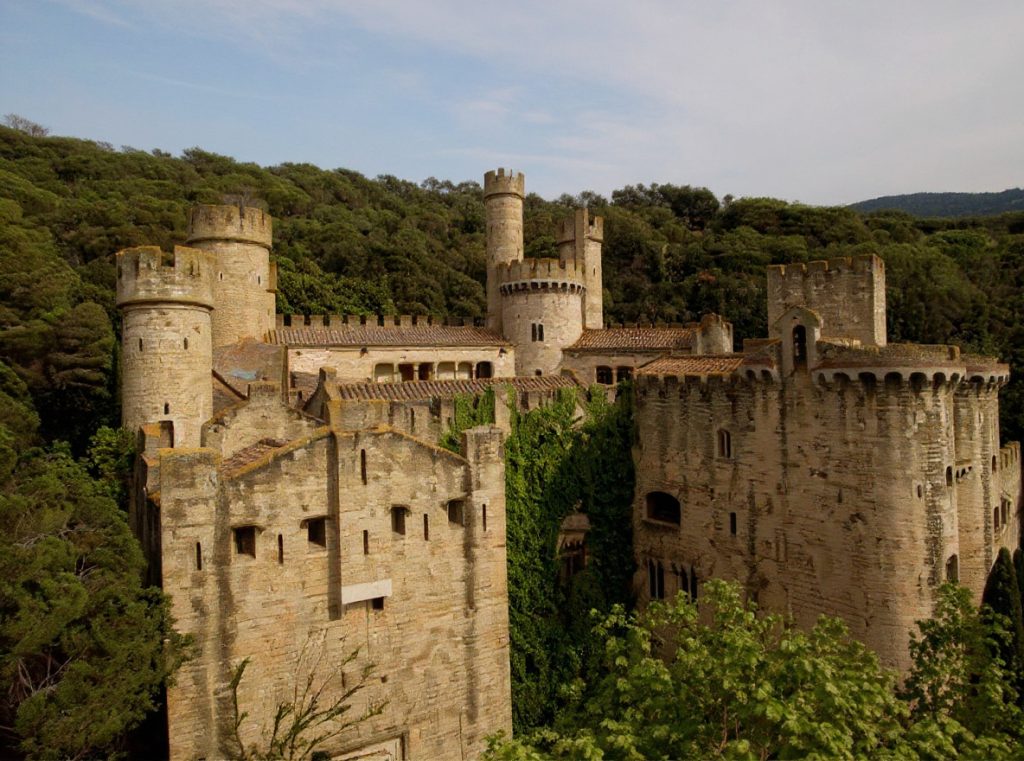
A Roman fortification originally occupied this site, which became the foundation for a medieval fortified house in the 11th century. Records show Gaudamir de Canet as the earliest owner in 1024. By 1041, the knight Gilabert de Canet enhanced the medieval defences when he constructed towers at the fortified entrance. The property served its early owners as protection against Mediterranean pirates who threatened the Catalan coast. The castle remained in the Canet family lineage through the 13th century. Ferrer de Canet held ownership until his death in 1251, before ownership passed through several families including the Peguera family in the 15th century.
In the 16th century, Dimas Muntaner acquired the castle. His daughter later married Felipe Dimas de Montaner, a Barcelona-based lawyer, bringing the property to the Montaner family that still owns it today. In the 14th century, Ferrer de Canet, a noble knight and advisor to King Alfonso V the Magnanimous, fortified the house with two towers and medieval gates. Centuries of gradual modifications shaped the castle’s medieval character before its dramatic transformation in the early 20th century.
In 1908, the castle hosted King Alfonso XIII, who made the castle’s owner Ramon de Montaner i Vila count of Canet. In 1910, the modernist architect Lluís Domènech i Montaner expanded and renovated the castle. He added gargoyles to its façade, which sculptor Carles Flotats i Galtés created. Domènech i Montaner, nephew of the owner and publisher Ramon de Montaner i Vila, undertook the renovation between 1899 and 1912. His project involved building new rooms around a courtyard that recreated a castle. He reused stone elements from other medieval buildings, including a large part of the cloister from the monastery of Tallat.
Current status
The government lists the castle as a cultural heritage monument while it remains private property. The site hosts a museum that visitors can see by appointment as well as a yearly festival of classical music. Tours use audio guides in Catalan, Spanish, English, French, German, Russian, Chinese and Korean. The devices narrate content at 17 stops throughout the castle. General admission costs €12, with reduced rates for children. Group bookings, private events or film productions may affect tours, so advance ticket purchase is recommended. The castle opens regularly during summer months, typically Tuesday through Saturday.
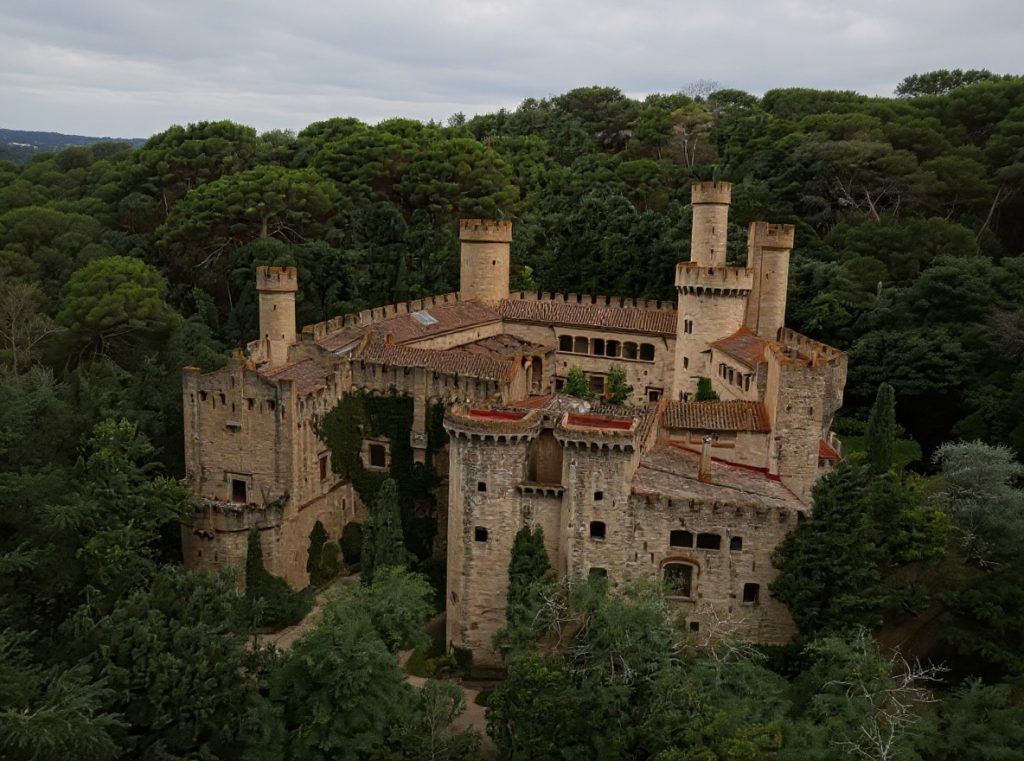
The museum’s collections include many works by Catalan artists dating back to the early 20th century. The castle’s current appearance features tall crenellated towers, a large enclosed courtyard, a chapel with a crypt, and several stately halls. The interiors showcase exquisite stained glass windows, wrought ironwork, coffered ceilings and sculptures by prominent early 20th-century Catalan artists. In 2015, the castle became a setting for the sixth season of Game of Thrones, representing House Tarly’s seat of Horn Hill. The Montaner family continues to preserve this architectural jewel, where medieval stones and modernist artistry create an atmosphere that transcends time. Visitors can explore the layered history of Catalonia here.
Castles near Castell de Santa Florentina
Frequently asked questions
Was Castell de Santa Florentina used in Game of Thrones?
Yes, the castle was used in Season 6 of Game of Thrones as Horn Hill, the ancestral home of House Tarly. Scenes were filmed in the castle courtyard, the King's Room (serving as the dining hall), and various bedrooms.
Do I need to book tickets in advance for Castell de Santa Florentina?
Yes, advance booking is strongly recommended as places are limited. Booking online also saves €2 per ticket compared to purchasing at the door, and entry is not guaranteed without a reservation.
What can I see inside Castell de Santa Florentina?
The audio-guided or guided tour takes you through medieval and modernist spaces including the 11th-century courtyard, the Great Hall with painted wooden ceilings and marble fireplace, stained glass windows, and rooms featuring works by Catalan artists. The castle was renovated by renowned architect Lluís Domènech i Montaner in 1910.
Is Castell de Santa Florentina accessible by public transport?
Yes, take the Rodalies R1 train from Barcelona to Canet de Mar station, which takes approximately 56 minutes. From the station, it is a 25-minute uphill walk through the town to reach the castle entrance.
Can I bring my dog to Castell de Santa Florentina?
Yes, the castle is pet-friendly. Dogs are welcome as long as they remain on a lead and under supervision at all times during the visit.
Featured listings