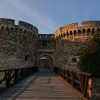
At the strategic junction where the River Sava flows into the Danube, Belgrade Fortress commands a dramatic clifftop position above Serbia’s capital. This sprawling complex of stone walls, towers and ramparts forms the historic heart of Belgrade. It blends the Upper and Lower Towns with the green expanses of Kalemegdan Park across 66 hectares. For more than two millennia, armies fought over this site. Yet today it welcomes visitors freely and offers river panoramas and centuries of layered European history.
Plan your visit to Belgrade Fortress
Tue–Sun 07:30–15:30Fortress grounds open 24 hours; museums and towers Tue–Sun 11:00–19:00 (Apr–Sep), 10:00–17:00 (Oct–Mar).
Location of Belgrade Fortress
Belgrade Fortress sits in the Stari Grad municipality of central Belgrade. The fortress occupies a 125-metre limestone ridge above the confluence of the Sava and Danube rivers. Visitors reach the site easily on foot along Knez Mihailova Street, Belgrade’s main pedestrian boulevard. This street leads directly into Kalemegdan Park and the fortress gates. Boulevards including Vojvoda Bojović and Tadeuša Košćuška bound the fortress on three sides, while the riverside railway traces its northern edge. The fortress complex merges seamlessly with the surrounding city, so no formal entrance barriers restrict access.
History of Belgrade Fortress
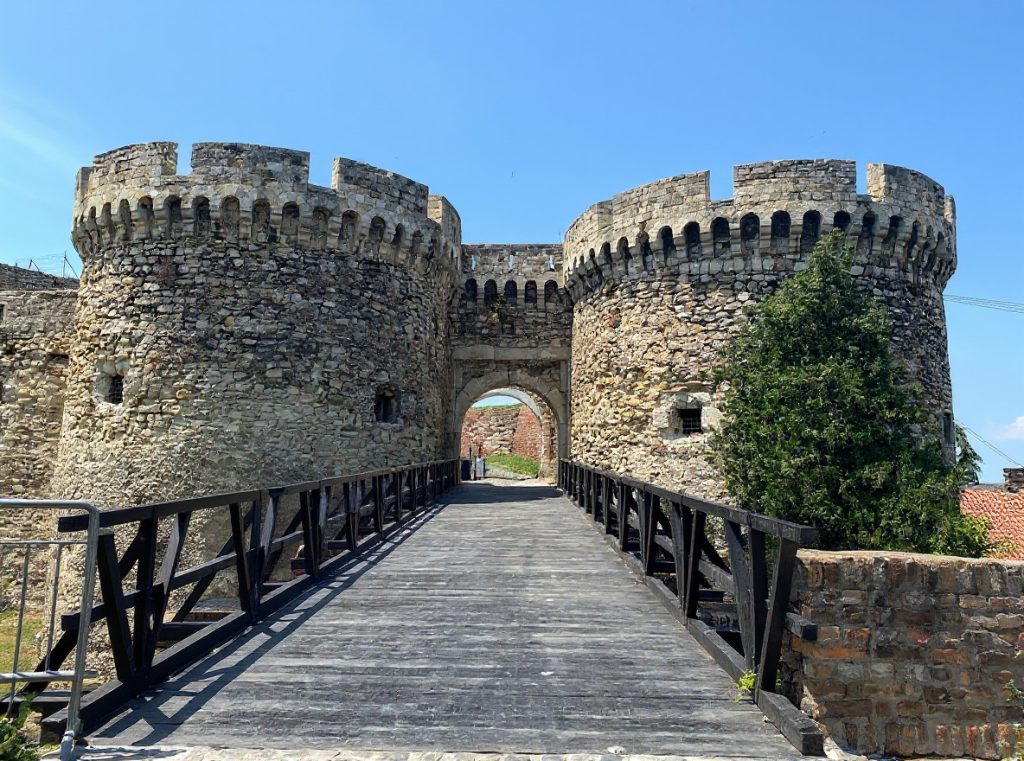
The Celtic Scordisci tribe founded a settlement called Singidunum on this ridge in the 3rd century BC. Romans conquered the site and built a fortified military camp around the 1st century AD. The Roman legion IV Flavia Felix garrisoned Singidunum and transformed it into a frontier stronghold. The empire bordered territories beyond its control at this point. Goths and Huns repeatedly destroyed the Roman camp between 378 and 441 AD. Yet Byzantine Emperor Justinian I reconstructed the fortress in 535.
The fortress changed hands many times as Byzantines, Hungarians, Serbs, Ottomans and Austrians fought for control of this strategic river crossing. Serbian Despot Stefan Lazarević rebuilt and expanded the fortress significantly after 1403. He added massive walls for both the Upper and Lower Towns and constructed a palace within the defences. Belgrade flourished as the Serbian capital during his reign. Ottoman forces captured the fortress in 1521, and it remained under Turkish control for much of the next four centuries. Austria seized it several times during the long wars of the 17th and 18th centuries, though.
French military engineer Nicolas Doxat de Démoret redesigned large sections of the fortress for Austria between 1723 and 1736. He created the Baroque fortifications visible today. The fortress witnessed over 115 battles throughout its history. Serbian forces gradually reclaimed Belgrade in the 19th century as Ottoman power waned. Both World Wars brought damage to the fortress, yet extensive restoration work followed.
Current status
The City of Belgrade owns the fortress, and the public enterprise JKP Beogradska Tvrđava manages daily operations and preservation. Serbia designated the fortress a Cultural Monument of Exceptional Importance in 1965 because of its role as the nation’s most significant historical site. The fortress remains open to the public year-round without charge and welcomes an estimated two million visitors annually. Several monuments and museums occupy the complex, including the Military Museum. Towers such as the Sahat Tower and Nebojša Tower open for tours.
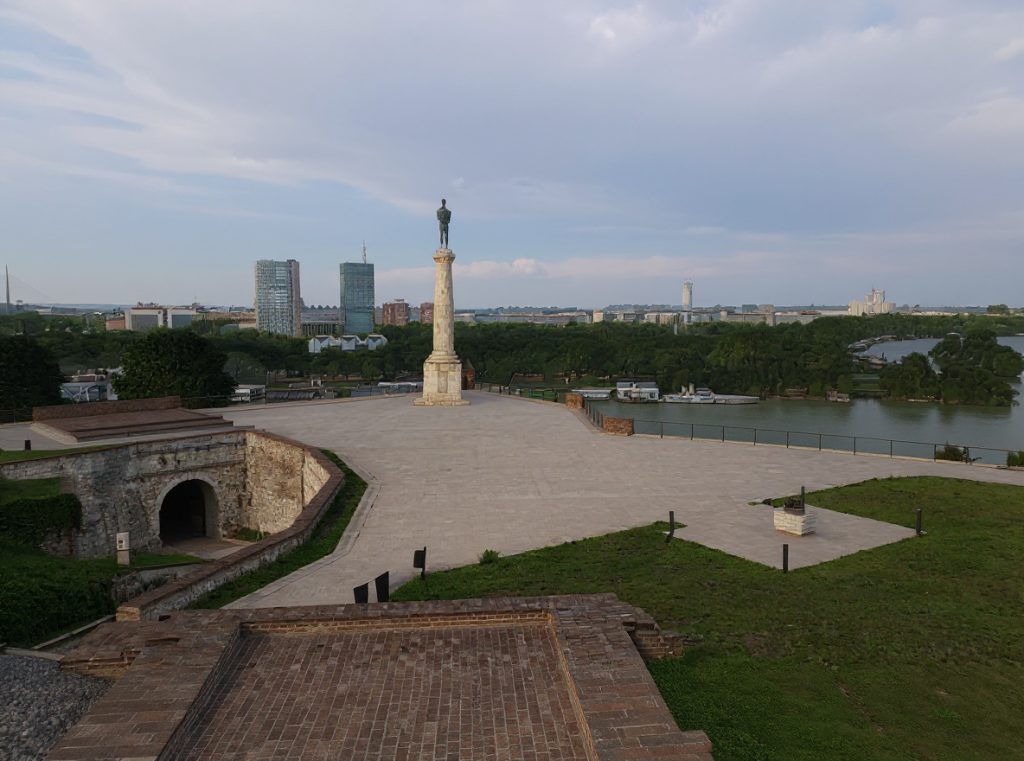
Kalemegdan Park surrounds the fortifications and offers tree-lined walks, fountains and viewpoints. The Victor monument—a bronze statue erected in 1928—stands on the ramparts. It commemorates Serbia’s victories in the Balkan Wars and World War I. Cultural events, concerts and festivals animate the former gunpowder magazine known as Barutana. UNESCO World Heritage status candidacy reflects ongoing international interest in the site’s architectural and historical layers.
Stone towers catch the afternoon sun, and their shadows fall across courtyards where Romans once drilled and Ottoman janissaries stood guard. The rivers below mirror the changing sky, while the fortress itself endures. It stands as a living chronicle of empires risen and fallen.
Castles near Belgrade Fortress
Frequently asked questions
Is Belgrade Fortress free to visit?
Yes, entry to the fortress grounds and Kalemegdan Park is free and open 24 hours. Individual attractions inside, such as the Roman Well, Nebojsa Tower and Military Museum, charge separate admission fees ranging from RSD 80 to RSD 400.
How long does it take to visit Belgrade Fortress?
Plan 1.5 to 2 hours for a general visit covering the ramparts, viewpoints and main areas. Allow 3–4 hours if you want to visit interior attractions like the underground Roman Well or the Military Museum.
What are the opening hours of Belgrade Fortress?
The fortress grounds and Kalemegdan Park are open 24 hours daily. Interior attractions (Roman Well, Nebojsa Tower, etc.) operate Tuesday to Sunday, 11:00–19:00 from April to September and 10:00–17:00 from October to March.
How do I get to Belgrade Fortress from the city centre?
Walk 10–15 minutes from Republic Square along the pedestrian street Knez Mihailova, which leads directly to the fortress entrance. Alternatively, tram lines 2, 5 and 10 stop near Kalemegdan Park.
What is the best view at Belgrade Fortress?
The best viewpoints are from the upper ramparts near the Victor Monument, where the Sava and Danube rivers meet. Late afternoon offers softer light and is popular for sunset views over the river confluence.
Featured listings