
Rising above the Cardener valley on a commanding hilltop, Castell de Cardona ranks among Catalonia’s most formidable medieval strongholds. Guifré el Pilós promoted its construction in 886 to protect the frontier against the advance of al-Andalus. The salt mines below were so valuable that people once called Cardona “the salt mountain of the Catalans.” Today visitors discover centuries of military and ecclesiastical architecture woven into stone and legend.
Plan your visit to Castell de Cardona
Tue–Sat 10:00–17:00
Sun 10:00–14:30Oct-Apr: Tue-Sat 10:00-17:30; May-Sep: Tue-Sat 10:00-19:00; Sun & holidays: 10:00-15:00 year-round
Location of Castell de Cardona
The fortress sits on a hill overlooking the river valley of the Cardener and the town of Cardona. Cardona lies around 56 miles (90 kilometres) from Barcelona. If you’re traveling by car, head towards Cardona by taking the C-55 road from nearby towns such as Manresa or Berga. The journey from Barcelona takes roughly an hour and a half. For public transport, first take a train from your nearest station to Manresa. From Manresa, you can catch a local bus (Line 3) directly to Cardona. The bus ride takes approximately 30-40 minutes. The walk to Castell de Cardona from the town center takes about 15-20 minutes. Start from the main square, Plaza del Camp, then follow Carrer de la Creu upwards. The path will lead you through charming streets. The castle’s elevated position rewards visitors with sweeping vistas across the Bages region.
History of Castell de Cardona
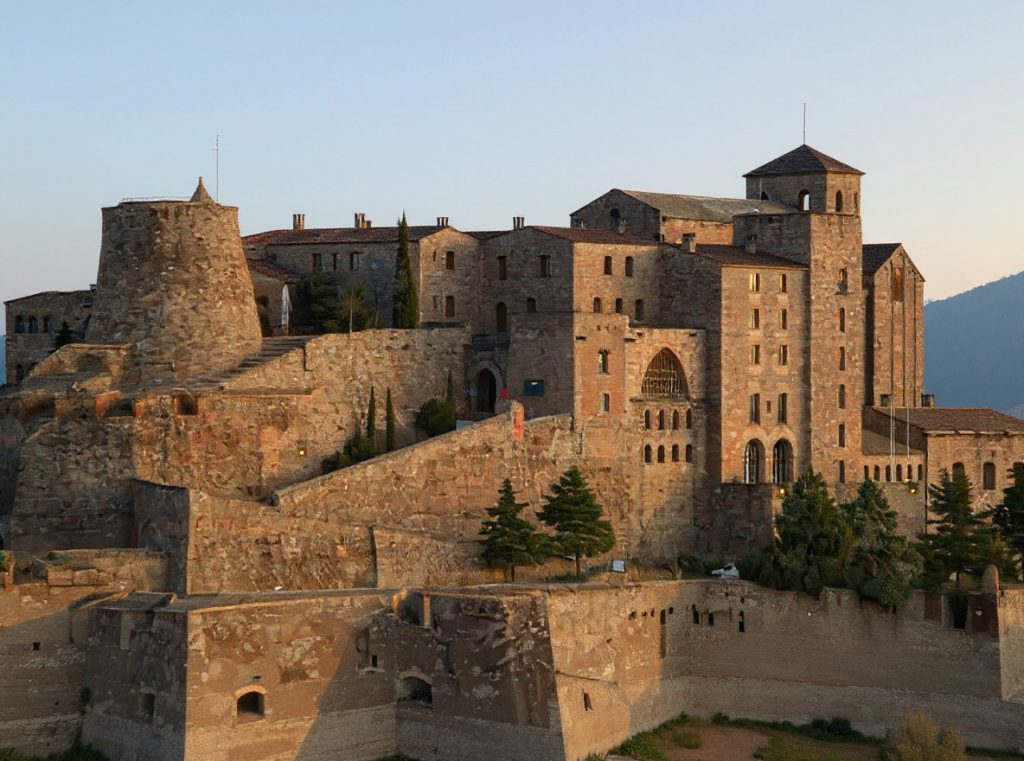
Chronicles already mentioned the castle in Carolingian times in the 8th century, after a Saracen raid destroyed it. Louis the Pious, in 798, ordered its occupation and restoration for military purposes. Wilfred the Hairy constructed the fortress in 886. Over the centuries it evolved from a modest defensive tower into a sprawling complex. The complex included walls, towers, a Romanesque collegiate church (Sant Vicenç, consecrated in 1040), and a palatial residence. Sant Vicenç de Cardona represents one of the finest examples of Catalan Romanesque architecture. During the 14th century, the dukes of Cardona came from the most important family of the Crown of Aragon. They ranked second only to the royal house. People called them “kings without crowns” because they had extensive territories in Catalonia, Aragon, and Valencia. They also maintained dynastic ties with Castile, Portugal, Sicily, and Naples.
During the War of the Spanish Succession (1701–1714), Cardona served as one of the last strongholds to resist the Bourbon forces. It surrendered in September 1714, weeks after the fall of Barcelona. Legend has it that enemies never took the castle of Cardona throughout its eleven centuries of history. After centuries of military service, the castle eventually transformed into a symbol of regional heritage. The castle became even more well known when it became a movie set for the Orson Welles classic ‘Chimes at Midnight’ in 1964.
Current status
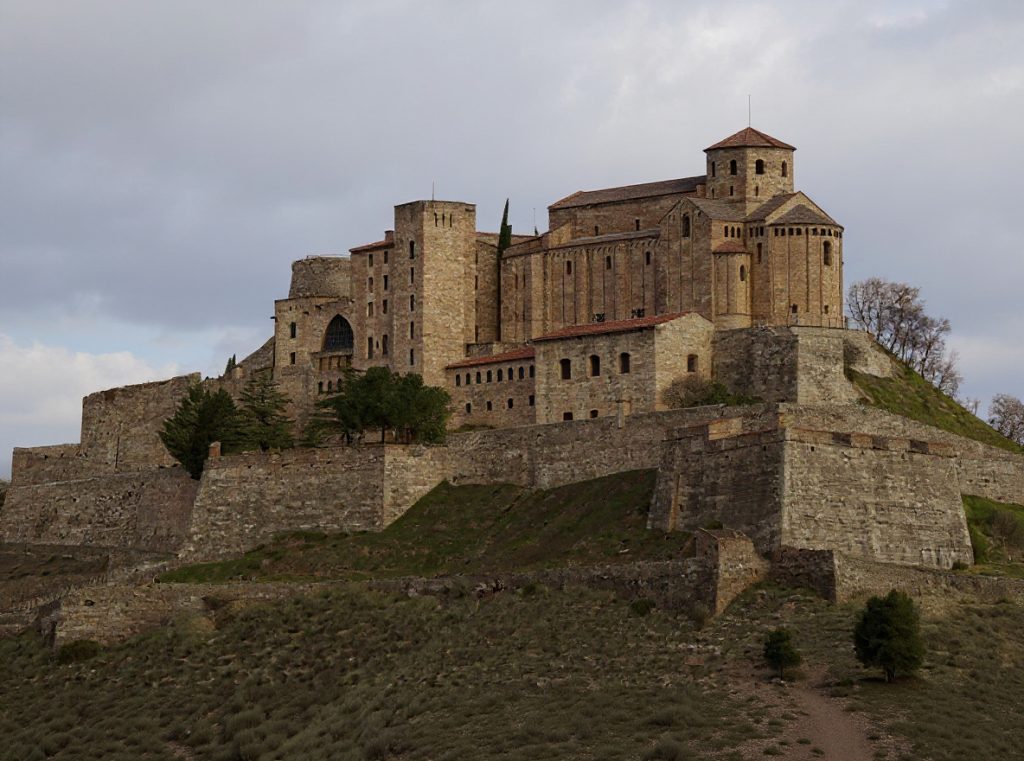
The fortress now operates as a hotel belonging to the state-owned Paradores chain. The Parador de Cardona occupies a promontory in a 9th c. castle. It ranks as one of the most impressive medieval complexes in Catalonia. Visitors can choose three types of visits to discover the Castle of Cardona: general, thematic and dramatised. For schools, the Fundacio Cardona Històrica offers guided tours and other educational activities. Children aged under 16 enjoy free admission. The monument welcomes history enthusiasts, families, and scholars who seek authentic medieval atmospheres.
Inside, moats, towers and Gothic walls combine with a décor designed for comfort. The furnishings draw inspiration from Catalan medieval art. The restaurant occupies the old refectory and ranks as one of the most impressive in the Paradores portfolio. Visitors often express amazement at the gallery of pointed arches. The site also features a charming chapel, which adds to the castle’s historical significance. The surrounding town of Cardona retains its medieval character, with winding streets and noble houses that recall its feudal past. Beyond the walls, the famous salt mountain draws geologists and curious travelers to explore tunnels. Miners carved these tunnels through millennia of extraction. From the battlements, views stretch toward the Pyrenees and the interior plains. This timeless landscape once belonged to warrior-dukes and now belongs to those who climb the hill to meet its stones.
Castles near Castell de Cardona
Frequently asked questions
What can I see inside Castell de Cardona?
The castle has three areas: the fortress and grounds (partly free access), the 11th-century Romanesque church of Sant Vicenç (ticketed), and the Parador hotel with restaurant. Highlights include the Minyona Tower, Gothic courtyard, and views over the Cardener valley and salt mines.
Do I need a guided tour to visit Castell de Cardona?
A guided tour is recommended as it provides access to restricted areas including the collegiate church. You can walk the outer grounds for free, but the full experience requires a ticket for the 1.5-hour guided tour.
Is Castell de Cardona suitable for visitors with mobility issues?
The castle has facilities for people with disabilities. However, the Minyona Tower is not wheelchair accessible due to its structure.
Can I combine a visit to Castell de Cardona with the Salt Mountain?
Yes, the Cardona Tiquet combined ticket offers guided tours of the castle, Salt Mountain, and historic centre for €18. The Salt Mountain is 2 km from the castle and was mined from 1929 to 1990.
When is Castell de Cardona closed?
The castle is closed on non-holiday Mondays and on 25-26 December and 1 and 6 January. The ticket office closes 30 minutes before the stated closing time.
Featured listings