
Dover Castle, often referred to as the “Key to England,” stands as one of the most iconic and historically significant castles in Europe. Furthermore, overlooking the English Channel, this imposing fortress has served as a vital defensive stronghold for centuries. It has witnessed pivotal moments in British history. From Roman times through the Second World War. As one of the largest castles in England, Dover Castle remains a remarkable example of medieval military architecture. It attracts visitors from around the globe who are eager to explore its rich past. And experience its stunning views.
Plan your visit to Dover Castle
Can’t wait to visit the castle? Book your Dover Castle tour online.
Location of Dover Castle
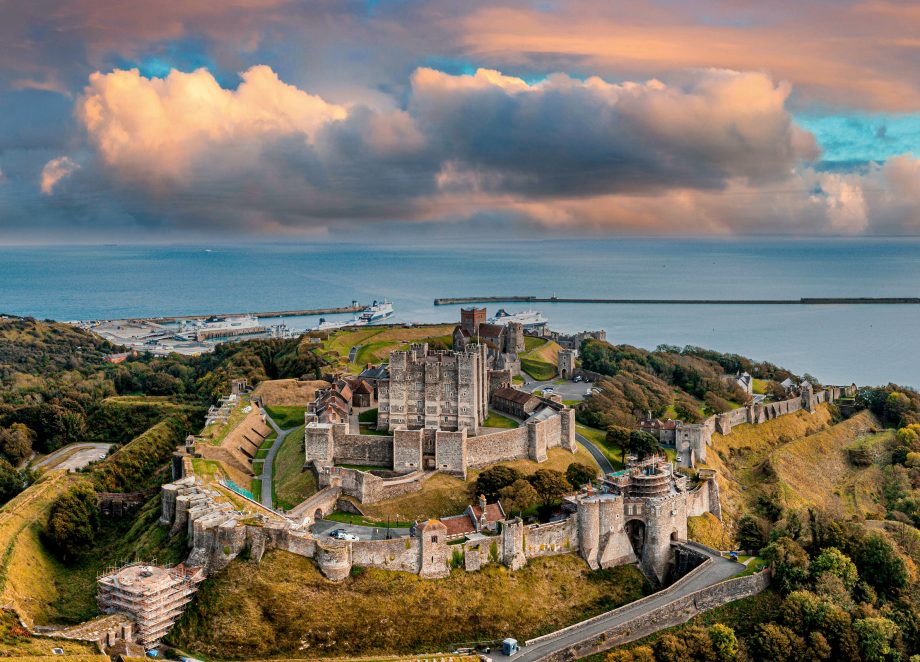
Situated in the town of Dover, in the county of Kent, Dover Castle is perched strategically atop the White Cliffs of Dover. Moreover, the castle’s elevated position, about 120 meters above sea level, provides commanding views of the narrowest part of the English Channel. Here, England and France are separated by just 21 miles (34 kilometers). This geographical advantage made Dover Castle a crucial point of defense against invasions. Allowing it to monitor and control maritime traffic in one of the busiest seaways in the world.
Dover’s proximity to continental Europe has always rendered it a significant gateway between Britain and the rest of the continent. Additionally, the castle’s location is easily accessible by road and rail. Being just a short distance from Dover’s ferry terminals and the Channel Tunnel, it emphasizes its historical role as a central hub in England’s defenses.
History of Dover Castle
The origins of Dover Castle stretch back to Roman times. The Romans, recognizing the strategic importance of Dover’s cliffs, established a lighthouse near the site of the present-day castle. However, the most significant developments began in the 11th century following the Norman Conquest of England. It was William the Conqueror who initiated the construction of the early fortifications on the site. This would later evolve into the grand structure that stands today.
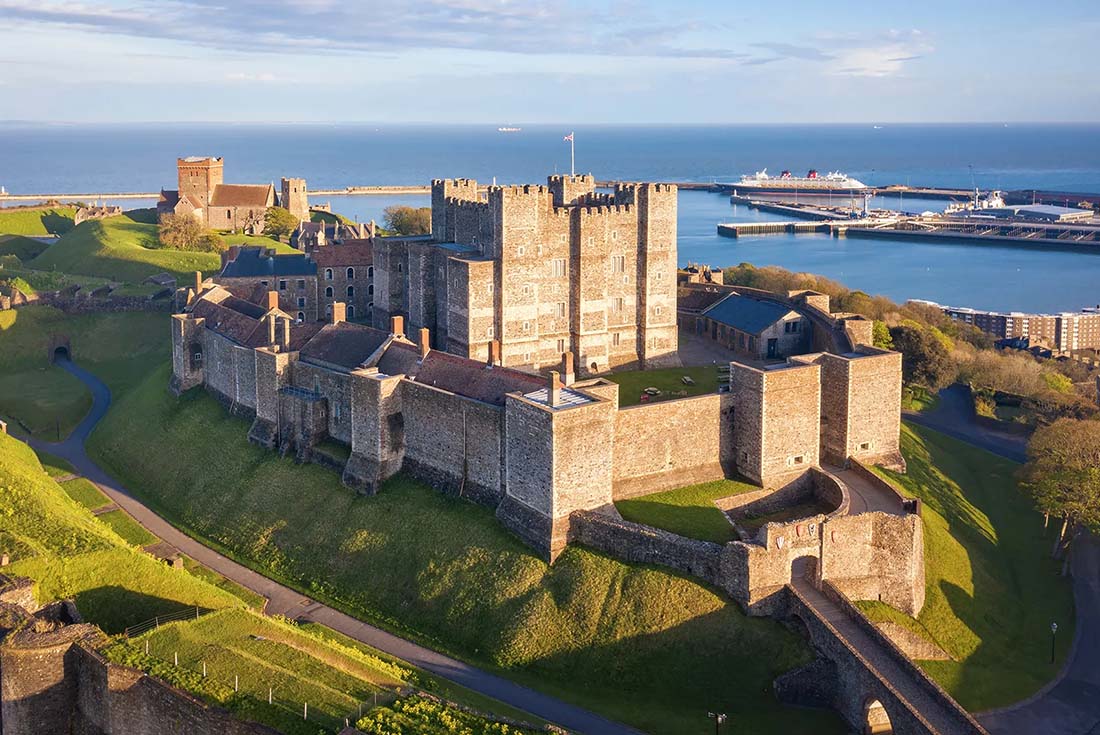
In the 12th century, under the reign of King Henry II, Dover Castle underwent significant expansion. It became the formidable fortress we know. The Great Tower, a massive keep built between 1180 and 1185, was the centerpiece of Henry’s design. It symbolized the crown’s authority. This period marked the beginning of Dover Castle’s role as a royal residence. And a symbol of Norman power.
Throughout the medieval period, Dover Castle played a critical role in several military conflicts. This includes the Siege of 1216 during the First Barons’ War, when French forces attempted to invade. The castle’s defenses held firm, thanks to its robust design and the leadership of its commander, Hubert de Burgh. In subsequent centuries, builders further strengthened its fortifications to meet the evolving needs of warfare, adding new curtain walls, tunnels, and bastions over time.
The castle’s importance continued into the early modern period. Particularly during the Napoleonic Wars, when underground tunnels were constructed to house troops and supplies in preparation for a potential French invasion. Dover Castle’s military relevance reached its peak during the Second World War. It became the command center for Operation Dynamo, the famous evacuation of British and Allied troops from Dunkirk in 1940.
Current status
Today, Dover Castle is managed by English Heritage. It remains one of the most visited historical sites in the United Kingdom. Its restoration and preservation efforts have allowed many parts of the castle to be open to the public. This offers visitors a comprehensive glimpse into its past. The Great Tower, still the focal point of the castle, has been restored to reflect its medieval grandeur. It is complete with re-creations of the royal chambers and furnishings from Henry II’s era. Guided tours and interactive exhibitions provide an immersive experience. This enables visitors to step back in time.
You can explore the extensive network of wartime tunnels beneath the castle, which played a critical role in Britain’s defense during the Second World War. These tunnels feature rooms that restorers have carefully brought back to their original condition. They depict their use during the evacuation of Dunkirk, complete with period furnishings and equipment. This gives visitors a sense of the wartime operations that took place in secret.
Dover Castle’s surrounding landscape offers picturesque views of the White Cliffs and the English Channel. This makes it a popular destination for both history enthusiasts and nature lovers. The castle grounds host various seasonal events. These include reenactments of historical battles, medieval festivals, and concerts. Ensuring there is always something for visitors of all ages to enjoy.
Castles near Dover Castle
Frequently asked questions
What can you see inside Dover Castle?
You can explore the medieval Great Tower with recreated royal chambers and hologram figures of King Henry II's court, descend into the Secret Wartime Tunnels used during Operation Dynamo in WWII, and visit the Roman lighthouse (one of Britain's oldest). The site includes over 80 acres of grounds, medieval fortifications, and multiple museums and exhibitions.
How long does it take to visit Dover Castle?
English Heritage recommends 3 to 4 hours minimum, though you can easily spend longer exploring the whole site. Last entry is one hour before closing, and tickets allow you to stay as long as you like within opening hours.
Are the tunnels at Dover Castle open?
Yes, the Secret Wartime Tunnels are open and included in general admission, with guided tour elements. However, the Operation Dynamo section is currently closed for essential maintenance, though the Underground Hospital remains accessible (not wheelchair accessible).
Is Dover Castle the largest castle in England?
Dover Castle is widely described as the largest castle in England by area, covering over 80 acres on the White Cliffs. It has been known as the 'Key to England' due to its strategic defensive position, though Windsor Castle also claims the title.
Can you visit Dover Castle and the White Cliffs in one day?
Yes, Dover Castle sits atop the White Cliffs with panoramic views over the English Channel included in your visit. The castle grounds themselves offer cliff-top views, though reaching the National Trust White Cliffs visitor centre requires additional transport or a significant walk from the castle.
Featured listings