
Rising from two islands in a lake formed by the River Len, Leeds Castle commands one of England’s most dramatic settings. Stone walls and towers emerge from the water seven miles southeast of Maidstone in the Kent countryside. Over 900 years of history unfold within these fortifications, from Norman stronghold to royal palace to elegant twentieth-century retreat. Today the castle and its 500 acres of parkland welcome visitors who explore galleries, gardens, and chambers shaped by six medieval queens and centuries of English history.
Plan your visit to Leeds Castle
Location of Leeds Castle
Leeds Castle sits in the village of Broomfield near Maidstone in Kent. The M20 motorway runs close by, so Junction 8 offers direct access from London, roughly an hour’s drive away. Southeastern trains connect London Victoria to Bearsted Station, which lies five minutes by taxi from the castle gates. The estate occupies two islands created by the River Len. This river flows east through the Kent Downs before joining the River Medway. Woodland and open parkland surround the moat and lake. The village of Leeds stands two and a half kilometres to the west. Canterbury lies eighteen miles to the east, while Dover and the English Channel coast extend further southeast. This strategic position in Kent’s countryside once made the castle a vital defence point against potential invasions from the southern coast.
History of Leeds Castle
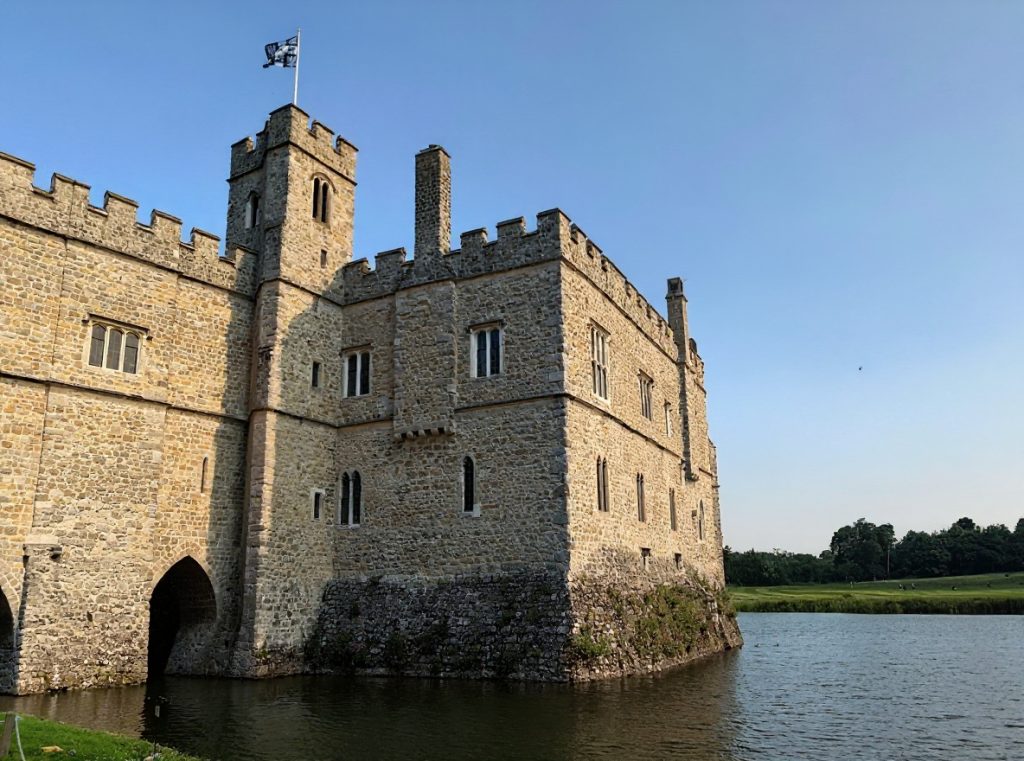
A Saxon chief called Led or Leed built a wooden fortification on these islands around 857. Robert de Crevecoeur replaced that structure with a Norman stone stronghold in 1119. His family held the castle until financial troubles forced them to surrender it in 1278. King Edward I acquired the property that year for his queen, Eleanor of Castile. Edward invested heavily in the defences when he constructed robust outer curtain walls with cylindrical towers and improved the gatehouse. Eleanor commissioned residential quarters known as the Gloriette on the smaller island. The work transformed a military post into a royal residence.
The castle became dower property for six medieval queens over three centuries. After Eleanor died, Edward gave Leeds to his second wife, Margaret of France. Later queens included Anne of Bohemia, Joanna of Navarre, and Catherine of Valois. In 1321, a dramatic siege unfolded when Lady Badlesmere refused Queen Isabella entry while her husband was away. Edward II stormed the castle, took Lady Badlesmere hostage, and later executed several defenders. Henry VIII undertook major renovations in 1519 for his first wife, Catherine of Aragon. He blended the medieval fortress with Tudor elegance. The king added new royal apartments, larger windows, and Renaissance-inspired features. The castle passed from royal hands in 1552 when Edward VI granted it to Sir Anthony St Leger.
During the English Civil War, Parliamentarian forces used Leeds Castle as a garrison and arsenal. Sir Cheney Culpeper, the owner, received substantial funds for assisting the escape of the Prince of Wales. As a result, his family received over five million acres of land in Virginia. In 1823, Fiennes Wykeham Martin inherited the property and began restoring it as a private country estate in the Gothic Revival style.
Current status
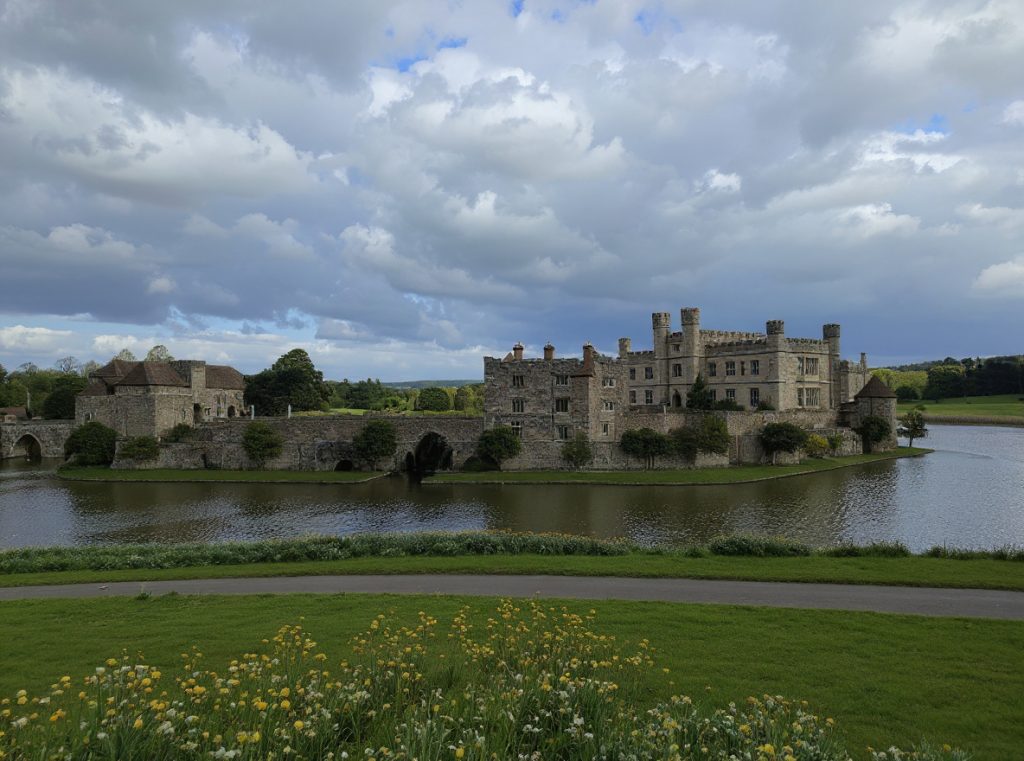
The Leeds Castle Foundation has managed the property since Lady Baillie established it shortly before her death in 1974. The foundation opened the castle to the public in 1976. Around half a million visitors arrive each year. They tour the 1930s interiors that Rateau and Boudin designed. Visitors also walk through medieval chambers and the Great Hall, then explore the chapel and residential quarters. The Gloriette houses displays about the castle’s royal queens. Three adventure playgrounds, a maze planted with 2,400 yew trees, and a bird of prey centre occupy the grounds. Go Ape operates high ropes courses through the woodland. Lakeside lodges, holiday cottages, and bed-and-breakfast rooms allow overnight stays.
The foundation preserves the estate as a charitable trust. It stages events throughout the year, including jousting tournaments, open-air concerts, and the annual Fireworks Spectacular. Corporate clients book the castle for conferences and weddings on an exclusive-use basis. Educational programmes serve school groups from early learners through adult education. Conservation teams maintain the historic interiors, stonework, and 500 acres of parkland. Visitors who purchase admission can return free for a full year. The castle opens daily from 10am to 5pm, with the interior accessible from 10.30am to 3.30pm, though hours vary seasonally and the estate closes on certain event days.
Water still encircles the stone walls and towers just as it did when Norman masons first raised them nine centuries ago. Swans glide across the moat while the Kent countryside rolls away beyond the lake. The castle’s long transformation from fortress to royal palace to country retreat has left layers of history visible in every courtyard and chamber. Each era added its mark to this extraordinary survivor of England’s medieval past.
Castles near Leeds Castle
Frequently asked questions
What is included in a Leeds Castle ticket?
Entry includes the castle interior, 500 acres of parkland and gardens, the yew maze and underground grotto, Bird of Prey Centre with falconry displays, three adventure playgrounds, Dog Collar Museum, and Queens with Means cinematic experience. Ultimate Explorer tickets also include six trips on the Castle Train or Black Swan Ferry and one round of adventure golf.
How do I get to Leeds Castle from London by train?
Take a Southeastern train from London Victoria to Bearsted station, which takes approximately 1 hour to 1 hour 10 minutes. From Bearsted, Leeds Castle is a 5-minute taxi ride, or you can use the seasonal shuttle bus service that runs from April to September.
Is parking free at Leeds Castle?
Yes, on-site parking is free for all visitors at Leeds Castle. The main car park opens at 9:45am and is located approximately 10–15 minutes' walk from the castle through the gardens.
What is the Dog Collar Museum at Leeds Castle?
The Dog Collar Museum at Leeds Castle houses a unique collection of over 130 rare and valuable dog collars spanning five centuries, from 16th-century German iron collars to ornate 19th-century silver pieces. It is located in the Stable Courtyard and is included in the admission price.
When are the falconry displays at Leeds Castle?
Falconry displays at Leeds Castle are included with admission and take place daily during the summer months (weather permitting). During winter, displays typically run only at weekends and school holidays, subject to weather conditions.
Featured listings