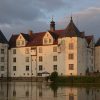
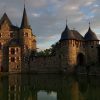
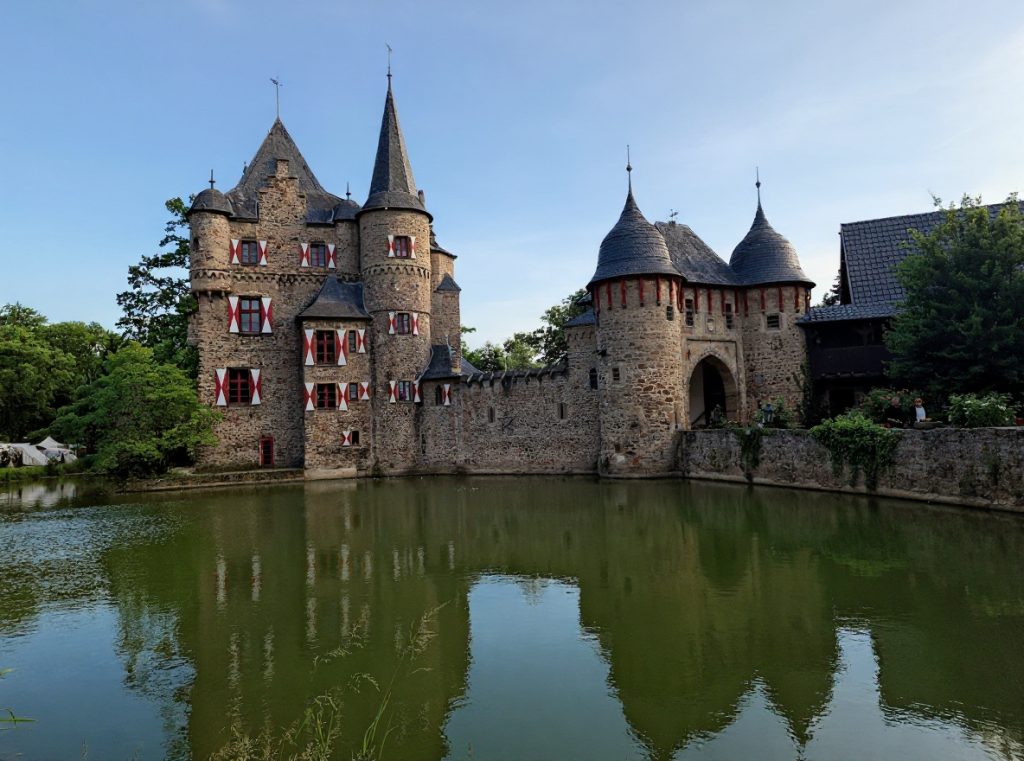
Water-filled moats surround Burg Satzvey, Mechernich on the northeastern edge of the Eifel region. The castle ranks among the Rhineland’s finest examples of a medieval water fortress. The Veybach stream feeds the protective waters that encircle the stronghold, which sits on an island in a large pond. Builders created this pond centuries ago for defence. Documents first mention the castle in 1396. The fortress preserves its original medieval character through its twin-towered gatehouse, thick stone walls and fortified courtyard. After more than 300 years, the Counts Beissel von Gymnich still own the castle. The family uses it as both a private residence and a vibrant cultural venue.
Plan your visit to Burg Satzvey, Mechernich
Sat–Sun 09:00–17:00Castle grounds open Sat–Sun 09:00–17:00 mid-March to October; tours noon–17:00 on the hour.
Location of Burg Satzvey, Mechernich
The castle sits in the village of Satzvey within the municipality of Mechernich, in the Euskirchen district of North Rhine-Westphalia. The fortress occupies a strategic position at the northeastern edge of the Eifel highlands, approximately 55 kilometres southwest of Cologne. Visitors travelling by car can reach the site via the A1 Autobahn. Drivers should take exit 111 and follow signs to Mechernich-Satzvey. Regional trains serve Satzvey station, which lies just 600 metres from the castle entrance. A short walk through the village then brings you to the gates. The surrounding Veybach valley offers open meadow landscapes, while the towns of Euskirchen and Bad Münstereifel lie within easy reach.
History of Burg Satzvey, Mechernich
The von Vey family established a fortified manor on this site in the 12th century, when Otto von Vey served as bailiff for Benedictine church possessions. The castle took its present form between 1396 and 1406. During those years, Heinrich von Krauthausen, son-in-law of the von Vey family, constructed the main castle house and defensive structures on two separate islands. The fortress changed hands through inheritance and sale over the following centuries. It passed through the Spies von Büllesheim family before coming to the von und zu Gymnich lineage. In 1578, Duke Wilhelm V of Jülich briefly occupied the stronghold. He compelled its lord to pledge loyalty to both the Duke and the Archbishop of Cologne.
The Wolff Metternich family acquired Satzvey in the 18th century, and Max Felix Reichsgraf Wolff Metternich took residence as lord in 1878. His son undertook extensive stylistic renovations during the late 19th century. He expanded the castle to create the appearance visitors see today. The fortress suffered severe damage during the Second World War but underwent careful reconstruction afterwards. In 1944, the Beissel von Gymnich family gained possession through marriage. Count Franz Josef Beissel von Gymnich then assumed ownership in 1977. The twin-towered gatehouse, north wall, north tower and castle house represent the oldest surviving elements. These structures have stood for more than 600 years.
Current status
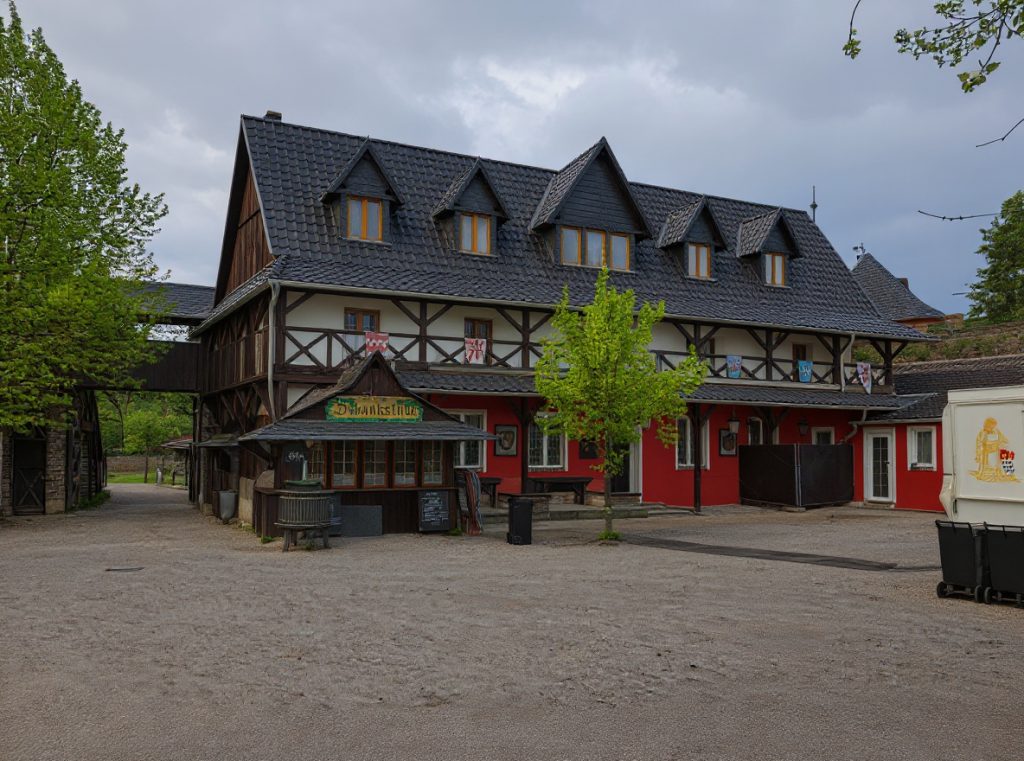
Patricia Gräfin Beissel GmbH manages operations at the castle, which Patricia Countess Beissel has directed since 2012. The family maintains their private residence within the fortress while opening the grounds and select interior spaces to visitors through guided tours. The castle follows a philosophy of “preservation through entertainment.” As a result, it hosts internationally renowned medieval festivals twice yearly in spring and autumn. These knight festivals feature jousting tournaments, the Knights of Burg Satzvey show troupe, medieval markets with over 70 traders, and historical demonstrations across the 4.5-hectare grounds. The castle also presents Fantasy Days, seasonal markets, historical bazaars, concerts, theatre performances and cultural events throughout the year.
Guided tours run at hourly intervals on weekends and public holidays. The castle charges both entrance fees and tour fees during festival days, though. The fortress offers guest accommodation in castle rooms, while the Burgbäckerei bakery serves traditional fare to visitors. The Hall of Crests displays the coats of arms of all previous noble owners. This spectacular banquet hall hosts concerts and private celebrations. North Rhine-Westphalia protects the castle as an architectural monument, so conservation efforts preserve its authentic medieval character. Across the moat, muskrats and otters inhabit the pond waters. The surrounding meadows and fortification walls create an atmospheric setting that transports visitors back through seven centuries of Rhineland history.
Castles near Burg Satzvey, Mechernich
Frequently asked questions
Is Burg Satzvey open every day?
No, the castle grounds are open weekends only (Saturday and Sunday) from mid-March to October. During special events such as medieval festivals or the Christmas market, additional opening days and hours apply with separate admission fees.
Do I need to book tickets in advance for Burg Satzvey?
For regular weekend visits, no booking is required—entry to the grounds is free. However, for special events (medieval festivals, Christmas markets, Halloween), advance booking is strongly recommended as tickets sell out.
How do I reach Burg Satzvey by public transport?
Take the RB24 regional train from Cologne to Satzvey station; the castle is a 600-metre walk (8–10 minutes). The S23 suburban train via Euskirchen also serves Satzvey station.
Are there guided tours at Burg Satzvey?
Yes, guided tours are offered on weekends and holidays from noon to 17:00 on the hour. Tours cost €5 for adults and €3 for children aged 4–12; children under 4 are free when accompanied by an adult.
What medieval events does Burg Satzvey host?
Burg Satzvey hosts several major events throughout the year including Whitsun and September medieval festivals with jousting tournaments, an Easter market, a Halloween celebration, and a Christmas market on all four Advent weekends. Each event requires separate admission tickets.
Popular right now
Featured listings