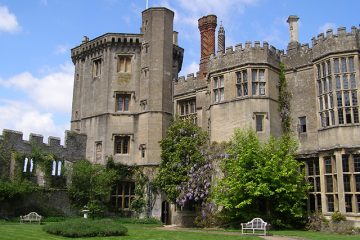
Rising from its double moat in the Kent countryside, Hever Castle ranks as one of England’s most romantic medieval fortresses. Builders raised the original defensive castle, with its gatehouse and walled bailey, in 1383. The castle became the childhood home of Anne Boleyn, who later served as King Henry VIII’s second wife. She reigned as Queen of England for just 1,000 days. Today visitors discover over six centuries of history within walls that witnessed one of the most dramatic love stories in English history.
Plan your visit to Hever Castle
Wed–Sun 10:30–16:30Open daily 28 Mar–24 Oct 10:30–18:00; Wed–Sun only 4–19 Nov; closed Mon–Tue in autumn; grounds 10:30, castle 12:00.
Location of Hever Castle
Hever Castle sits in the village of Hever, Kent, near Edenbridge. The village lies 30 miles southeast of London, England. The castle occupies a position three miles south-east of Edenbridge off the B2026 between Sevenoaks and East Grinstead. Visitors can exit the M25 at junctions 5 or 6 and then follow brown tourist signs. Travellers can reach the castle by train via Edenbridge Town Station. After arrival, a taxi journey of approximately three miles leads to the castle. Hever Station offers another option, as it sits around a one-mile rural walk from the castle. The castle occupies 125 acres of grounds in the Kentish countryside.
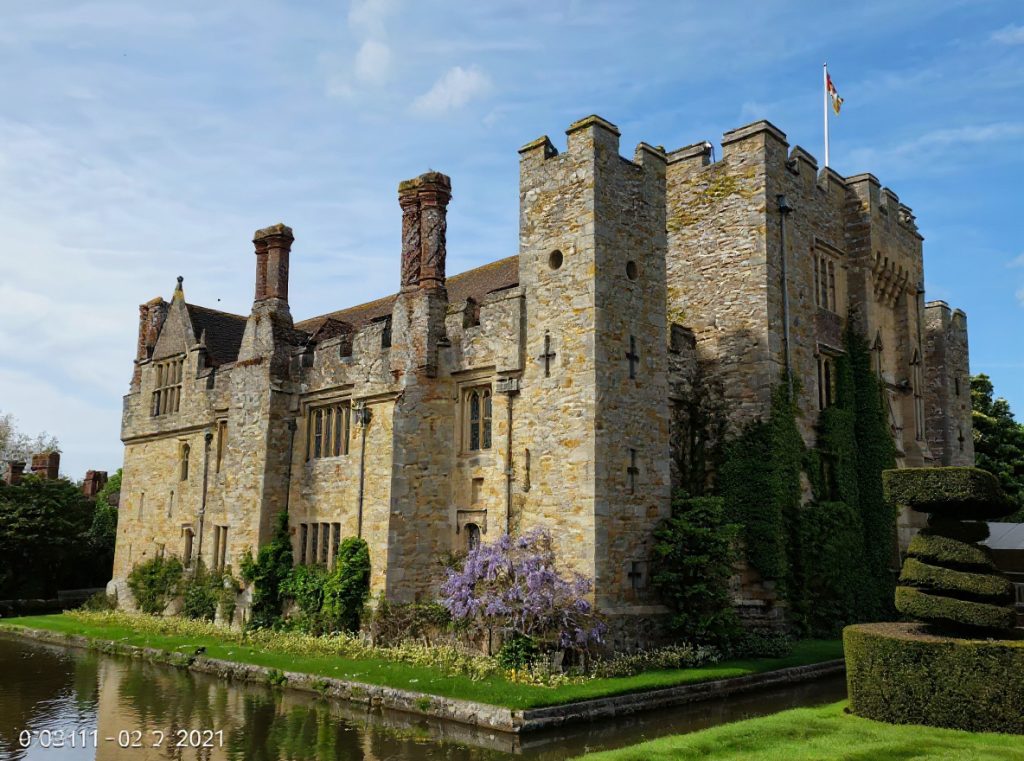
History of Hever Castle
The first castle on the site was a 12th-century motte and bailey with a timber hall. In 1383 John de Cobham was granted a licence to crenellate, and the moat, gatehouse and walls date from that 14th-century fortification. In 1462 the castle passed to the Bullen (Boleyn) family. Geoffrey de Bullen added wings on each side of the existing gatehouse. Geoffrey’s grandson, Thomas Bullen, inherited the castle in 1505. Anne Boleyn spent part of her childhood at Hever before departing abroad around 1513 to the court of Margaret of Austria. She returned to Hever after joining Catherine of Aragon’s household in 1522. Seven of Henry VIII’s love letters reached Anne at Hever in 1528.
Henry’s love for Anne drove him to dramatic action. Her insistence that she become his wife rather than his mistress led to major consequences. The King split from the Church in Rome and created the Church of England. This decision forever altered the course of English and European history. After Anne’s execution in 1536, the castle remained in crown possession. Henry VIII bestowed Hever Castle on his fourth wife, Anne of Cleves, in 1540. This gift formed part of the settlement details of the annulment of their marriage. Following Anne of Cleves’ death in 1557, Hever Castle reverted to the Crown. Sir Edward Waldegrave then received ownership of both the castle and the estate. It would remain in the Waldegrave family until 1715.
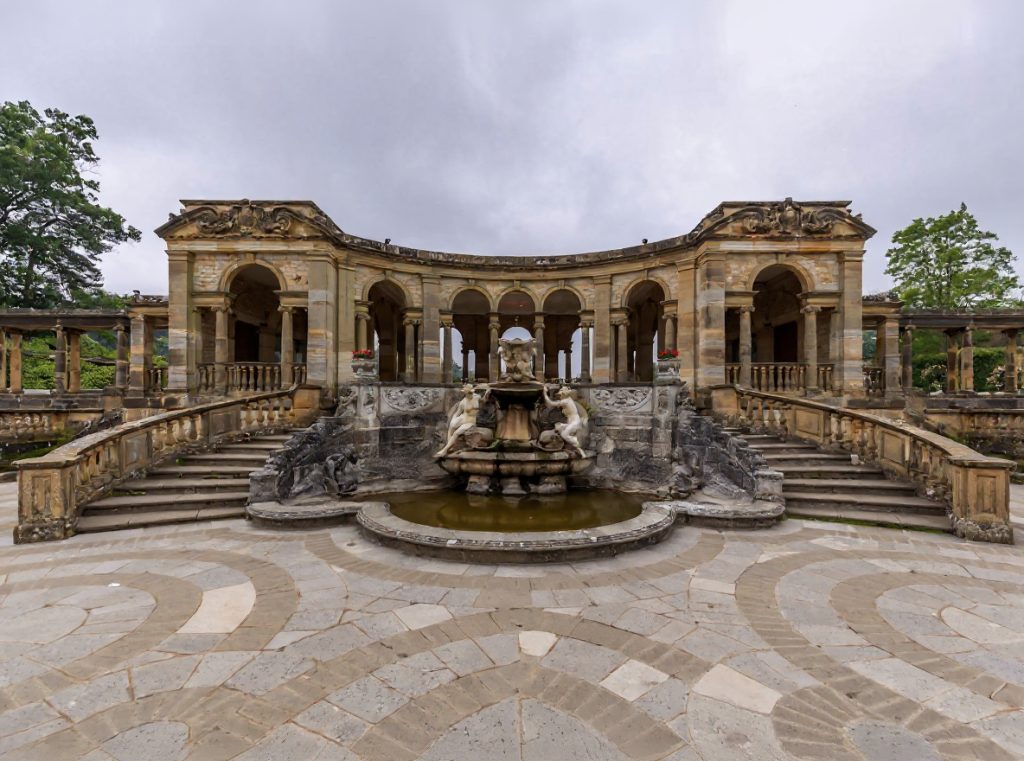
The Waldegrave family owned the castle from 1557 to 1718. They then sold it to Sir William Humphreys. From 1749 to 1895 Hever belonged to the Waldo and Meade-Waldo families. It grew ever more rundown during this ownership. In 1903 William Waldorf Astor set about restoring Hever Castle to its former glory. He added the Astor Wing to accommodate his family and guests. He also created a lake and the spectacular Italian Garden to house his impressive collection of ancient Greek and Roman statuary.
Current status
The Guthries, a Yorkshire family based in Scarborough, now own the Hever Castle Estate. Broadland Properties, founded in 1950, purchased Hever Castle and its collection from the Astor family in 1983. The site opened to the public in 1983. It now houses a large variety of galleries and exhibitions, as well as mazes and an adventure playground for children. The owners run the estate as a conference centre, yet the castle and grounds remain open to the public. The castle has 28 rooms in the adjacent Tudor village. Guests can rent these rooms in a B&B format. The castle also operates two restaurants, both located in the gardens.
Hever Castle now functions as a tourist attraction. It draws visitors through its links to Anne Boleyn and Henry VIII, its mazes, gardens and lakes. The award-winning gardens bring colour through every season. Snowdrops appear in February, while daffodils bloom in March and autumn displays fill October. Visitors walk through the majestic Italian Garden with its classical statuary. They can explore the Tudor herb garden and challenge themselves in both the water maze and yew maze. The castle preserves Anne Boleyn’s prayer books and Henry VIII’s personal lock. He carried that lock on visits to noble houses. Within the medieval stone walls and across the tranquil moated grounds, centuries of English history come alive for modern visitors.
Castles near Hever Castle
Frequently asked questions
Was Anne Boleyn born at Hever Castle?
Her birthplace is unknown, but Anne Boleyn spent much of her childhood at Hever Castle from around 1505. The Boleyn family acquired the castle in 1462 when Geoffrey Boleyn purchased it, and it passed to Anne's father, Thomas Boleyn.
What is included in a Hever Castle ticket?
The Castle & Gardens ticket (£25.50 online) includes entry to the castle with audio guide, 125 acres of gardens, maze, miniature model houses, playgrounds and the military museum. A gardens-only ticket is available for £19.95.
Can I visit Hever Castle in winter?
Hever Castle is closed from late November to mid-February. It reopens on 11 February for the spring season. A special Christmas season runs from 20 November to 2 January with separate tickets.
Why does Hever Castle open at noon?
The castle building opens at 12:00 every day whilst the grounds open at 10:30. This allows visitors to explore the gardens first, then tour the castle at noon when the rooms are still quiet.
Is there parking at Hever Castle?
Yes, parking is free at Hever Castle with multiple car parks available. Staff direct visitors to whichever car park is open on the day, and accessible spaces are provided.
Featured listings