
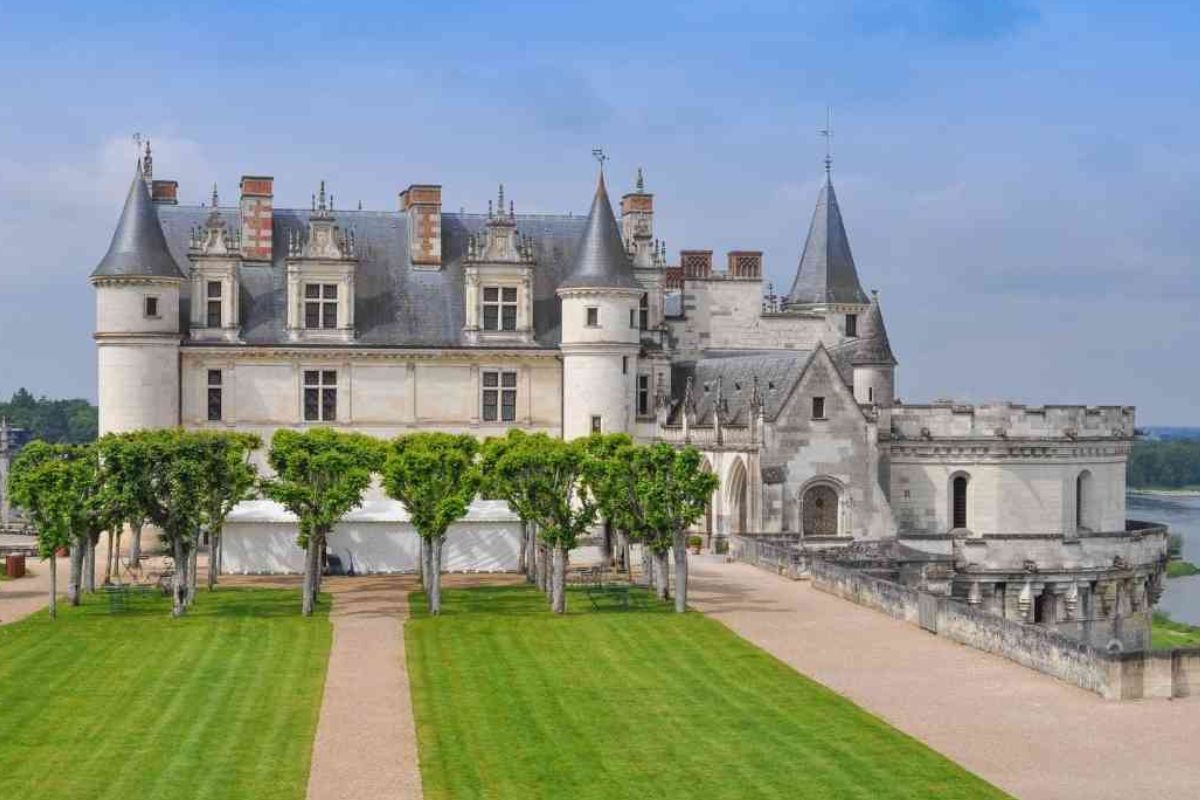
Perched above the Loire River, the Château d’Amboise is a striking symbol of French royal history. Its unique blend of medieval fortifications and Renaissance elegance tells a story of political power, cultural prestige, and architectural evolution. Built on a rocky outcrop, it once served as both a defensive stronghold and a luxurious royal residence.
Plan your visit to Château d’Amboise
The château gained prominence during the reigns of Charles VIII and François I. These monarchs transformed it into a Renaissance masterpiece by incorporating Italian influences. Leonardo da Vinci, invited by François I, spent his final years nearby and is buried in the castle’s chapel. Over centuries, the château hosted royalty, artists, and political prisoners alike. It remains one of the most historically significant sites in the Loire Valley.
Visitors today can trace centuries of French history within its walls. From Gothic vaults to Renaissance galleries, every stone has a story. It stands not just as a relic, but as a vibrant cultural landmark that continues to captivate.
Location of Château d’Amboise
The Château d’Amboise is situated in the town of Amboise, in the Indre-et-Loire department of central France. It dominates the riverbank from a high promontory, offering sweeping views of the Loire and the surrounding valley. This region is known for its vineyards, rolling hills, and a dense concentration of historic châteaux.
Amboise lies approximately 25 kilometers east of Tours and about 190 kilometers southwest of Paris. The town itself is charming, with narrow streets, cafés, and local markets that reflect its rich heritage. To the southwest of the château is the Clos Lucé, Leonardo da Vinci’s final residence, connected to the castle by a subterranean passage.
The Loire Valley is a UNESCO World Heritage Site, celebrated for its cultural landscape and architectural treasures. From the terraces of Château d’Amboise, visitors can appreciate the harmony between nature and monumental human achievement. The site’s elevated position was ideal for both strategic defence and grand royal displays.
History of Château d’Amboise
The history of Château d’Amboise stretches back to prehistoric times. Archaeological evidence indicates the site was used by Gauls and Romans as a defensive position. A medieval fortress emerged in the 11th century under the control of the powerful Counts of Anjou.
In 1434, the crown seized the castle from the Amboise family after a failed plot against King Charles VII. From that point, the château became a favored royal residence. Charles VIII began major renovations in 1492, transforming the medieval fortress into a Gothic palace with early Renaissance features. He employed Italian craftsmen who introduced new artistic and architectural styles to France.
Charles VIII tragically died at Amboise in 1498 after striking his head on a doorway. His successor, Louis XII, expanded the Renaissance elements and added formal gardens. François I, who spent much of his youth at the château, later invited Leonardo da Vinci to France. Da Vinci moved into Clos Lucé in 1516 and died there in 1519. He was buried in the chapel of Saint-Florentin, later moved to the Chapel of Saint-Hubert within the château grounds.
In the mid-16th century, the château witnessed the Amboise Conspiracy—a failed Huguenot attempt to kidnap the young King Francis II. This event led to brutal reprisals and marked the start of the French Wars of Religion. The Edict of Amboise, signed in 1563, attempted to ease tensions by granting limited religious freedoms.
The château’s prominence declined in the 17th century. Under Louis XIV, it served as a prison for disgraced nobles. During the French Revolution, large sections of the structure were demolished or sold. In the early 19th century, Napoleon handed it to a loyal officer who further dismantled the buildings to fund restoration efforts.
Current status
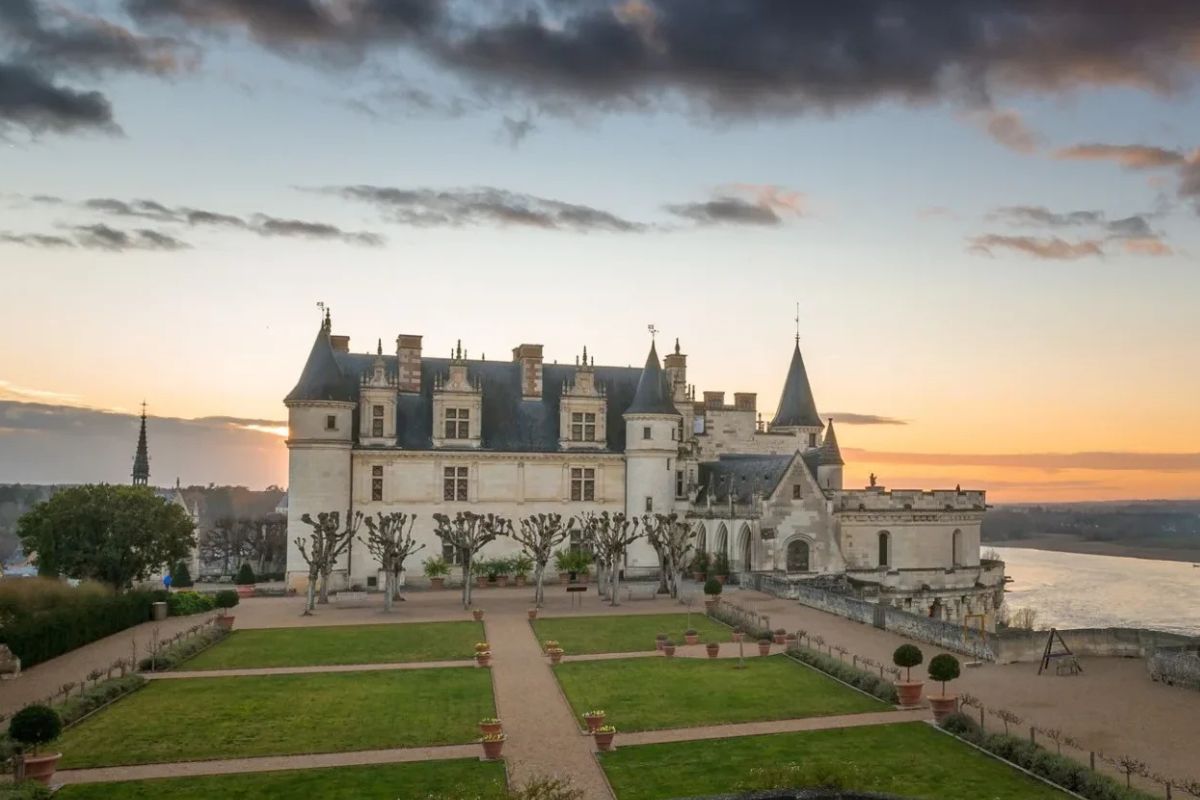
The Château d’Amboise is open to the public and fully restored. The French government officially recognizes the Château d’Amboise as a Monument Historique and preserves it with great care. The Fondation Saint-Louis manages the site, leading conservation work, research initiatives, and educational programs.
Visitors can explore the Royal Apartments, Gothic vaults, Renaissance galleries, and the Chapel of Saint-Hubert, where Leonardo da Vinci is buried. The panoramic views from the terraces highlight the strategic brilliance of the location and its natural beauty.
The château grounds include several unique garden spaces. The Terrace of Naples features formal Italian landscaping, while other sections reflect 19th-century design. More recently, memorial gardens have been added to honor the companions of Abd el-Kader who died in exile.
Throughout the year, Château d’Amboise hosts events such as music concerts, historical reenactments, and seasonal festivities. Staff conduct guided tours daily, offering multilingual options and special focus tours on the Renaissance or Leonardo da Vinci. Educational programs cater to schools and families, enhancing its role as a living museum. As you walk through its halls, you experience more than architecture—you encounter the spirit of French history. Whether you seek art, politics, or panoramic beauty, Château d’Amboise remains an essential stop in the Loire Valley. Its legacy endures, waiting for your next visit.
Castles near Château d’Amboise
Frequently asked questions
What is special about Château d'Amboise?
Château d'Amboise was a royal residence of French kings including Charles VIII and François I. Leonardo da Vinci is buried in the château's Saint-Hubert Chapel, having spent his final years nearby at the invitation of King Francis I.
How long does it take to visit Château d'Amboise?
A visit typically takes 1.5 to 2 hours. This allows time to explore the royal apartments, Saint-Hubert Chapel where Leonardo da Vinci rests, the terraces with panoramic Loire views, and the gardens.
Are tickets to Château d'Amboise included in Loire Valley passes?
Not all Loire Valley combination passes include Château d'Amboise, so check your ticket inclusions before purchasing. Combined tickets are available for Château d'Amboise and Clos Lucé (Leonardo da Vinci's residence) at a preferential rate.
Is Château d'Amboise accessible for visitors with reduced mobility?
Visitors with disability documentation can access the château by car via a private entrance at the end of Rue Augustin Thierry and park on the terrace for single-level access. However, as a medieval fortress on a rocky promontory, not all areas meet modern accessibility standards and an accompanying adult is compulsory.
Can I buy food at Château d'Amboise?
A café operates daily in July and August serving light meals including salads, sandwiches, quiches and drinks on the terrace or takeaway. During the rest of the year, self-service machines offer hot and cold drinks and biscuits.
Featured listings