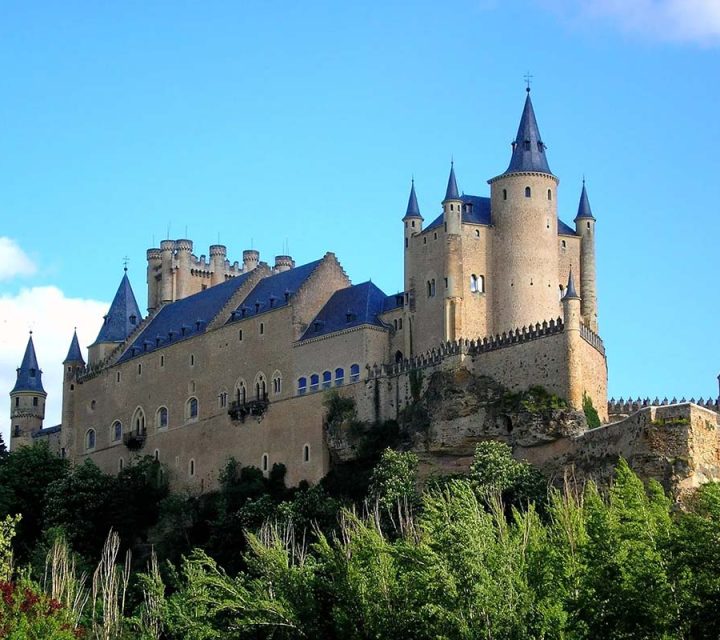
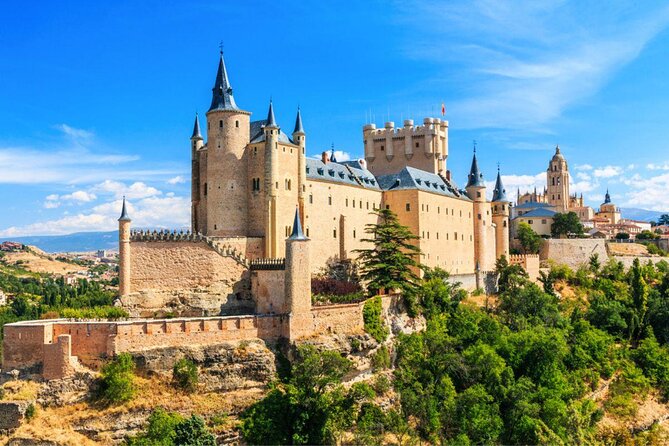
The Alcázar of Segovia, a prominent medieval castle, stands as one of Spain’s most iconic landmarks. Renowned for its fairy-tale appearance, it is a testament to the rich history and architectural grandeur of the region. This castle, characterized by its distinctive shape and strategic location, has served multiple purposes throughout its existence, from a fortress and royal palace to a state prison and military academy. Your exploration of this magnificent structure will reveal its historical significance and the enduring legacy it continues to uphold.
Plan your visit to Alcázar of Segovia
Can’t wait to visit the castle? Book your Alcázar of Segovia tour online.
Location of the Alcázar of Segovia
The Alcázar of Segovia is majestically perched atop a rocky crag at the confluence of the Eresma and Clamores rivers, in the city of Segovia, within the autonomous community of Castile and León, Spain. The castle’s elevated position not only provides commanding views over the surrounding landscape but also underscores its strategic military importance. Segovia is located in the heart of Spain, approximately 90 kilometers northwest of Madrid. This location makes the Alcázar easily accessible for visitors traveling from the capital or other parts of the country.
History of the Alcázar of Segovia
The history of the Alcázar of Segovia is diverse and long, beginning in Roman times when people believe a fortress existed on the site. The first documented reference to the castle dates to the 12th century during the reign of King Alfonso VI. Initially constructed as a fortress, the Alcázar’s role evolved significantly over the centuries.
In the 13th century, under the reign of King Alfonso VIII, the castle underwent substantial expansions, transforming it into a more robust defensive structure. The Alcázar’s prominence continued to rise during the reign of the Trastámara dynasty, particularly under King John II. His successor, Henry IV, further embellished the castle by adding luxurious royal apartments and grand halls.
The Alcázar played a crucial role in the history of Spain, notably during the reign of the Catholic Monarchs, Ferdinand II of Aragon and Isabella I of Castile. It was here that Isabella was proclaimed Queen of Castile in 1474. Throughout the 16th century, the castle served as the residence for numerous Spanish monarchs and hosted important diplomatic and political events.
The 18th century marked a shift in the castle’s purpose when it was converted into a state prison. Later, in 1764, King Charles III established the Royal Artillery School within its walls, reinforcing its significance as a military stronghold. Unfortunately, in 1862, a devastating fire caused extensive damage to the Alcázar. This led to a significant restoration effort that sought to preserve its historical integrity while incorporating necessary repairs and modifications.
Current status
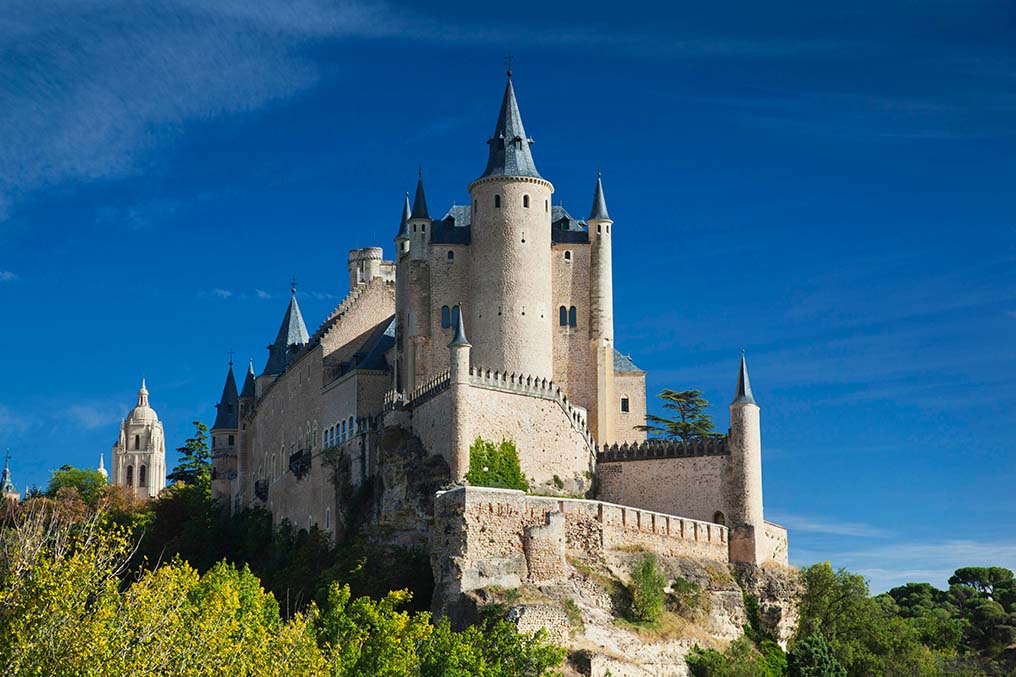
Today, the Alcázar of Segovia stands as a well-preserved and meticulously maintained monument, attracting numerous visitors from around the world. Its striking silhouette, with turrets and spires reminiscent of a fairy-tale castle, captivates all who visit. This iconic structure continues to spark the imaginations of visitors. The castle now functions primarily as a museum and a major tourist attraction, offering a glimpse into its storied past and architectural splendor.
The restorers have transformed the interior of the Alcázar to reflect its historical appearances. This transformation is evident through a series of rooms and halls.Visitors can explore the Throne Room, the Hall of Kings, the Armory, and the Chapel, each adorned with period furnishings, tapestries, and artworks. The castle’s museum houses an impressive collection of artifacts. These include medieval weapons, armor, and royal insignia, offering valuable insights into the lives of the castle’s former inhabitants.
The Alcázar of Segovia is a remarkable example of Spain’s rich historical and architectural heritage. Its strategic location and historical significance make it a must-visit destination. As a cultural and tourist landmark, it invites anyone interested in exploring the grandeur and history of European castles.
Castles near Alcázar of Segovia
Frequently asked questions
What is the Alcázar of Segovia famous for?
The Alcázar is one of Spain's most iconic medieval castles, a UNESCO World Heritage Site perched on a rocky promontory above the confluence of two rivers. Built as a 12th-century fortress, it served as a royal palace, state prison, and royal artillery college over its 900-year history.
Is the Tower of Juan II at the Alcázar of Segovia worth climbing?
The tower offers panoramic views of Segovia and the surrounding countryside, but requires climbing 159 steep steps. It costs an additional €4 and is not recommended for those with mobility issues or back problems.
How do I get from Segovia's train station to the Alcázar of Segovia?
The high-speed train arrives at Segovia Guiomar station, which is outside the old town. Take a local bus or taxi to the old town centre, then walk 15–20 minutes uphill through pedestrianised medieval streets to reach the Alcázar.
Can I visit the Alcázar of Segovia for free?
EU citizens with valid ID can enter the palace and museum for free on Tuesdays between 14:00 and 16:00, excluding national, regional, and local holidays. Children under 6 always enter free.
Should I book Alcázar of Segovia tickets in advance?
Online booking is recommended, especially on busy weekends when the castle may not sell tickets at the door due to limited capacity. Tickets can be booked up to 45 days in advance through the official website.
Official website

Featured listings