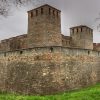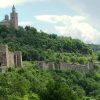

On the banks of the mighty Danube in northwestern Bulgaria, Baba Vida Fortress rises above the river bend with its thick stone walls and commanding towers. This medieval stronghold claims distinction as the country’s only fully preserved medieval castle, because its double walls and battlements survived centuries of sieges and conquests. The fortress takes its name from a legendary Bulgarian princess who chose independence over marriage and built an impregnable citadel. Romans first fortified this strategic location in the ancient settlement of Bononia, when watchtowers guarded the empire’s northern frontier.
Plan your visit to Baba Vida Fortress
Sat–Sun 09:30–18:30
Location of Baba Vida Fortress
Baba Vida Fortress sits in the city of Vidin, positioned along a dramatic bend of the Danube River in Bulgaria’s northwestern corner. The fortress occupies a low rise near the riverbank. For centuries it controlled both land and water routes. Vidin lies approximately 140 kilometres northwest of Sofia, the capital, and faces Romania directly across the Danube. Regular buses and trains connect the city to Sofia and other Bulgarian centres. The fortress itself stands within Kraidunavski Park in the northern part of Vidin. Visitors can easily reach it on foot from the town centre. Those approaching from Serbia will find Vidin a natural stop along the Danube route.
History of Baba Vida Fortress
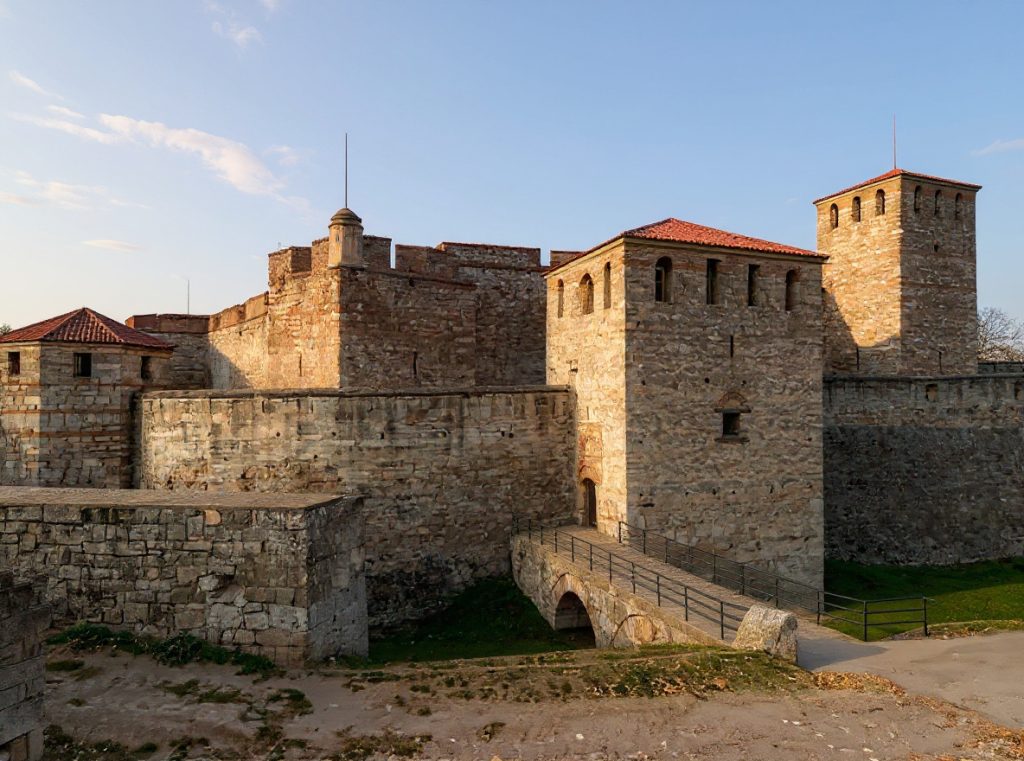
Romans built a defensive tower on this site during the third century AD as part of the fortified frontier guarding against barbarian incursions. The ancient town of Bononia grew around these fortifications. Its northeastern corner tower still forms part of Baba Vida’s foundations. Bulgarian builders began constructing the medieval castle during the second half of the tenth century, when the First Bulgarian Empire controlled the region. The Second Bulgarian Empire undertook the fortress’s main construction between the late twelfth and fourteenth centuries. They transformed it into northwestern Bulgaria’s paramount stronghold.
Tsar Ivan Stratsimir ruled from Baba Vida between 1356 and 1396, making it the capital of his realm. Byzantine forces under Emperor Basil II besieged the fortress for eight months, though it withstood the assault. Hungarian armies captured the castle between 1365 and 1369, requiring several months to overcome its defences. Ivan Stratsimir regained control in 1369 but remained under Hungarian overlordship. Ottoman forces took Vidin in 1396 following the catastrophic Battle of Nicopolis, which shattered the allied Christian armies. Sultan Bayezid II ordered substantial renovations around 1475-1476 and adapted the fortress for gunpowder artillery.
The Ottomans converted Baba Vida into a weapons arsenal and prison. It served these roles until the late eighteenth century. After Bulgaria’s liberation in 1878, the Bulgarian army occupied the fortress and restricted access for decades. Archaeological excavations began in 1956 and continued through 1962. They uncovered Roman, Byzantine, early Bulgarian, late Bulgarian and Ottoman remains. Archaeologists discovered foundations of a thirteenth or fourteenth-century chapel within the fortress grounds during these digs.
Current status
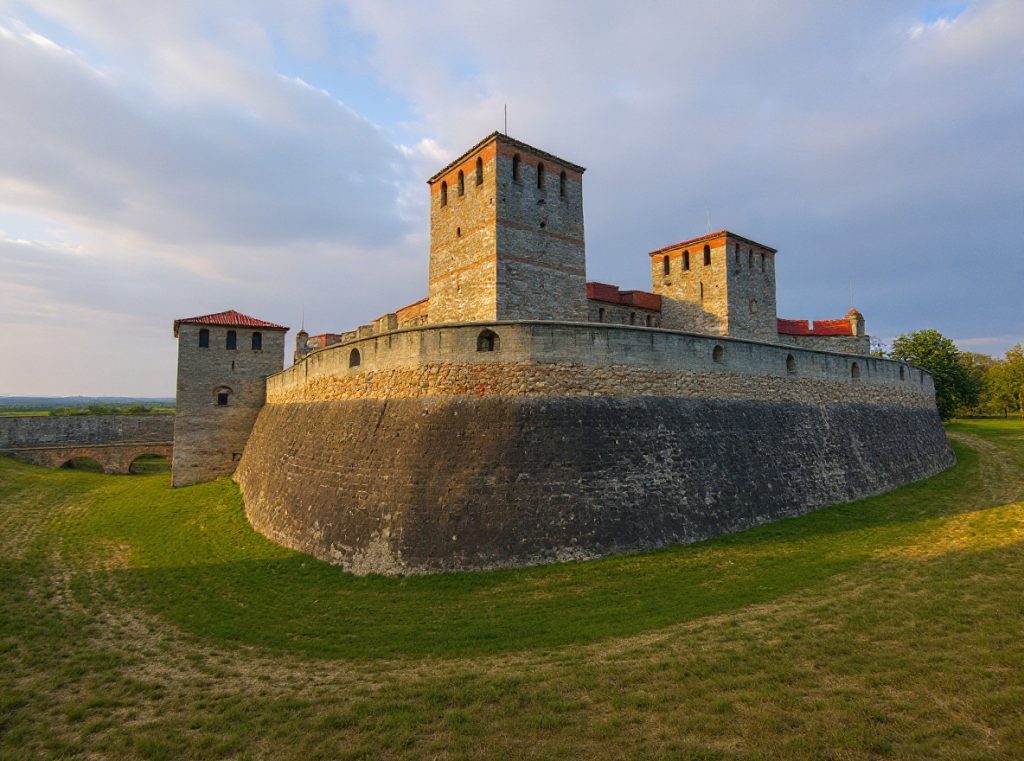
Baba Vida Fortress opened to visitors in 1958, when curators established a museum within its walls. The Bulgarian government declared it a monument of culture with national significance in 1964. The fortress now forms part of Bulgaria’s “100 National Tourist Sites” programme, recognising its exceptional historical importance. Two concentric curtain walls enclose the structure, with nine towers on the inner wall and two on the outer circuit. Three towers survive to their full medieval height, complete with original battlements. A moat twelve metres wide and six metres deep surrounds the fortress. Once it filled with Danube water when invaders threatened.
The museum displays medieval arms, period costumes and archaeological finds spanning two millennia. Visitors can climb accessible towers for sweeping views across the Danube to Romania and south toward the Balkan Mountains. The former prison preserves torture devices and features life-size figures of executioners and prisoners. A summer theatre occupies the inner courtyard and hosts concerts and historical re-enactments during warmer months. Film crews frequently choose the fortress as a location for period productions, because its authentic medieval architecture provides atmospheric backdrops. Vidin’s community takes pride in this riverside sentinel, where legend and verified history intertwine across massive stone walls that have guarded the Danube for more than a thousand years.
Castles near Baba Vida Fortress
Frequently asked questions
What makes Baba Vida Fortress special?
Baba Vida is the only fully preserved medieval fortress in Bulgaria, dating from the 10th century. It features double walls, nine towers, and a former moat once filled from the Danube.
Can you climb the towers at Baba Vida Fortress?
Yes, visitors can climb the towers and walk along the ramparts for views over the Danube and Romania. The staircases can be steep and narrow, so sturdy footwear is recommended.
Is there parking near Baba Vida Fortress?
Yes, parking is available near the fortress in Vidin's riverside park. The fortress is also easily reached on foot from the city centre in about 10 minutes.
What is the legend behind Baba Vida Fortress?
According to legend, Vida was the eldest daughter of a Bulgarian noble who rejected marriage proposals after her sisters' unhappy unions. She built the castle and lived there for the rest of her life; the name means 'Granny Vida'.
Are there guided tours available at Baba Vida Fortress?
Yes, guided tours are available for 30.30 BGN, though lectures are conducted only in Bulgarian. Audio guides in seven languages can be hired for 10.17 BGN.
Featured listings