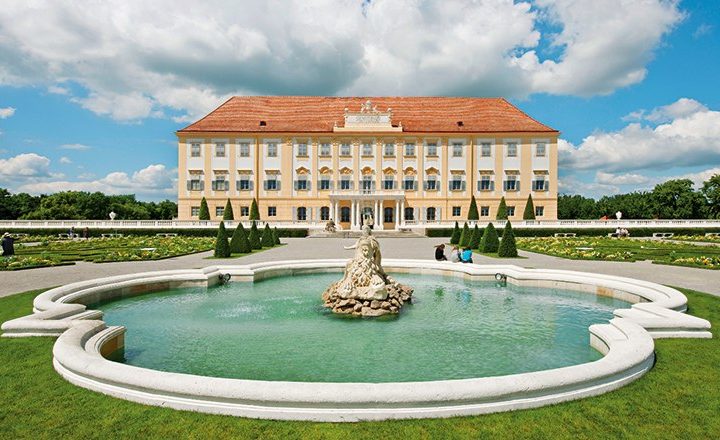
Schloss Hof, a magnificent baroque palace nestled in the Austrian countryside, is one of the finest examples of 18th-century European architecture. Surrounded by meticulously designed gardens and serene landscapes, this grand estate embodies the opulence and cultural richness of its era. Located near the Slovakian border, Schloss Hof continues to captivate visitors with its historical significance, architectural splendor, and timeless beauty.
Plan your visit to Schloss Hof
Location of Schloss Hof
Schloss Hof is situated in Lower Austria, approximately 50 kilometers east of Vienna. The estate lies in the charming Marchfeld region, known for its fertile plains and agricultural heritage. Its strategic location, near the Morava River and close to the Slovakian capital of Bratislava, made it a significant residence in the Habsburg Monarchy. The castle’s accessibility from Vienna and Bratislava makes it a popular destination for day trips, offering a seamless blend of cultural exploration and picturesque natural surroundings.
History of Schloss Hof
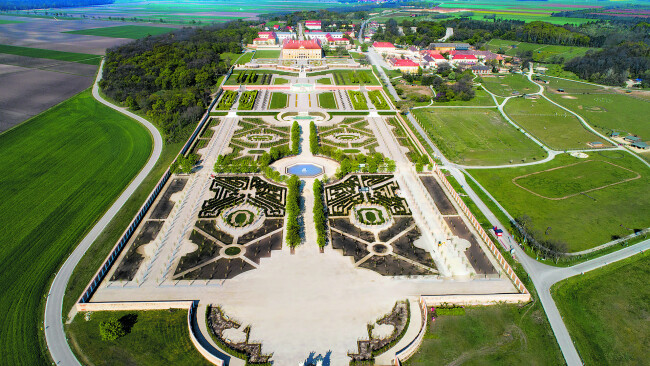
The history of Schloss Hof begins in the early 18th century when Prince Eugene of Savoy, one of the era’s most renowned military commanders, acquired it. In 1725, the estate underwent a transformative period under the prince’s ownership. Prince Eugene of Savoy commissioned Johann Lucas von Hildebrandt, a prominent baroque architect, to design a residence that would reflect his grandeur and prestige. The result was an impressive complex featuring a majestic palace, terraced gardens, and extensive grounds.
After Prince Eugene’s death in 1736, Schloss Hof was inherited by Empress Maria Theresa. She played a significant role in its further development. The empress ensured the estate maintained its status as a symbol of imperial power by expanding its gardens and enhancing its interior décor. The palace became a favorite retreat for the Habsburg family, hosting numerous courtly events and hunting expeditions.
Over the centuries, the castle underwent periods of decline and restoration. During the 19th century, its importance diminished as it was overshadowed by other Habsburg residences. By the 20th century, Schloss Hof faced neglect and damage, particularly during and after World War II. However, restorers undertook extensive efforts in the late 20th and early 21st centuries to revive its former splendor.
Current status
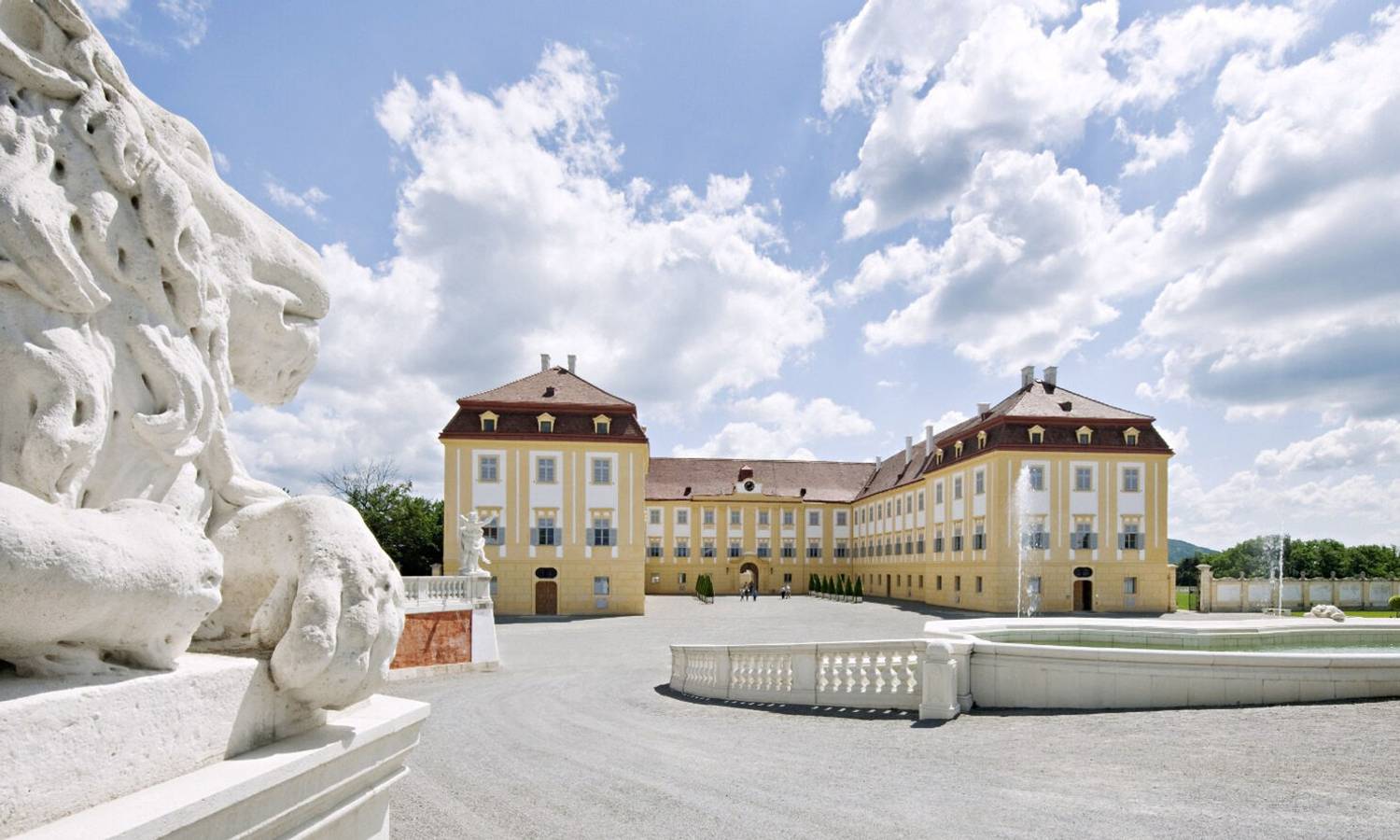
Today, Schloss Hof stands as a beautifully preserved historical site that welcomes visitors from around the world. Managed as part of Austria’s cultural heritage, the estate serves as both a museum and a venue for cultural events. Its grand palace, with richly decorated interiors, offers a glimpse into the lives of European nobility, showcasing baroque art, period furnishings, and artifacts associated with its illustrious history.
The terraced gardens, spanning seven levels, are a highlight of the estate. Designed in the baroque style, these gardens feature geometric patterns, fountains, and statues. Vibrant floral displays enhance their beauty, changing with the seasons. The harmonious integration of the gardens with the surrounding landscape is a testament to the artistic vision of the baroque period.
Schloss Hof also features a functioning estate farm, which reflects the agricultural practices of the past through careful restoration. The farm houses rare breeds of animals, creating a living connection to the estate’s rural heritage. It engages visitors of all ages with educational programs and interactive exhibits.
Throughout the year, Schloss Hof hosts a variety of events, including classical concerts, seasonal markets, and family-friendly activities. These events, combined with the estate’s historical charm, make it a vibrant cultural hub.
Castles near Schloss Hof
Frequently asked questions
What can I see at Schloss Hof?
Schloss Hof includes the Baroque palace with ceremonial rooms, seven terraced gardens designed by Prince Eugene of Savoy, and an estate farm with around 240 animals including rare breeds. The 2026 special exhibition explores the Baroque garden as a work of art.
Is Schloss Hof suitable for children?
Yes, the estate is very family-friendly. Children enjoy the petting zoo, water adventure trail, balance bike course, playgrounds, and the Children and Family World at Bäckenhof with interactive exhibits.
How long does it take to reach Schloss Hof from Vienna?
By car it takes about 1 hour via the A4 motorway. By public transport, take the U2 to Hausfeldstraße then bus 540 directly to the estate, taking around 1 hour 45 minutes total.
Does the Schloss Hof ticket include Schloss Niederweiden?
Yes, admission to Schloss Hof includes entry to Schloss Niederweiden, a smaller palace nearby. However, Schloss Niederweiden is difficult to reach by public transport, so most visitors focus on Schloss Hof.
Who originally owned Schloss Hof?
Schloss Hof was purchased in 1725 by Prince Eugene of Savoy, who transformed it into a grand Baroque country estate. It later passed to Empress Maria Theresa and became part of the Habsburg imperial properties.
Featured listings