
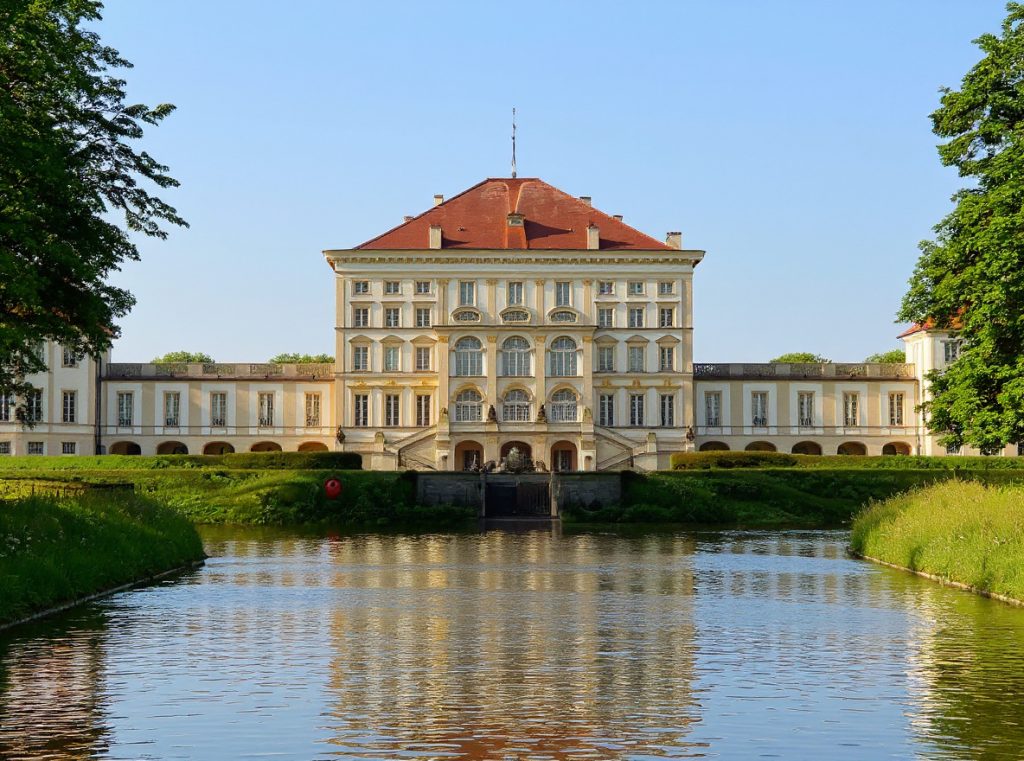
Stretching across the western edge of Munich, Nymphenburg Palace commands attention with its immense baroque facade and sprawling parkland. This magnificent summer residence served the Wittelsbach dynasty for centuries as it evolved from a modest villa into one of Europe’s largest royal complexes. Its frontal width of 632 metres surpasses Versailles, while its 200-hectare park combines formal baroque gardens with romantic English landscapes. The palace dates from the seventeenth century and reflects Bavarian royal heritage and architectural ambition.
Plan your visit to Nymphenburg Palace
Location of Nymphenburg Palace
Nymphenburg Palace sits in Munich’s western district Neuhausen-Nymphenburg, a location once surrounded by open countryside but now integrated into the city. Tram line 17 offers the easiest route by public transport when visitors travel from Karlsplatz in Munich’s Old Town to the Schloss Nymphenburg stop. The journey takes about twenty minutes. Visitors arriving by S-Bahn can take most lines to Laim station, then board bus 51 to reach the palace. The U1 underground line to Rotkreuzplatz connects with tram lines 12 and 17.
The 180-hectare complex with its palace park forms the second largest green space in Munich. The address Schloß Nymphenburg 1, 80638 München places the palace roughly three miles from central Munich. The park adjoins the Munich Botanical Garden to the north, creating an even more extensive green zone. Multiple entrances serve different areas, with the main palace entrance at the central pavilion and separate access points for the park palaces and museums.
History of Nymphenburg Palace
Elector Ferdinand Maria and his wife Henriette Adelaide of Savoy received their long-awaited heir Max Emanuel in 1662 after ten years of marriage. The couple commissioned Italian architect Agostino Barelli to design the palace in 1664 after their son’s birth. Planners chose a site on the edge of the court lands west of the city and the Residenz. The location still lay some way out of Munich, surrounded by open countryside. Construction began in 1664, and around 1679 builders completed the palace in its first form.
The Italianate summer residence initially took the form of a mighty cubic pavilion. The court church, several outbuildings and a small walled geometrical garden flanked it. Master builders Agostino Barelli and Enrico Zuccalli originally designed Nymphenburg as a baroque palace. Craftsmen added rococo and neoclassical elements later, as architect Joseph Effner transformed it from a small country house into a large three-winged complex over two centuries.
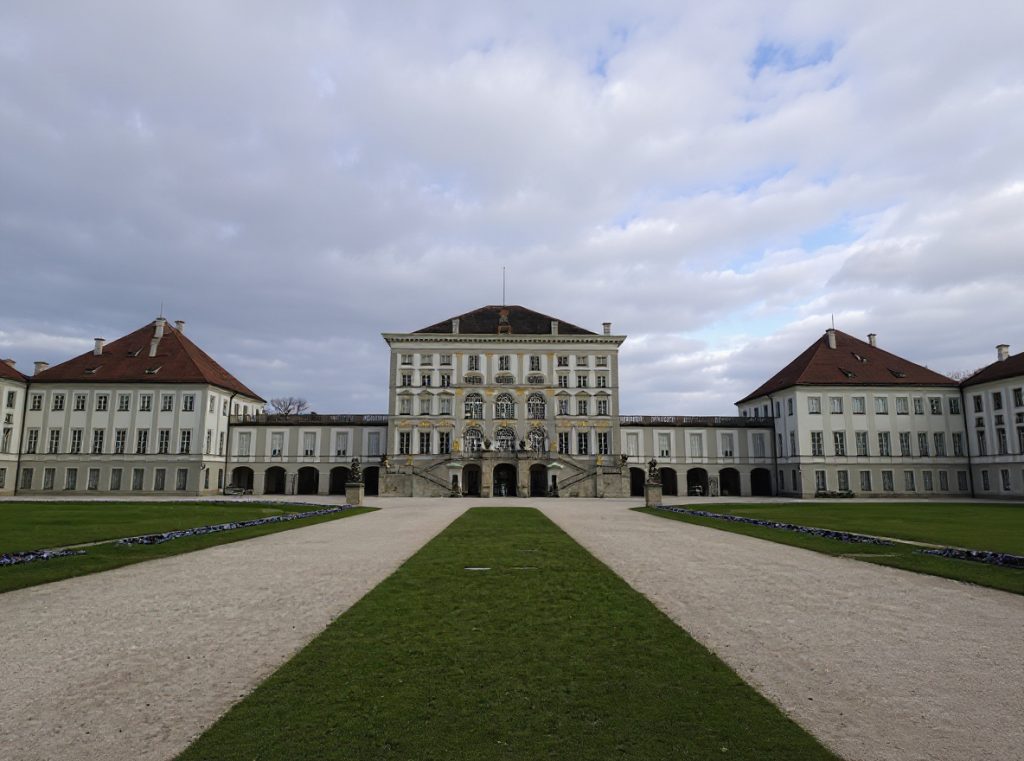
The palace acquired its present dimensions under Elector Max Emanuel. In 1701, he commissioned court architect Henrico Zuccalli to build pavilions on each side of the existing structure. Galleries linked these pavilions to the central edifice. The Spanish War of Succession halted construction because Max Emanuel spent time outside Bavaria from 1704 to 1715. Around 1715, court architect Joseph Effner and French landscape architect Dominique Girard designed an overall plan for Nymphenburg. This plan established the framework for subsequent development.
Karl Albrecht continued construction as Elector of Bavaria and later as Emperor Charles VII. He added the palace’s crescent of baroque mansions. His son Elector Max III Joseph founded the Nymphenburg Porcelain Manufactory in 1747, establishing a tradition of fine craftsmanship. Elector Charles Theodor opened the park to the public in 1792.
Current status
The Bavarian Administration of State Palaces, Gardens and Lakes owns and cares for the palace today. The complex operates as a major museum and tourist attraction, welcoming visitors year-round with seasonal opening hours. From April to mid-October the palace opens from 9:00 to 18:00, while winter hours run from 10:00 to 16:00. The palace interior requires an admission fee, though the park remains free to explore. Combination tickets grant access to the main palace, Marstallmuseum, Museum of Nymphenburg Porcelain, and the park pavilions.
From 1715 to 1918 the palace served as the summer residence of Bavarian Electors and Kings from the House of Wittelsbach. After the 1918 revolution the family retained residential rights in a small part, which the head of the House still uses. This living connection to the Wittelsbach dynasty adds authenticity to the site. The palace houses several museums, including the Marstallmuseum with its collection of royal carriages and sleighs. The Museum of Nymphenburg Porcelain showcases exquisite regional craftsmanship.
The park pavilions offer distinct attractions. The Amalienburg hunting lodge features an extraordinary rococo mirrored hall, while the Badenburg contains a historic swimming pool. The Pagodenburg provides a tea room for contemplation, and the Magdalenenklause presents a hermitage atmosphere. Visitors can enjoy gondola rides on the central canal during summer months as they glide past fountains and formal parterres. The extensive grounds invite exploration, with tree-lined avenues, serene lakes, and hidden corners revealing centuries of landscape design evolution.
Nymphenburg Palace now serves as Munich’s most beloved baroque ensemble. Visitors traverse opulent state rooms, discover royal collections, and wander through gardens that shift from geometric precision to romantic wilderness. The palace continues to enchant with its combination of architectural grandeur and natural beauty.
Castles near Nymphenburg Palace
Frequently asked questions
What does the Nymphenburg Palace combination ticket include?
The combination ticket covers Nymphenburg Palace, the Marstallmuseum (carriage museum) with Museum of Nymphenburg Porcelain, and the four park pavilions in summer. In winter the pavilions are closed, so the combination ticket only includes the palace and Marstallmuseum.
Is the park at Nymphenburg Palace free to visit?
Yes, the palace park is free and open year-round from 06:00 until 18:00 (winter) or 21:30 (summer). Only the buildings within the park—the palace, museums, and four pavilions—require tickets.
When are the park pavilions at Nymphenburg Palace open?
The four park pavilions (Amalienburg, Badenburg, Pagodenburg, and Magdalenenklause) are open daily 09:00–18:00 from 1 April to mid-October. They are completely closed from mid-October to 31 March.
How much time is needed to visit Nymphenburg Palace?
Allow 2 to 3 hours for the main palace and Marstallmuseum. If visiting the park pavilions and exploring the extensive gardens in summer, plan for 3 to 5 hours total.
Can I buy tickets at Nymphenburg Palace on the day?
Yes, but online booking is strongly recommended as only timed-entry tickets are available. A limited number of tickets are sold at the ticket office daily, and waiting times or sold-out slots are common during busy periods.
Featured listings