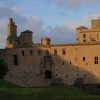
Linlithgow Palace sits on a rise above the calm waters of Linlithgow Loch and commands West Lothian with its soaring walls and Renaissance grandeur. This roofless ruin once served as Scotland’s finest royal residence, where Stewart monarchs held court and shaped the nation’s destiny. The palace saw the birth of two monarchs, sheltered queens and kings, and symbolized Scottish royal power for over two centuries. Though fire claimed its roofs in 1746, the palace endures as one of Scotland’s most evocative historic sites.
Plan your visit to Linlithgow Palace
Location of Linlithgow Palace
The palace sits in the centre of Linlithgow, a historic royal burgh in West Lothian. It stands fifteen miles west of Edinburgh. Its strategic position between Edinburgh Castle and Stirling Castle made it an ideal stopping point for travelling royals. Visitors today reach the palace easily by train, with frequent services from Edinburgh, Glasgow and Stirling taking under thirty minutes. The palace stands on Kirkgate, just a short walk from Linlithgow railway station. Its elevated site beside Linlithgow Loch offers commanding views across the water and surrounding parkland, known as the Peel. The adjacent Church of St Michael, with its distinctive modern crown spire, complements the palace ruins. Together they create one of Scotland’s most striking historic ensembles.
History of Linlithgow Palace
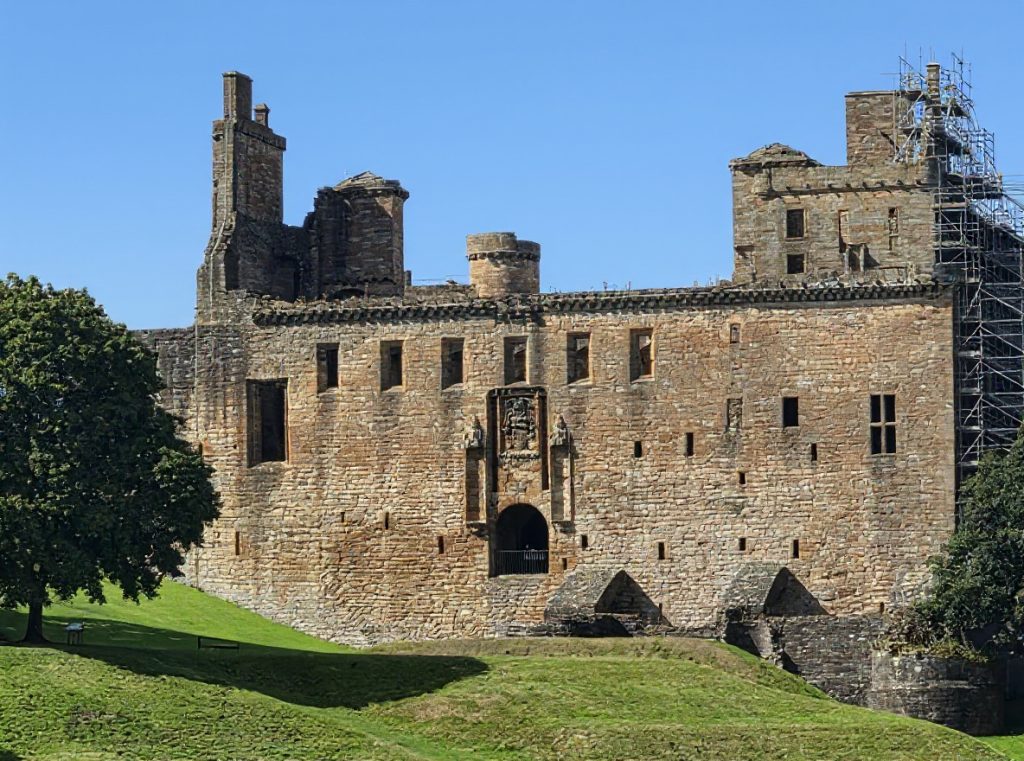
A royal manor occupied this site from the twelfth century, when King David I established both the residence and the town around it. Edward I of England seized the site in 1296 and built a fortified peel here in 1302. Scottish forces eventually reclaimed it, but a devastating fire destroyed much of the town and the royal residence in 1424. King James I ordered construction of a new palace that same year because he envisioned a pleasure palace rather than a defensive fortress. The work continued for over a century as successive Stewart monarchs added their own contributions.
James I built the Great Hall in the east range and created a magnificent reception space. James III and James IV continued the work in the late fifteenth century. James IV effectively completed the quadrangular structure around a central courtyard. He gave the palace to his bride, Margaret Tudor, as a wedding gift in 1503. Their marriage celebration featured jousting, feasting and hawking on the grounds. James V added the ornate three-tiered fountain in the courtyard in 1538 and created a new entrance and gatehouse. Marie de Guise famously declared she had never seen a more princely palace when she first arrived.
The palace served as the birthplace of James V in 1512 and Mary Queen of Scots in 1542. After James VI inherited the English throne in 1603 and moved his court to London, the palace saw declining use. Cromwell’s forces damaged the building during their occupation in 1650. Builders refurbished the palace for Charles I’s visit in 1633, but it fell into progressive decay thereafter. Troops billeted here in 1746 accidentally set fire to the building on the night of 31 January. The blaze destroyed the roofs and much of the interior.
Current status
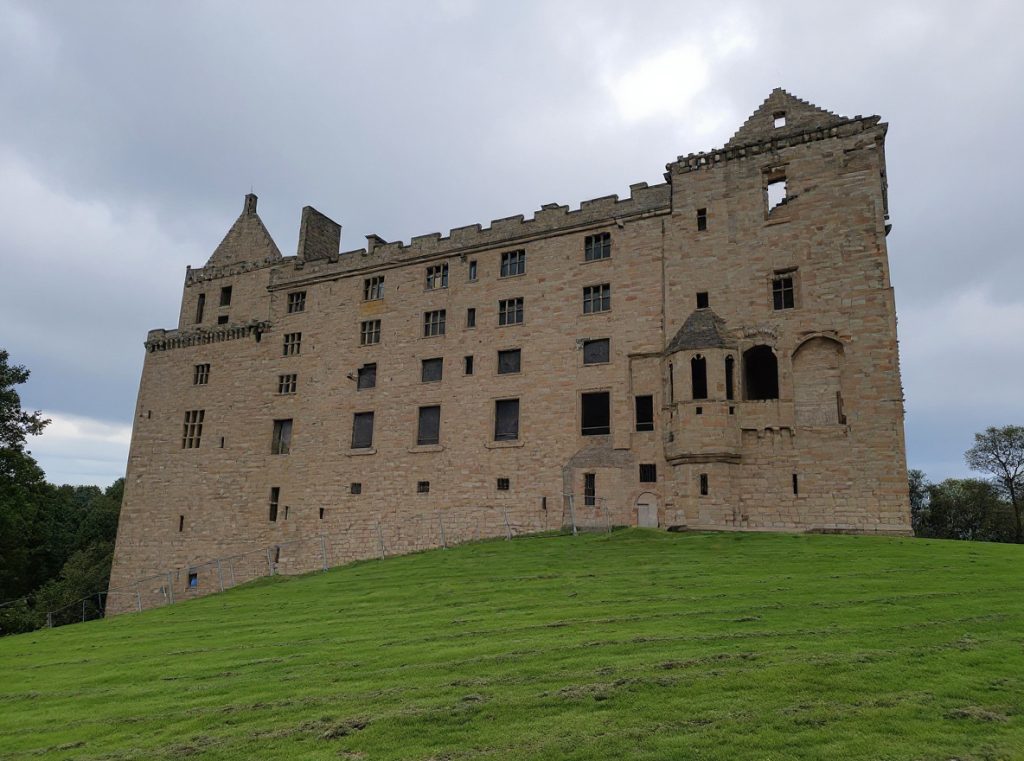
Historic Environment Scotland now maintains the palace and opens it daily to visitors. Though roofless, the structure retains remarkable architectural detail across its four ranges. Visitors explore the Great Hall, royal apartments, chapel and kitchen spaces while climbing towers for panoramic views over the loch and countryside. The restored courtyard fountain stands as a centrepiece. Its carved mermaids, unicorns and decorative details show Renaissance craftsmanship. Interpretation boards throughout the site explain the function of rooms and the lives of those who lived here. The palace hosts occasional cultural events and exhibitions celebrating Scottish heritage.
Admission charges apply, with concessions available. Audio guides share the royal history and stories from the site. The surrounding park and loch offer pleasant walks. Officials designated the loch as a Site of Special Scientific Interest for its waterfowl populations. St Michael’s Church next door welcomes visitors to explore Scotland’s medieval ecclesiastical architecture. Conservation work continues to preserve the palace for future generations. The combination of dramatic ruins, beautiful setting and rich royal connections ensures the palace remains one of Scotland’s most visited historic monuments.
The honey-coloured stonework glows in afternoon light while shadows play across empty window frames and spiral stairs. Water still flows in the fountain when rangers activate it for special occasions, bringing a fleeting echo of courtly splendour. The palace stands silent yet eloquent as its walls remember centuries of power, celebration and tragedy beneath the skies of West Lothian.
Castles near Linlithgow Palace
Frequently asked questions
Was Mary, Queen of Scots really born at Linlithgow Palace?
Yes, Mary was born at Linlithgow Palace on 8 December 1542 whilst her father James V lay dying at Falkland Palace. She remained only seven months at Linlithgow before being taken to Stirling Castle.
Is Linlithgow Palace fully intact or a ruin?
Linlithgow Palace is a roofless ruin, having been gutted by fire in 1746. However, much of the structure remains, including the Great Hall, chapel, courtyard and corner towers which visitors can explore.
What parts of Linlithgow Palace are currently closed?
The North Range, King's Bed Chamber and Court Kitchen are closed whilst conservation works are ongoing. Most other areas including the Great Hall and Queen Margaret's Bower remain accessible.
Can I get a discount on Linlithgow Palace tickets?
Scottish residents aged 7–25 with a Young Scot or National Entitlement Card pay just £1. Booking online saves £1 per adult and 50p per child compared to on-the-day prices.
How long is the train from Edinburgh to Linlithgow Palace?
Direct ScotRail trains run from Edinburgh Waverley to Linlithgow every 20 minutes, taking 15–20 minutes. The palace is a 10-minute walk from Linlithgow station.
Featured listings