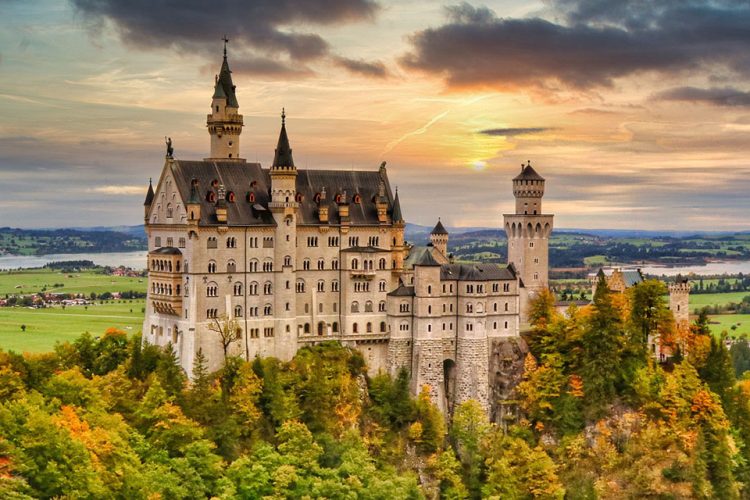

Perched 120 metres above the capital on a commanding limestone ridge, Vaduz Castle has watched over Liechtenstein for more than eight centuries. The fortress rises against an Alpine backdrop, where its medieval keep and later Renaissance and Baroque wings form the official residence of the Princely Family. Unlike many European castles that now serve as museums, Vaduz remains a living royal home. The family keeps it closed to the public yet central to the national identity of this small principality between Switzerland and Austria.
Plan your visit to Vaduz Castle
Location of Vaduz Castle
The castle overlooks the town of Vaduz from an adjacent hilltop. Visitors see it from nearly every corner of the capital and the Rhine Valley beyond. Vaduz serves as the capital of Liechtenstein and also hosts the national parliament. The town sits along the Rhine with 5,696 residents. A steep but well-maintained footpath winds up from the town centre in about 20 to 30 minutes. Alternatively, a narrow road allows drivers to reach a free parking area about 250 metres from the castle gates. The principality sits wedged between Austria to the east and Switzerland to the west. Travellers reach it easily by train to Sargans in Switzerland, then take a bus into Vaduz. The castle address is Fürst-Franz-Josef-Strasse 150, 9490 Vaduz, Liechtenstein. Visitors can explore the exterior grounds year-round, though the interiors stay private.
History of Vaduz Castle
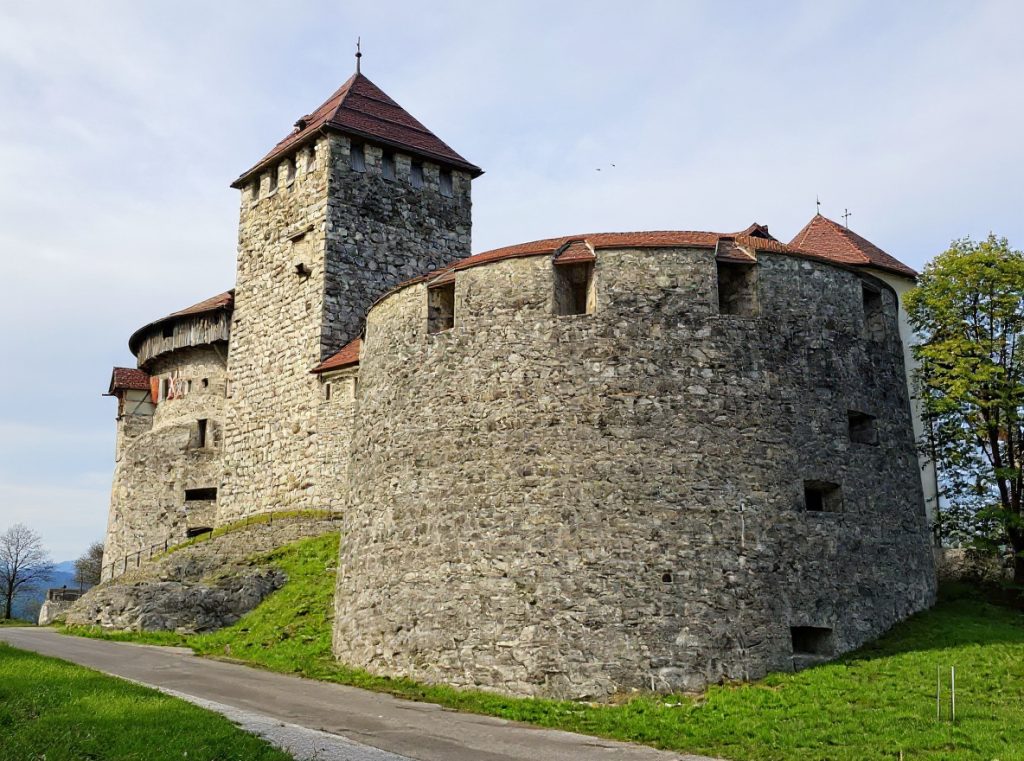
Count Hugo von Montfort appeared in Vaduz around the year 1200. He also owned the counties of Werdenberg and Sargans, so the first Vaduz Castle probably rose under him or one of his successors. Builders constructed the bergfried, or keep, in the 12th century. Parts of the eastern side date from the same period and rank as the oldest sections. Masons completed the residential tower in 1287. Documents first mention the castle in 1322. On 3 May 1342, Count Hartmann III of Werdenberg-Sargans received the castle and the area as part of an inheritance. As Count Hartmann I of Vaduz, he took up residence in his castle and named his line after the seat of power.
From 1416 to 1510, the Barons of Brandis owned Vaduz Castle and its lordship. During the Swabian War of 1499, soldiers from the Swiss Confederacy burned the castle. From 1510 to 1613 the Counts of Sulz held ownership. They had builders restore, extend and improve the fortifications. Workers constructed the Palas with blind arcades in 1528, the south roundel in 1523, and the north roundel in 1528/29. Artisans created the “Beautiful Hall” with Renaissance paintings around 1540. Count Kaspar von Hohenems (1613–1640) then expanded the western side. Gardeners added a Baroque garden in 1642.
Since 1712 the Princes of Liechtenstein have owned the castle. Prince Johann Adam Andreas of Liechtenstein purchased the County of Vaduz in 1712 and became the castle’s fifth owner. From 1712 to 1732, officials renamed it Hohenliechtenstein because it served as the seat of the bailiwick with official residence in the west wing. Around 1840, Prince Alois II considered converting the partially dilapidated castle into a residence. The project never went ahead, though in 1896/97 architect Gustav Ritter von Neumann carried out repairs. Prince Johann II later undertook a thorough restoration in 1904-12.
Current status
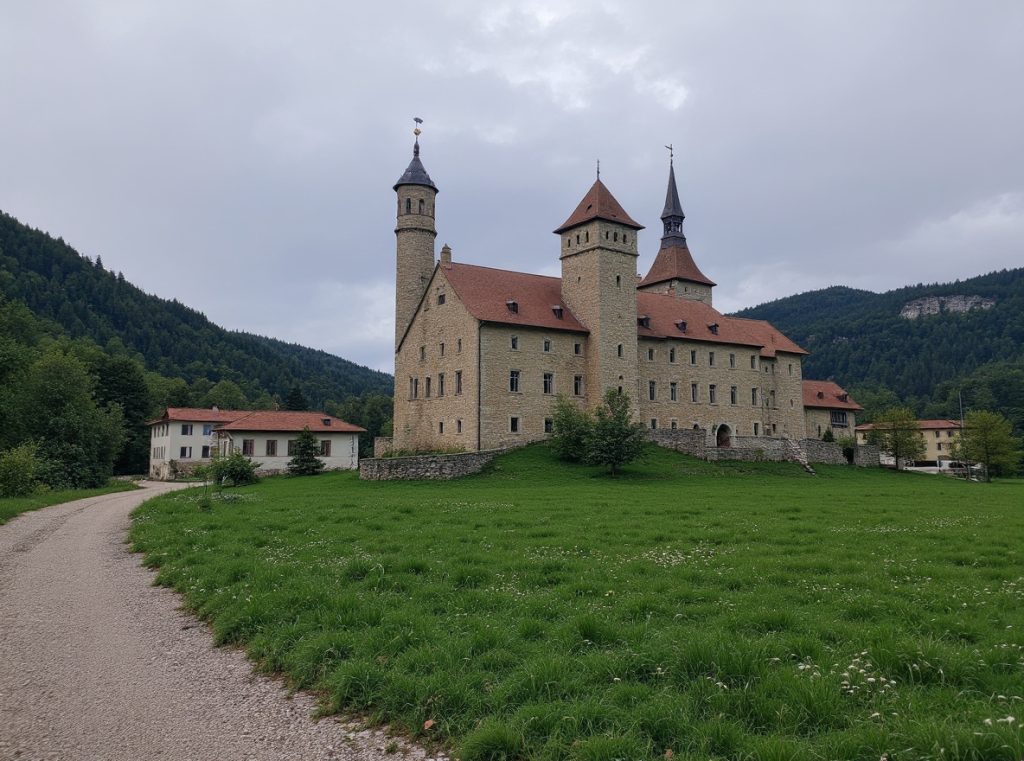
Vaduz Castle serves as the palace and official residence of the Prince of Liechtenstein. The Reigning Prince and the Hereditary Prince and Princess live there, so the family keeps it closed to the public. Prince Hans-Adam II and his family continue to live within the castle walls. They maintain it as a working royal home rather than a heritage attraction. Guided tours only take place in exceptional cases, such as on special occasions. August 15 is the only day of the year when the public gains access to the castle grounds. Liechtenstein’s National Day celebration includes an official reception in the rose garden hosted by the Princely Family. All visitors can attend free of charge.
The exterior grounds and the path up to the castle remain freely accessible throughout the year. Visitors walk or drive up to admire the fortress walls and the medieval keep with walls up to four metres thick at ground level. They also enjoy panoramic views across Vaduz and the Rhine Valley. The castle dominates postcards and promotional materials, so it serves as the most recognisable symbol of Liechtenstein. Though the interiors remain private, the silhouette alone draws travellers who hike the steep footpath to stand before the gates. They gaze out over one of Europe’s smallest yet most prosperous nations. For those seeking historical detail, the Liechtenstein National Museum in Vaduz centre offers exhibitions on the castle and the princely dynasty. The official website of the Princely House also provides further information about the family and their role in the nation’s governance and culture.
Castles near Vaduz Castle
Frequently asked questions
Can you go inside Vaduz Castle?
No, Vaduz Castle is the private residence of the Prince of Liechtenstein and is not open to the public for interior tours. On 15 August (National Day), the castle grounds are opened to ticket holders for a ceremony and reception.
How do I get to Vaduz Castle from the town centre?
The castle is reached via a steep footpath called the Schlossweg from central Vaduz, taking approximately 20–30 minutes to walk up. The path is paved but steep, and there is parking available near the castle for those arriving by car.
What can you see at Vaduz Castle?
Visitors can admire the castle's 12th-century exterior architecture and enjoy panoramic views over Vaduz, the Rhine Valley, and the Swiss and Austrian Alps from the grounds. The castle has been the official residence of the princely family since 1938.
Is there a charge to visit Vaduz Castle?
No, there is no admission fee to view the castle from the outside or walk the surrounding grounds. However, you cannot enter the interior as it is a private royal residence.
What is special about Vaduz Castle on Liechtenstein National Day?
On 15 August each year, the castle grounds are opened to the public for an official ceremony with speeches by the Prince and reception in the rose garden. Tickets are required and are distributed free to residents and visitors in advance.
Featured listings