High on a promontory above the River Teme, Ludlow Castle commands the border between England and Wales with its formidable stone walls. Construction started around 1085, when Walter de Lacy arrived with William the Conqueror and helped secure the western frontier. For nearly six centuries this fortress played a pivotal role in British history as it transformed from a Norman stronghold into the administrative heart of the Welsh Marches. Today its evocative ruins invite visitors to explore the corridors where kings, princes and judges once shaped the destiny of Wales.
Plan your visit to Ludlow Castle
Location of Ludlow Castle
Ludlow Castle occupies a promontory overlooking the River Teme in the historic market town of Ludlow, Shropshire. The address is Castle Square, Ludlow, Shropshire, SY8 1AY. Ludlow railway station sits just a ten-minute walk from the castle, with regular services connecting the town to larger centres. By road, the A49 runs directly through Ludlow, linking Shrewsbury to the north and Hereford to the south. Visitors arriving by car will find Castle Square Car Park within easy walking distance. The castle occupies the oldest quarter of the town, where medieval streets radiate from its imposing walls.
History of Ludlow Castle
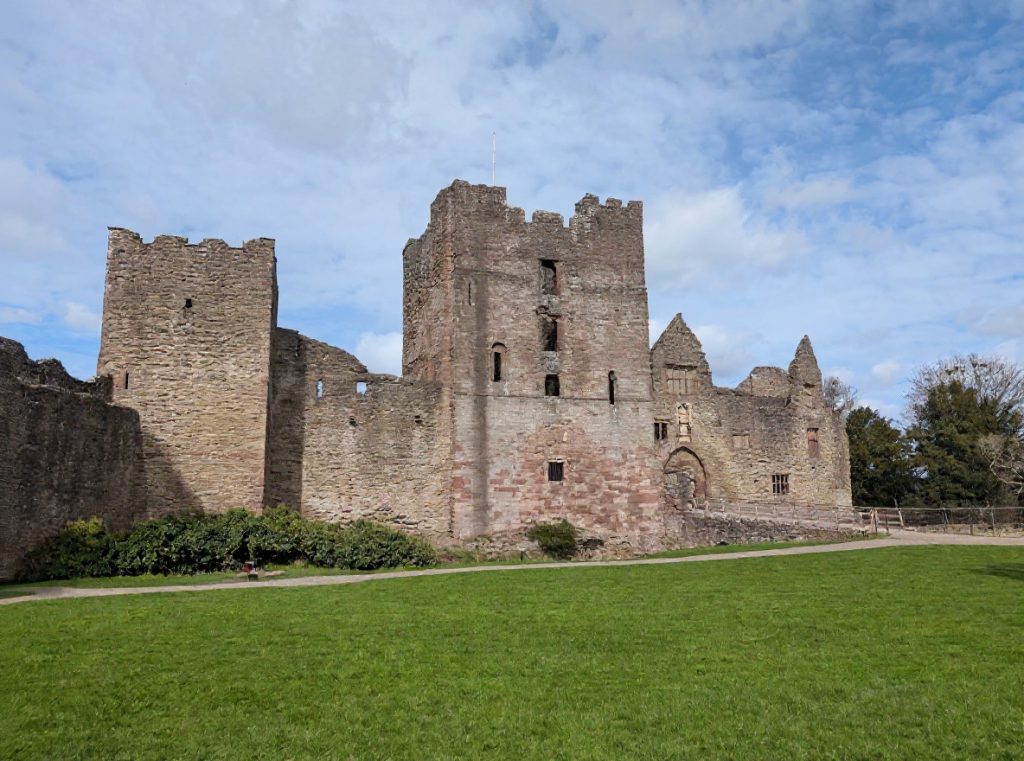
Walter de Lacy received a reward of 163 manors spread across seven counties, with 91 in Herefordshire alone. Builders added the castle’s Norman stone fortifications possibly as early as the 1080s onwards and finished them before 1115. This created a stone version of a ringwork. The fortification carried the original name of Dinham Castle before it acquired its later name of Ludlow. When Hugh de Lacy died childless, King Henry I granted the castle to his niece Sybil. Her husband Pain fitzJohn then used Ludlow as the main seat in his estates.
Pain died fighting the Welsh in 1137, which triggered decades of contested ownership. In the late 12th and early 13th centuries builders extended the castle, and the enlarged outer bailey obscured part of the grid pattern of streets. Geoffrey and Maud’s granddaughter Joan married Roger Mortimer in 1301, bringing Ludlow into Mortimer control. The Mortimers made significant improvements and turned the fortress into what historians call a “show castle” befitting their growing power and prestige.
In 1425 the Mortimer inheritance passed to Richard Plantagenet, Duke of York, who made Ludlow a favoured residence. In 1461, when King Edward IV ascended the throne, the castle became royal property. Edward IV founded the Council of the Marches of Wales with headquarters at Ludlow Castle. Workers extensively renovated it in the 16th century. Young Prince Arthur, heir to Henry VII, lived here with his bride Catherine of Aragon until his untimely death in 1502. King James I declared his son Charles Prince of Wales in the castle in 1616 and made Ludlow his principal castle in Wales.
The English Civil War brought violence to Ludlow. A Parliamentary force laid siege to the town in April 1646. The garrison surrendered a month later without a fight.
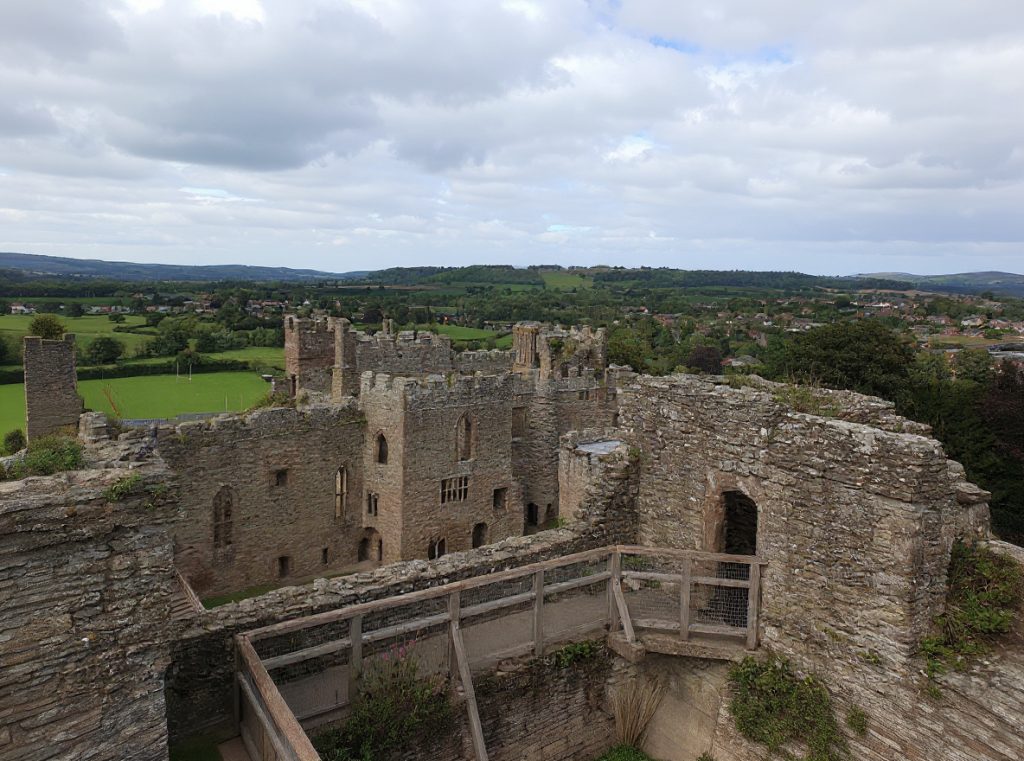
Current status
The Earls of Powis began renting Ludlow Castle from the Crown in 1772 and bought the ruined structure in 1811. The castle has passed down through the family since then. The Trustees of the Powis Castle Estate now own the castle on behalf of the family. After 1900, workers cleared Ludlow Castle of vegetation, and over the century the Powis Estate and government bodies extensively repaired it. The castle holds Grade I listed building status and designation as a Scheduled Ancient Monument, which recognises its exceptional historical significance.
Today Ludlow Castle welcomes the public year-round. Visitors can explore the inner and outer baileys and climb ancient towers for panoramic views across Shropshire. They can walk through the remains of royal apartments where Tudor princes once resided. It features examples of architecture from the Norman, Medieval and Tudor periods. The Round Chapel, Great Hall and Mortimer’s Tower stand among the most striking surviving structures. A tea room offers refreshments, while a gift shop and gallery provide souvenirs and local crafts. The castle hosts major events throughout the year, including the Ludlow Spring Festival and Ludlow Food and Drink Festival. During these events the baileys fill with marquees and performers.
The ruins speak powerfully of England’s turbulent medieval past. Stone walls scarred by siege and storm frame views of the River Teme winding through green hills. Generations of builders left their marks in architectural layers, from severe Norman stonework to elegant Tudor windows. In the town below, black-and-white timber buildings cluster around medieval streets, while the castle rises above them all, just as it has for nearly a millennium.
Castles near Ludlow Castle
Frequently asked questions
What are the opening times for Ludlow Castle?
Ludlow Castle is open all year. From April to October it's open daily 10am–5pm; from mid-February to March and November to early January daily 10am–4pm; January to mid-February weekends only 10am–4pm. It's closed Christmas Day.
Does Ludlow Castle offer guided tours?
Guided tours are not routinely available. However, pre-booked group tours with 'Lady Caroline' can be arranged by contacting the castle directly.
Is Ludlow Castle suitable for children?
Yes, children under 5 enter free and there's a family ticket available. The castle hosts special events throughout the year, though some areas have uneven medieval surfaces.
What can you see at Ludlow Castle?
Ludlow Castle is an 11th-century ruin with Norman, medieval and Tudor architecture. Visitors can explore the ancient lodgings of royalty and nobility, climb towers for countryside views, and learn about its role as the seat of the Council of the Marches.
Is there parking near Ludlow Castle?
Yes, several car parks are available in Ludlow town centre, some within a short walk of Castle Square. The castle may occasionally close for private events and festivals, so check before travelling.
Featured listings