
Commanding a strategic crossing of the River Aln in Northumberland, Alnwick Castle rises as one of England’s largest and most formidable medieval strongholds. The seat of the 12th Duke of Northumberland, it ranks as the second biggest inhabited castle in the United Kingdom. The Percy family has called this fortress home for over 700 years. Film audiences worldwide recognise its towers and courtyards as Hogwarts in the Harry Potter films, yet the castle’s real history proves equally dramatic.
Plan your visit to Alnwick Castle
Location of Alnwick Castle
Alnwick Castle sits in Alnwick in the English county of Northumberland. The town lies 32 miles south of Berwick-upon-Tweed and the Scottish border. It stands 5 miles inland from the North Sea at Alnmouth and 34 miles north of Newcastle upon Tyne. Just off the A1, it offers easy access by car, train and bus. Visitors arriving by train can take the East Coast mainline to Alnmouth station, four miles from the castle. They can then continue by taxi or the X18 or X20 bus services. Alnwick Castle sits in the centre of Alnwick. The castle car park charges £3.75 per vehicle and opens from 9am daily during the season. The strategic position that once made this a vital border fortress now ensures excellent transport links for modern visitors exploring northern England.
History of Alnwick Castle
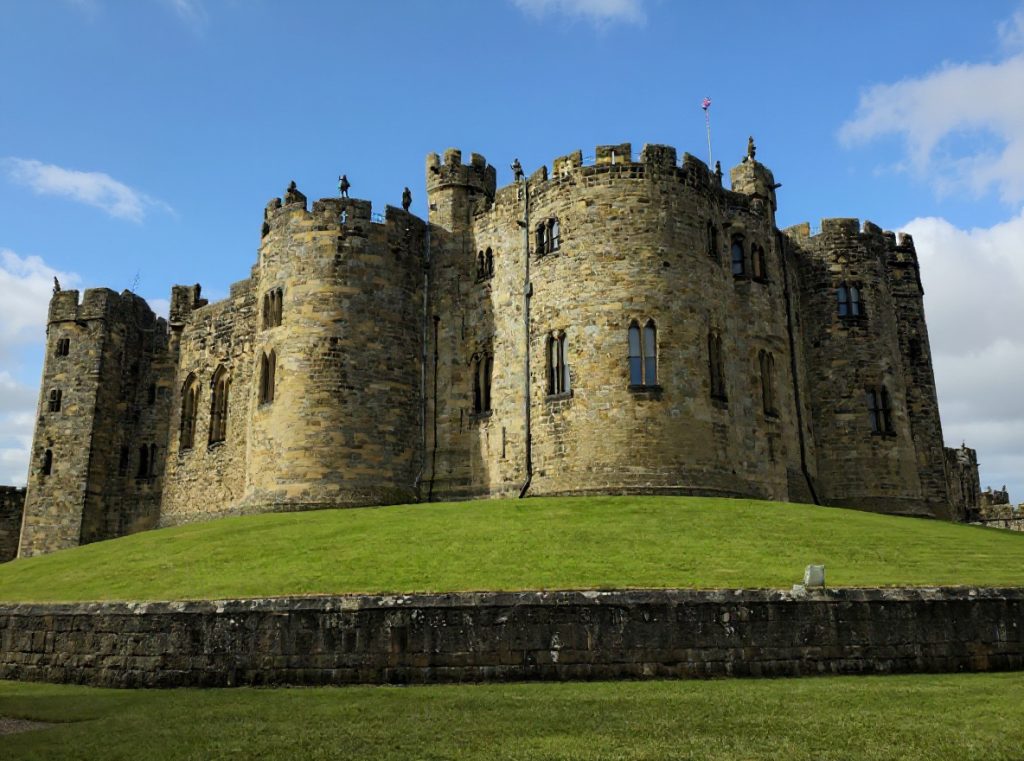
Norman nobleman Ivo de Vesci first founded Alnwick Castle in 1096 to protect a crossing of the River Aln. William the Conqueror had made him a baron. In its early life the castle faced frequent bombardment by the Scots. David I of Scotland captured it in 1136. William the Lion besieged it twice in 1172 and again in 1174. King John ordered the castle demolished in 1212 after accusing Eustace de Vesci of plotting against him, though nobody carried out these orders.
In 1297, William de Vesci left the castle in trust to Antony Bek, the Bishop of Durham. Bek sold the castle to Henry de Percy on November 19th, 1309, with the blessing of King Edward II. In the 14th century the Percy family undertook substantial building projects, transforming Alnwick into a major fortress along the Scottish border. Henry added the Abbot’s Tower and Constable’s Tower shortly after purchasing the castle. Both of these survive today. One of the most famous members of the family was Harry ‘Hotspur’ Percy, a fierce knight immortalised in Shakespeare’s play Henry IV. He died in 1403 leading a rebellion against Henry IV.
The castle saw much action during the Wars of the Roses. During this period it changed hands between the Yorkists and Lancastrians many times before returning to the Percys. In 1650, Oliver Cromwell held 6000 Scottish prisoners at the castle for one night on their way south to Durham after the Battle of Dunbar. The title went eventually to Sir Hugh Smithson, who married a Percy heiress and took the surname of Percy. King George III created him Duke of Northumberland in 1766. He had master gardener Capability Brown landscape the park, while the great Scottish architect Robert Adam worked on the interior.
Current status
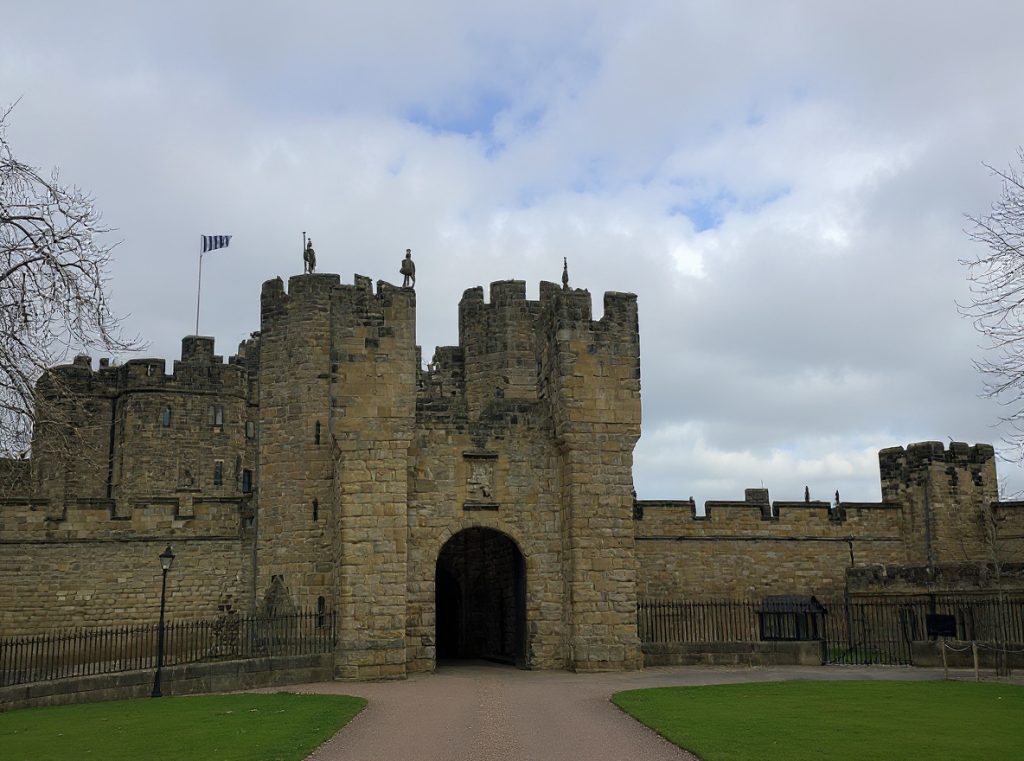
Ralph Percy, 12th Duke of Northumberland and his family now live in the castle. Builders raised it following the Norman Conquest, then renovated and remodelled it several times over the centuries. It holds Grade I listed building status. The castle opens to the public each year from Spring to mid-Autumn. Combining magnificent medieval architecture with sumptuous Italianate State Rooms, Alnwick Castle ranks as one of the UK’s most significant heritage destinations. In 2016, the castle and adjacent attraction the Alnwick Garden together received over 600,000 visitors per year.
The castle has served as a military outpost, a teaching college, and a refuge for evacuees. It has also functioned as a film set and not least as a family home to The Percy Family. For over 30 years, Alnwick Castle has served as a campus branch for students from St. Cloud State University in Minnesota, USA. This experience forms a vital component of their International Study Program, allowing students to immerse themselves in different cultures. The castle gained worldwide fame as the filming location for Hogwarts School in the early Harry Potter films. It has also appeared in Downton Abbey. Visitors today explore the State Rooms, walk the ancient battlements, and experience broomstick training on the very spot where Daniel Radcliffe learned to fly.
Stone figures of soldiers still keep watch from the battlements where real garrisons once defended England’s northern frontier. The River Aln flows past walls that have witnessed nearly a thousand years of border warfare, royal intrigue, and family devotion. Within these towers and courtyards, centuries of English history remain vibrantly alive.
Castles near Alnwick Castle
Frequently asked questions
Was Alnwick Castle used in Harry Potter films?
Yes, Alnwick Castle was a filming location for the first two Harry Potter films, standing in for Hogwarts. Broomstick training sessions inspired by the films are included free with admission.
Does anyone live in Alnwick Castle?
Yes, Alnwick Castle is the home of the Duke and Duchess of Northumberland, who live there for part of the year. It is the second largest inhabited castle in England after Windsor Castle.
Is the ticket to Alnwick Castle valid for multiple visits?
All tickets purchased online automatically become 12-month season passes, allowing unlimited re-visits during opening periods. Gate tickets can also be upgraded to an annual pass free of charge on the day.
Does the Alnwick Castle ticket include The Alnwick Garden?
No, Alnwick Castle and The Alnwick Garden are separate attractions requiring separate tickets. However, joint tickets offering a discount are available, and both share the same car park.
What activities are included with Alnwick Castle admission?
Admission includes access to the State Rooms, museums, castle grounds, all daily talks and guided tours, and broomstick training. A time-slot ticket for broomstick training is issued on arrival.
Featured listings