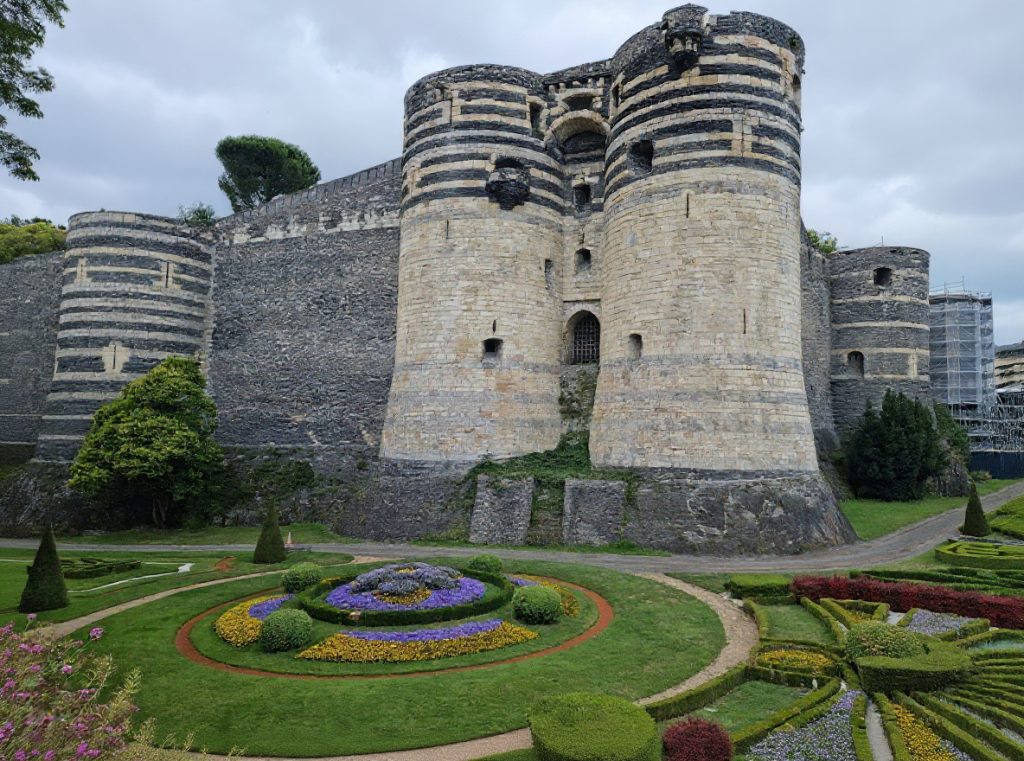
Commanding the heights above the River Maine, Château d’Angers stretches its formidable ramparts across a rocky promontory in the Loire Valley. Seventeen massive towers punctuate nearly 800 metres of walls. Their grey schist and white tufa stone create distinctive horizontal bands that have marked the Angers skyline for eight centuries. The fortress shelters the renowned Apocalypse Tapestry, a UNESCO-listed medieval masterpiece that draws visitors from across the globe. This royal stronghold has witnessed the rise and fall of the Counts of Anjou, the Plantagenet kings, and the tumultuous centuries that forged modern France.
Location of Château d’Angers
The castle sits in the centre of Angers, capital of Maine-et-Loire in the Pays de la Loire region of western France. It occupies a strategic position on a promontory overlooking the River Maine, which joins the Loire a short distance to the south. The address is 2 Promenade du Bout du Monde, 49100 Angers. Visitors arriving by train will find the fortress a fifteen-minute walk from Angers Saint-Laud railway station. The city lies on the A11 motorway between Paris and Nantes. The N23 trunk road provides additional access from the surrounding region. Ancient cobbled streets lead directly to the castle gates from the modern city centre because the fortress rises from the old medieval quarter.
History of Château d’Angers
Archaeological evidence reveals that humans occupied this rocky ridge as far back as the Neolithic period, over 6,000 years ago. The Romans later recognised the defensive value of this elevated site and established fortifications here. In the ninth century, the Bishop of Angers granted the Counts of Anjou permission to build a fortress against Norman invasions. Count Fulk III, who ruled from 970 to 1040 and earned fame for constructing dozens of castles across his domains, erected the first substantial stronghold on this spot.
The fortress became part of the Angevin Empire when the Plantagenet kings of England controlled the region during the twelfth century. In 1204, Philip II of France conquered Anjou and brought it under royal control. This victory placed Angers on the vulnerable frontier between French royal territory and lands still claimed by England. Queen Blanche of Castile, ruling as regent for her young son Louis IX, ordered the construction of an enormous fortress in 1230. The project required the demolition of nearly a quarter of the canonical district of Saint-Maurice. Over twelve years, royal engineers raised walls three metres thick and 660 metres long. Seventeen round towers soared more than forty metres into the sky and protected these walls. The construction consumed over 5,000 livres from the royal treasury, roughly one per cent of the entire annual revenue of the French crown.
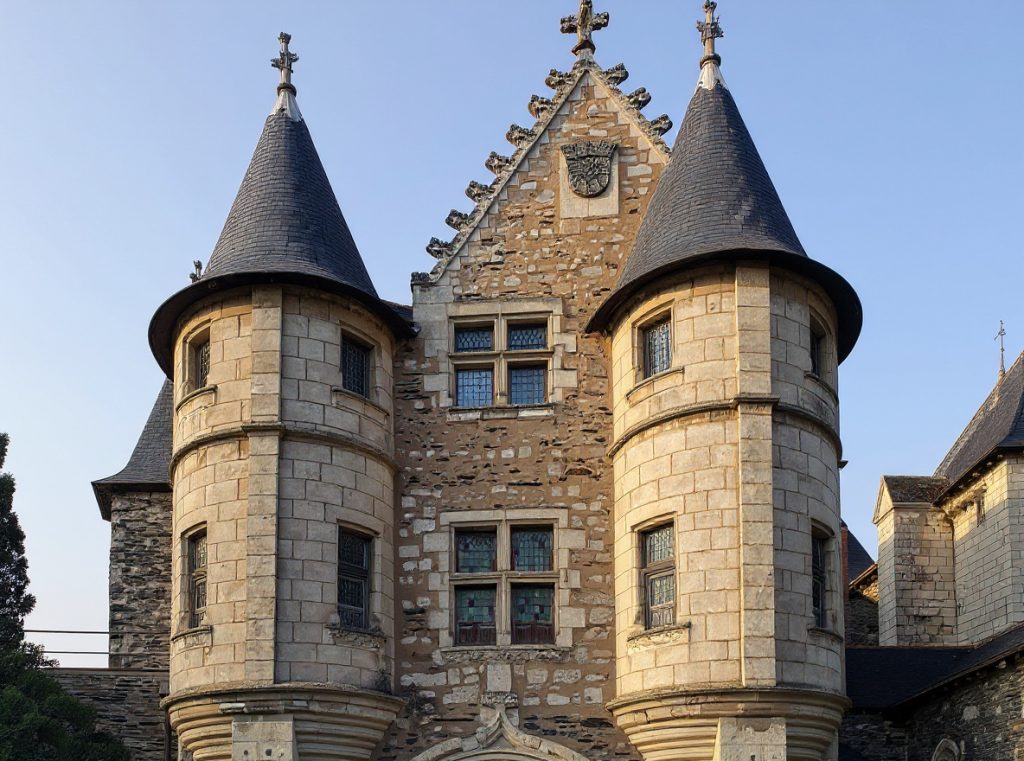
In 1352, King John II granted the fortress to his second son Louis, who later became Count of Anjou. Louis and his successors transformed the military stronghold into a sumptuous ducal residence whilst maintaining its defensive capabilities. The future Charles VII used the castle as a refuge when he fled Paris with the assistance of Joan of Arc during the Hundred Years’ War.
Current status
The Centre des Monuments Nationaux, a public institution responsible for preserving French national heritage, manages Château d’Angers today. Restoration work following the Second World War brought the fortress back from wartime damage. In 1947, the army vacated the castle, which allowed it to open to the public. The magnificent Apocalypse Tapestry then returned to the castle from Angers Cathedral. Louis I of Anjou commissioned this work in 1373. Flemish artist Hennequin de Bruges and French weaver Nicolas Bataille created it. This medieval textile masterpiece remains the largest tapestry ensemble in the world. It earned inscription on UNESCO’s Memory of the World register in May 2023.
Visitors can explore the ramparts and climb the towers for views across Angers and the Maine Valley. They can also wander through elegant Renaissance gardens that now flourish where dry moats once protected the walls. A chapel built in the ducal period stands within the inner courtyard. The fortress attracts over 200,000 visitors annually, which makes it the most visited historic monument in the Pays de la Loire region during summer months. The castle maintains its role as keeper of regional history whilst serving as a venue for cultural events and educational programmes. The thick walls that once defended Anjou from invasion now shelter biodiversity-protecting gardens alongside rooms displaying centuries of art and history.
The seventeen towers still command the skyline as they have for eight centuries. Their distinctive striped pattern of dark grey Anjou schist and pale tufa limestone gives the fortress an appearance unlike any other Loire Valley château. The fortress provides tangible evidence of the architectural ambition of medieval France because stone preserves memory across the centuries through its enduring power.
Featured listings