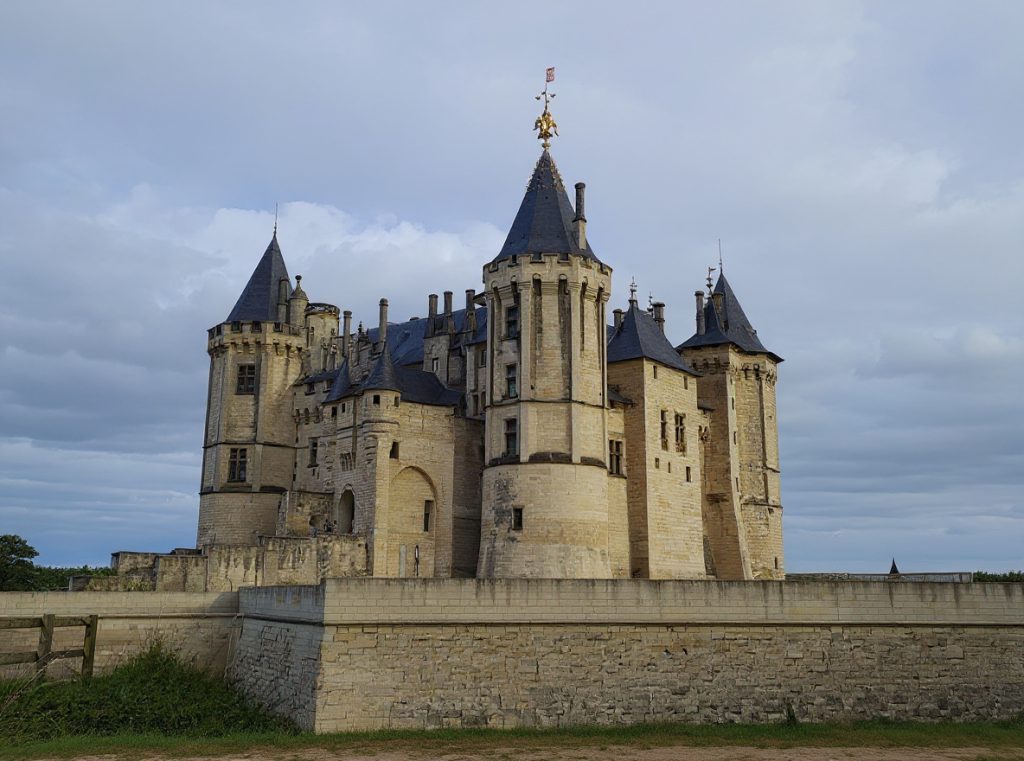
Crowning a rocky promontory above the confluence of the Loire and Thouet rivers, Château de Saumur rises in pale tuffeau stone like something from a medieval manuscript. This château was famous enough by about 1410 to appear in the Très Riches Heures du Duc de Berry, one of history’s most celebrated illuminated books. The château stands as one of the last untouched remnants of princely architecture from the Valois dynasty in the Middle Ages. The castle sits on a raised rocky area above the Loire and the town of Saumur in the Maine-et-Loire department, historically part of the Anjou region.
Plan your visit to Château de Saumur
Tue–Sun 10:00–13:00, 2:00–17:30Closed Mon; Tue–Sun 10:00–13:00, 14:00–17:30 (Oct–Dec); daily 10:00–19:00 (Jul–Aug); closed Jan–early Feb
Location of Château de Saumur
Château de Saumur overlooks the confluence of the Loire River and the Thouet River in the town of Saumur. Saumur has a train station where trains regularly arrive from key cities in the Loire Valley, such as Angers and Tours. Bus line A runs from the station up to the Château stop. Angers lies about 55km away, roughly 40 to 50 minutes by road, while Tours sits 65km distant, about one hour. Drivers park free at the large Esplanade Hubert Landais car park beside the castle. The château’s grounds are free to visit and get visitors up close to the landmark, allowing exploration of its external fortifications, courtyard and views. The white stone monument dominates Saumur’s skyline from miles around.
History of Château de Saumur
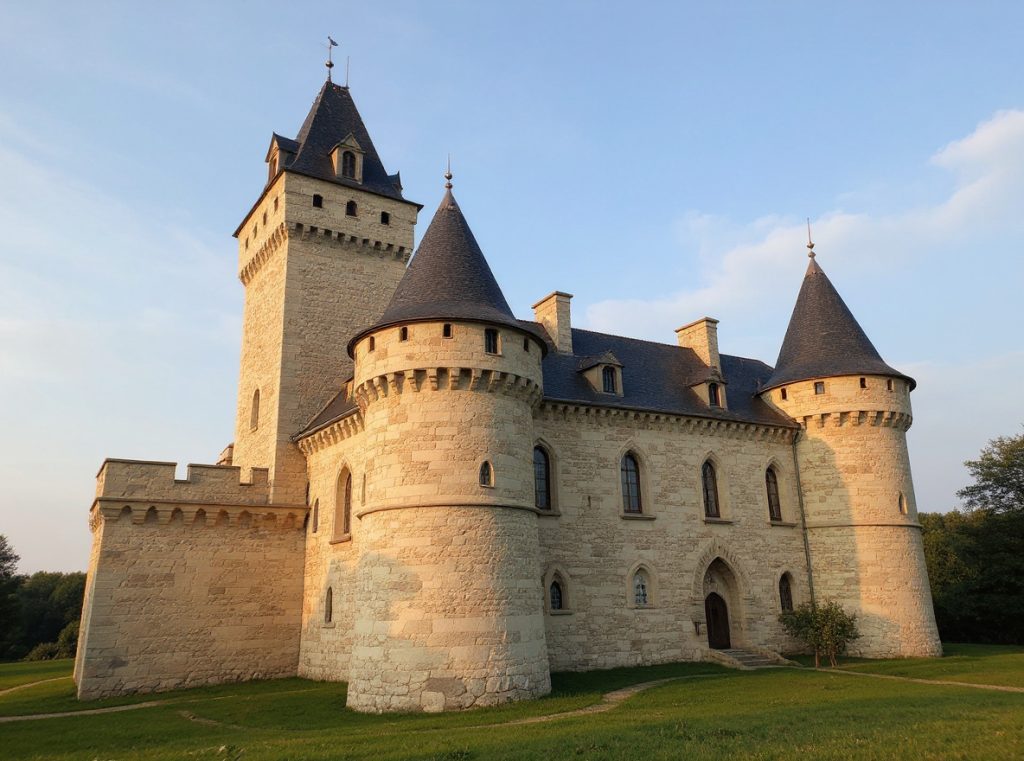
Theobald I, Count of Blois, originally constructed the château in the 10th century as a fortified stronghold against Norman attacks. After the original fortress and a nearby Benedictine abbey burned down, Henry II of England rebuilt the castle in 1068. Henry II, his wife Eleanor, and their sons Richard the Lionheart and John came many times to Saumur. In the early 13th century Saumur returned to French hands under King Philippe II, and his son King Louis IX added defensive walls and four round towers. The castle became home to the Dukes of Anjou during much of the 14th and 15th centuries, with major works converting the fortress into a luxury residence in the 14th century, when builders replaced the original towers with the current octagonal towers. René of Anjou converted Château de Saumur into a comfortable Renaissance palace during the 15th century. René called it his “château d’amour” until his death in 1480, when it reverted to the crown. One of the four wings around the courtyard collapsed in the 1600s, and in 1621 the château became an army barracks, then after the restoration of the monarchy in 1814 it served as an arms and ammunition depot until 1889. Under Napoleon Bonaparte, from 1808 until 1814 the castle was used as a prison. The château was listed as a historical monument in 1862.
Current status
The town of Saumur owns and runs the château, having bought it from the War Ministry in 1906 to house its municipal museum, which still holds the Musée de France label. After a major part of the ramparts collapsed in 2001, the castle closed from 2001 to 2008 for restoration. Saumur Council restored the château to house the municipal museum, which displays notably Count Charles Lair’s collection. The Decorative Arts collection on the first floor includes objects ranging from prehistoric finds and Gallo-Roman antiquities to fossils and minerals, moved to the château in 1912 when the former apartments of the Dukes of Anjou were being restored. In line with the Saumur area’s equestrian tradition and its famous Cadre Noir, the castle also serves as a Museum of the Horse. The château opens Tuesday to Sunday, from 10.00 am to 1.00 pm and from 2.00 pm to 5.30 pm. Visitors drink in fabulous views of the old town, Loire River and its UNESCO World Heritage valley, strolling along the stepped fortifications and bastions built whilst the Protestant governor Philippe Duplessis Mornay was in power in the late 16th century. Today the pale stone walls and octagonal towers still command the river crossing, while inside the former ducal apartments tell centuries of French history through treasured collections.
Castles near Château de Saumur
Frequently asked questions
What can I see inside the Château de Saumur?
The castle houses a museum with collections of decorative arts including tapestries, furniture, enamels, and ceramics, plus part of the equestrian collection. A free 30-minute presentation on the castle's history and architecture is offered in French and English.
Can I visit the belvedere at Château de Saumur?
The belvedere is open from June to September with guided tours in French only, limited to groups of 8 people. There is an additional charge of €3 per person and booking is done on-site on the day of your visit.
Is the Château de Saumur suitable for families with children?
Yes, the castle offers free activity booklets for children aged 7–12 and themed guided tours for children with a museum educator for an additional €2. Children under 7 visit for free.
How accessible is the Château de Saumur for visitors with mobility issues?
Access to the château's courtyard and upper floors is by staircase only, making it difficult for visitors with mobility challenges. The castle grounds and gardens are more accessible and offer exceptional views over the Loire and Saumur.
When is the Château de Saumur closed during the year?
The castle is closed on Mondays (except bank holidays), 25 December, 1 January, and has an annual closure from early January to early February. The north wing closes briefly in early November for exhibition changes.
Featured listings