Dracula’s Castles in Romania: Bran, Corvin and the Real Vlad the Impaler
Romania’s connection to the Dracula legend draws thousands of visitors each year to its medieval fortresses, yet the relationship between Bram Stoker’s fictional vampire and the historical Vlad III of Wallachia is far more complex than most imagine. While Stoker borrowed the name ‘Dracula’ from the 15th-century prince known for his brutal impalement methods, the author based his descriptions on geographical texts and imagination. The castles truly associated with Vlad the Impaler tell a different story, one of medieval warfare, political intrigue and the harsh realities of defending Christian Europe against Ottoman expansion.
Today, Romania’s castles offer two parallel journeys: one following the theatrical Gothic atmosphere that inspired vampire fiction, and another tracing the genuine footsteps of Vlad III through the fortresses where he actually lived, fought and ruled. Both paths lead through spectacular mountain landscapes and remarkably preserved medieval architecture.
Which castle in Romania is the real Dracula’s castle?
No single Romanian castle can claim to be definitively ‘Dracula’s castle’, but Poenari Fortress in the Făgăraș Mountains served as Vlad the Impaler’s actual stronghold, while Bran Castle near Brașov became famous as ‘Dracula’s Castle’ due to its Gothic appearance and Bram Stoker’s novel. Vlad III had connections to several fortresses throughout Wallachia and Transylvania during his turbulent reigns between 1448 and 1476, but most were temporary residences or military positions rather than permanent seats of power.
The confusion stems partly from marketing and partly from the nature of medieval rule in this region. Wallachian princes moved frequently between fortifications depending on military threats, political circumstances and seasonal considerations. Vlad spent time at the princely court in Târgoviște, rebuilt Poenari as a mountain refuge, possibly passed through Bran during military campaigns, and was imprisoned in Hungary. Each castle reveals different aspects of his life and the violent century in which he lived.
Bran Castle: The Gothic icon mistaken for Dracula’s lair
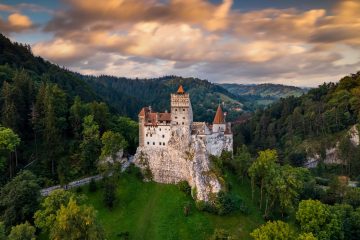
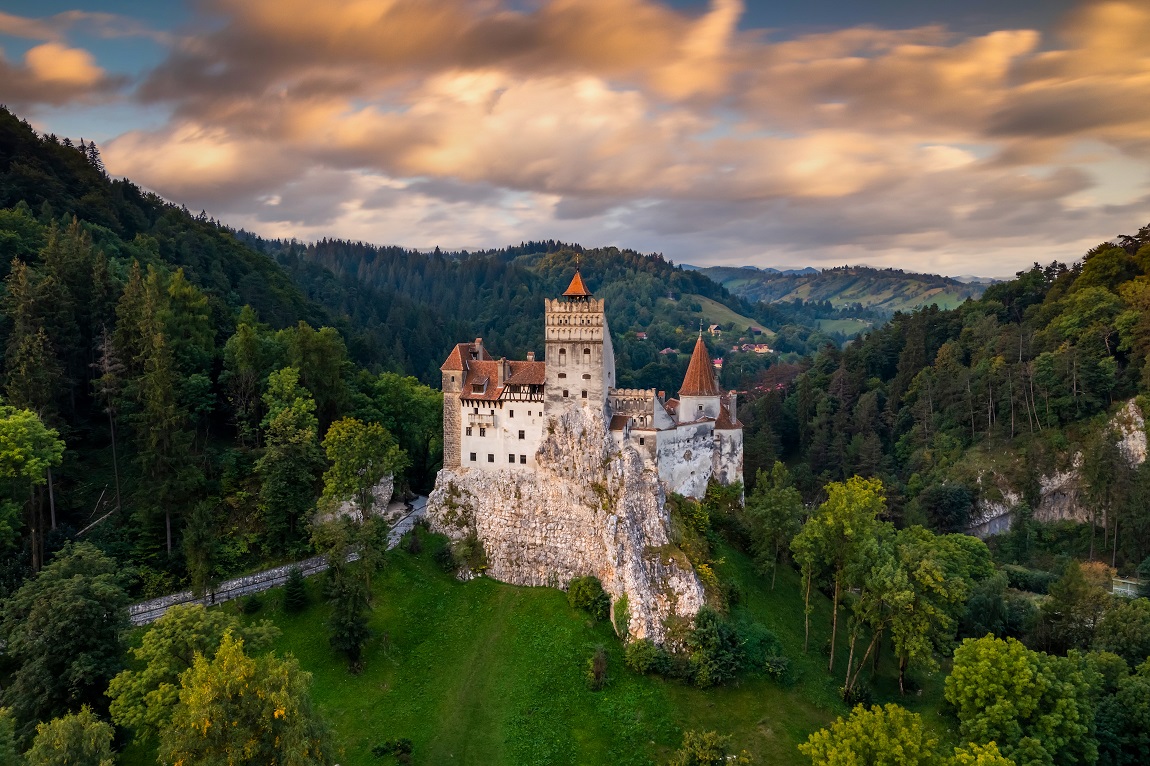
Bran Castle sits on the border between Transylvania and Wallachia, its towers rising from a rocky outcrop above a strategic mountain pass. Built in the 14th century by Saxons from Brașov, the fortress served as a customs post and defensive position against Ottoman incursions. The castle’s narrow staircases, hidden passages and irregular layout create exactly the Gothic atmosphere that tourists expect from a vampire’s residence. Yet despite its fame, historical evidence suggests Vlad the Impaler spent little if any time here. He may have passed through the region during conflicts with the Saxons who opposed his rule, but Bran was never his home.
What you see today is a fascinating blend of medieval military architecture and early 20th-century royal residence. Queen Marie of Romania transformed Bran into a summer retreat after receiving it in 1920, adding furniture and decorative elements that remain on display. The castle now houses collections of medieval weapons, furniture and art that help visitors understand both the fortress’s original defensive purpose and its later romantic reimagining. The inner courtyard, with its well and wooden galleries, captures the atmosphere of Transylvanian architecture regardless of its limited connection to Vlad.
Corvin Castle: A fortress linked to Vlad’s imprisonment
Corvin Castle in Hunedoara represents one of the largest medieval castles in Europe. Associated with János Hunyadi in the 15th century, this Gothic-Renaissance fortress later served as a prison. Vlad was imprisoned by Matthias Corvinus, King of Hungary and son of János Hunyadi, who turned against him. Vlad was held in Hungary from 1463 to 1475. This dramatic reversal of fortune for the Wallachian prince, who had once fought alongside the Hunyadi family against the Ottomans, marked a crucial period in his life.
Today’s visitors encounter a fortress that seems lifted from fairy tales, with its high towers, drawbridge over a deep moat, and Gothic halls with ribbed vaulting. The Knights’ Hall and Diet Hall showcase the castle’s role as an aristocratic residence rather than purely military structure. While later reconstructions have altered some original features, Corvin remains an impressive example of 15th-century fortification. The castle museum includes weapons, armour and period furnishings that help illustrate the world Vlad inhabited, even though most displays focus on the Hunyadi family rather than their famous prisoner.
Poenari Fortress: Vlad’s actual mountain stronghold
Poenari Fortress, perched on a cliff above the Argeș River in the Făgăraș Mountains, represents the castle most genuinely connected to Vlad the Impaler. He rebuilt and strengthened this earlier fortress during his reign, creating a mountain refuge during conflicts with boyars and Ottoman forces. Legend claims Vlad forced captured boyars to work on the construction until their clothes fell to rags, though the truth of forced labour during this period needs no embellishment. The fortress served its purpose as an emergency retreat, though it was eventually abandoned.
Reaching Poenari requires climbing a steep stairway up the mountainside, a strenuous journey that immediately explains the fortress’s defensive value. What remains today are partial walls and towers, enough to understand the layout but far from complete. The ruins occupy a narrow ridge with sheer drops on three sides, offering commanding views over the valley below. The remoteness and dramatic setting provide a more authentic sense of Vlad’s world than the more accessible tourist castles. Weather can close the site, and the climb demands reasonable fitness, but those who make the effort find themselves alone with history in a way rarely possible at Europe’s more famous fortifications.
Peleș Castle: Royal elegance near Dracula country
While Peleș Castle has no connection to Vlad the Impaler, its location near Brașov places it at the heart of Dracula tourism, and its spectacular 19th-century architecture offers a complete contrast to medieval fortresses. Built as a summer residence for King Carol I of Romania, Peleș represents Neo-Renaissance splendour with numerous rooms showcasing the finest European craftsmanship. The castle’s fame in Dracula tours stems purely from proximity to Bran and the chance to see how Romanian royalty lived centuries after Vlad’s brutal reign.
The interior preserves original furnishings, weapons collections, and technological innovations including central heating and electricity. The ornate reception halls, library, and armoury display a wealth that medieval Wallachian princes could never have imagined. Formal gardens surround the castle, and several smaller buildings on the grounds are also open to visitors. For those following the Dracula trail, Peleș provides historical context for Romania’s development from medieval battlefield to modern kingdom, even if that story has little to do with vampires or impalements.
Târgoviște Royal Court: Capital of Vlad’s Wallachia
The princely court at Târgoviște served as the administrative capital of Wallachia during Vlad’s reigns, making it more significant to his actual rule than any mountain fortress. The complex included watchtowers and served as the centre of princely authority. From Târgoviște, Vlad issued orders, received foreign ambassadors, and allegedly carried out many of the impalements that earned him his fearsome reputation. The infamous story of impaling Ottoman envoys who refused to remove their turbans supposedly occurred here, though like many tales about Vlad, historical verification proves difficult.
Today’s ruins occupy a park in modern Târgoviște, with towers still standing and climbable for views across the town. Foundations of the princely palace, churches and defensive walls mark out the medieval complex, though substantial reconstruction would be needed to fully understand the original layout. A small museum displays archaeological finds and explains the site’s significance as the political heart of 15th-century Wallachia. While less visually dramatic than mountain castles, Târgoviște offers genuine insight into how Wallachian princes actually governed, away from the battlefield and fortress walls.
Făgăraș Fortress: Transylvanian stronghold on the border
Făgăraș Fortress, with its massive walls and wide moat, controlled another key pass between Transylvania and Wallachia. The fortress played an important role in the constant conflicts between Wallachian princes, Transylvanian Saxons, and Hungarian kings that defined 15th-century politics in the region. Medieval foundations remain from Vlad’s era, though the fortress was strengthened by successive rulers.
The fortress now houses the Făgăraș Land Museum, with collections covering the region’s history from prehistoric times through the medieval period to modern Romania. The perfectly preserved rectangular layout with corner bastions demonstrates later developments in military architecture, showing how fortress design evolved after gunpowder rendered high medieval walls obsolete. Walking the ramparts gives a sense of the strategic importance of controlling Transylvanian passes, which both Vlad and his Ottoman enemies understood well. The castle sits in the modern town centre, easily accessible and less crowded than Bran, though also less dramatic in setting.
Hunyad: The Saxon fortress where legends accumulated
The fortress at Hunyad in southern Transylvania represents another location where popular legend places Vlad, though historical documentation remains sparse. This region saw frequent conflict between Wallachian princes and Transylvanian authorities, making it plausible that Vlad passed through or temporarily occupied various fortifications during his military campaigns. The Saxon communities who built and controlled many Transylvanian fortresses had complex relationships with Wallachian rulers, sometimes allied against Ottoman threats, sometimes in direct conflict over trade and political influence.
What remains today varies greatly among the smaller fortresses scattered through this region. Some are substantial ruins worth seeking out for dedicated history enthusiasts, while others have vanished entirely or survive only as fragments incorporated into later buildings. The landscape itself, with forested hills and narrow valleys, helps explain why control of fortified positions mattered so much in medieval warfare. These lesser-known sites offer escape from the crowds at Bran and provide a more contemplative encounter with the period, even without definitive connections to Vlad himself.
Planning your Dracula castle tour in Romania
Most visitors base themselves in Brașov, a Saxon city with its own medieval fortifications and charm, which provides easy access to both Bran and Peleș. Brașov’s location makes it an ideal centre for day trips, with regular buses to Bran and trains to Sinaia for Peleș. Reaching Poenari requires more planning, as public transport is limited and the site lies several hours northwest. Many visitors rent a car or join organized tours that combine multiple castles. The Transfăgărășan highway offers spectacular mountain scenery on the route to Poenari.
Spring through autumn provides the best conditions, with May to September offering reliable weather and full access to mountain sites. Winter closes some roads and sites, though snow-covered castles have their own atmosphere if you’re lucky with timing and weather. Each major castle maintains its own admission prices and hours, which change seasonally, so check ahead rather than relying on printed guides. Consider splitting your focus between the famous sites everyone visits and one or two genuine Vlad locations like Poenari or Târgoviște for a more complete picture. The combination of tourist-friendly attractions and authentic historical sites makes Romania’s Dracula trail more varied and rewarding than simply chasing vampire legends would suggest.
Frequently asked questions about dracula castle romania
Did Vlad the Impaler actually live at Bran Castle?
No credible historical evidence places Vlad the Impaler as a resident of Bran Castle. He may have briefly passed through the fortress during conflicts with Saxon merchants, but it was never his home or headquarters. The castle’s association with Dracula stems entirely from its Gothic appearance and marketing rather than historical fact.
How is Vlad the Impaler connected to Bram Stoker’s Dracula?
Bram Stoker borrowed the name ‘Dracula’ (meaning ‘son of the dragon’) from Vlad III and incorporated some aspects of his reputation for cruelty into the vampire character. The connection is literary rather than biographical.
Can you visit all of Vlad the Impaler’s castles in one trip?
Yes, though it requires several days and careful planning. Bran, Peleș and Corvin are easily accessible with standard tourist infrastructure, while Poenari demands more effort and cannot be combined with other sites in a single day. Târgoviște and other locations require additional time but are possible with a car and flexible schedule over a week-long visit.
Which castle gives the most accurate picture of Vlad the Impaler’s life?
Poenari Fortress and the Târgoviște Royal Court provide the most authentic connections to Vlad’s actual life and rule. Poenari shows his military defensive strategy, while Târgoviște represents his seat of government. Both require more imagination than restored castles like Bran or Corvin, but they offer genuine historical significance rather than atmospheric association.