
Set on a serene island in Budapest’s City Park, Vajdahunyad Castle unfolds as an extraordinary architectural collage that compresses a thousand years of Hungarian history into a single harmonious complex. Builders created it in 1896 as part of the Millennial Exhibition, which celebrated the 1,000 years of Hungary since the Hungarian Conquest of the Carpathian Basin in 895. This unique monument began as a temporary vision in wood and cardboard. It grew so popular that workers rebuilt it from stone and brick between 1904 and 1908. The castle comprises twenty-one smaller buildings linked together, each designed as a replica of other significant structures found throughout Hungary and Romania.
Plan your visit to Vajdahunyad Castle
Tue–Sun 10:00–17:00
Location of Vajdahunyad Castle
The castle sits on an island, so visitors reach it via one of four bridges in City Park (Városliget), one of Budapest’s largest green spaces. Guests can easily access the castle from Heroes’ Square. The nearest metro station is Hősök tere on the M1 (Millennium Underground) line. The M1 line to Széchenyi fürdő station requires only a three-minute walk. Tram 70 also serves the area. Nearby attractions include the Széchenyi Thermal Bath, the City Park Ice Rink, the Budapest Zoo and Botanical Garden, and Heroes’ Square, one of Budapest’s most important historical sites. The castle’s address at Vajdahunyad sétány places it in District XIV of the capital.
History of Vajdahunyad Castle
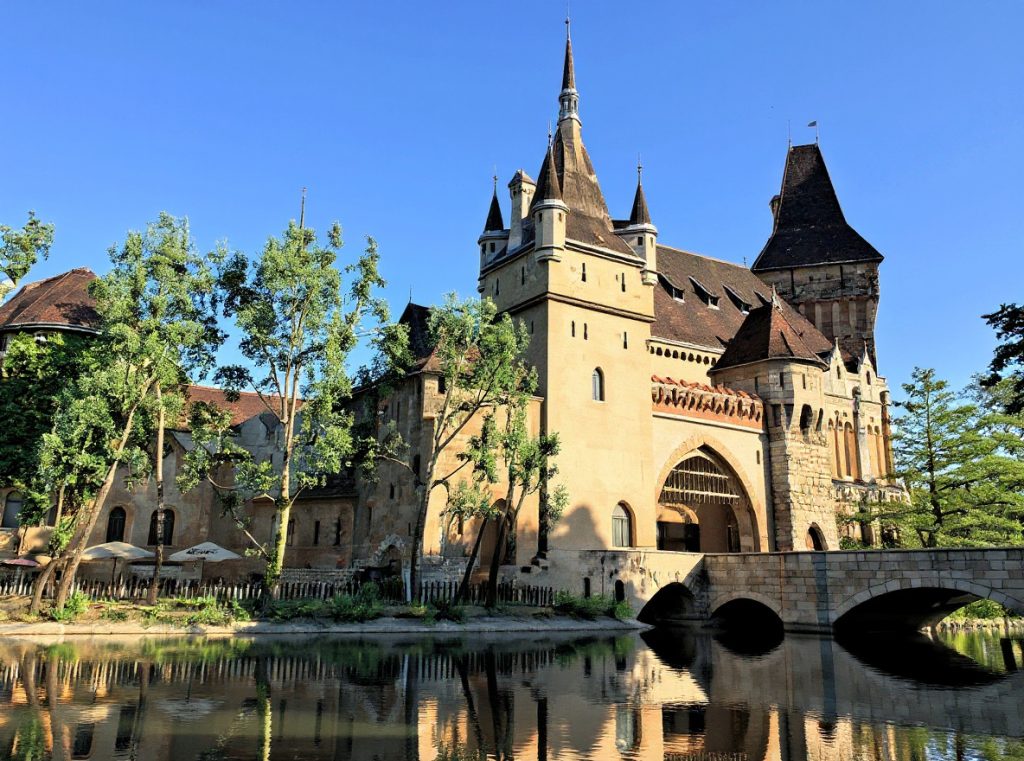
Builders completed the construction work on the building complex standing on an island in City Park Lake in 1896. This year held great significance for the Hungarian nation because Hungary celebrated the 1000th anniversary of the conquest. Along with many other landmarks in Budapest, this castle rose for the Jubilee celebration of the thousand years of the Hungarian State. Architect Ignác Alpár created a complex that represents each architectural style in the history of Hungary. Each section models after an existing building in the Kingdom of Hungary. In total, planners integrated twenty-one different buildings into the complex.
Designers originally called the building the “Historical Building Complex” and only later renamed it Vajdahunyad Castle after Ignác Alpár modeled the dominant part, the main facade, on the medieval Vajdahunyad Castle of the Hunyadis in Transylvania. Workers completed Vajdahunyad Castle in 1896, and it first housed the Millennium Exhibitions. Later, in 1897, the Museum of Hungarian Agriculture took up residence within the walls of the castle. Workers initially erected the buildings on a temporary basis. Yet the people grew to like the building complex so much that the capital city subsequently ordered its construction from permanent materials. As a result, the castle rapidly deteriorated and grew so hazardous that officials closed it to the public in 1899. They subsequently demolished it. While there was consensus that the structure was too dilapidated to remain open, the public’s affection for the castle and the advocacy of numerous prominent figures made it clear that its disappearance would be a great loss. Workers later rebuilt the castle using permanent materials between 1902 and 1908 to house the Hungarian Agricultural Museum. In 1907, the King of Hungary and Emperor of Austria, Franz Joseph I, personally inaugurated it.
Current status
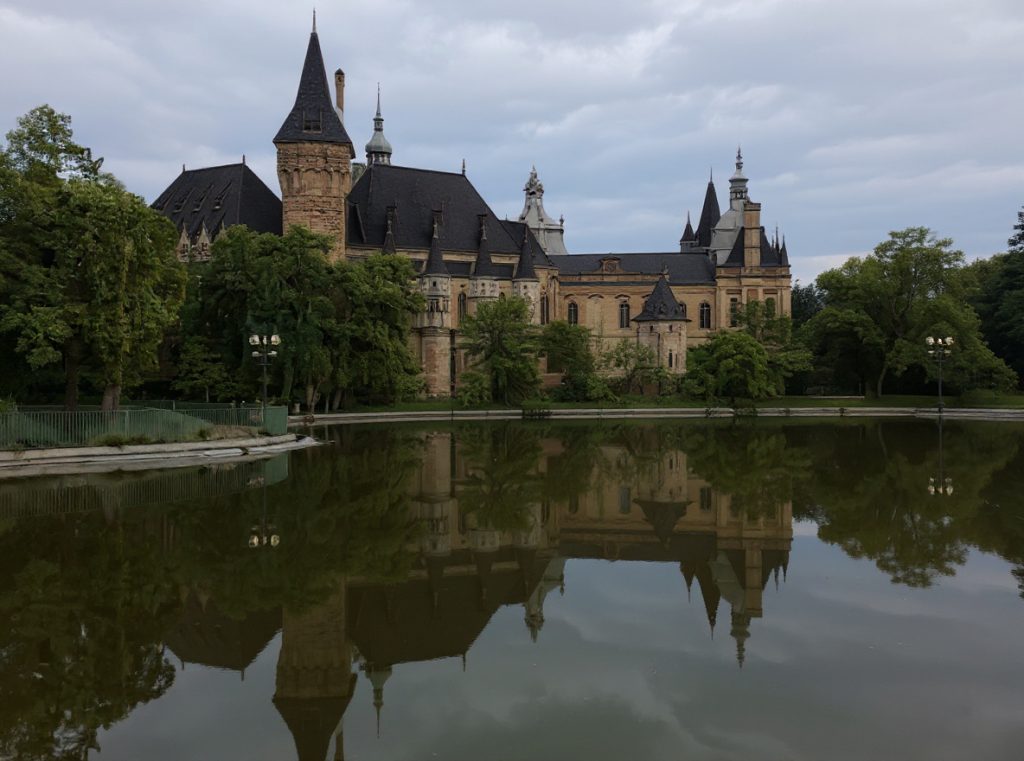
Since the castle contains parts of buildings from various time periods, it displays different architectural styles: Romanesque, Gothic, Renaissance, and Baroque. Visitors consider the building complex a particularly interesting attraction because it combines elements from the Romanesque, Gothic, Renaissance and Baroque styles at the same time. Designers modeled the components of the monumental castle building after famous buildings erected in historical Hungary. This means that elements of Romanesque and Gothic churches, as well as Renaissance palaces and Baroque castles appear throughout the castle. The Hungarian Agricultural Museum, one of the oldest and largest agricultural museums in Europe, occupies the main buildings within the complex. The Museum in the Castle closes on Mondays and opens from Tuesday to Sunday.
The castle courtyard opens for walks 24/7 and costs nothing to enter. You can enter the courtyard free of charge all day and all night, except for festivals. Museum admission requires tickets, though exploring the grounds costs nothing. The castle hosts several festivals, concerts and the exhibitions of the Hungarian Agricultural Museum. An important religious element came in 1915, when builders dedicated a Roman Catholic chapel modeled on the medieval Ják Chapel. This chapel remains active for worship and ceremonies. Today the complex serves simultaneously as a working museum, a functioning chapel, an event venue, and a beloved public space where locals and visitors wander beneath towers and archways that span centuries of Magyar architectural tradition. The castle lake transforms into an ice rink each winter, while the surrounding park hums with life year-round. The castle complex presides over it all, a built dream that refused to vanish.
Castles near Vajdahunyad Castle
Frequently asked questions
Is entry to Vajdahunyad Castle free?
The castle courtyards and grounds are free to visit 24 hours a day. Only the Museum of Hungarian Agriculture inside charges admission: 3,600 Ft for adults and 1,800 Ft for students and seniors.
What is Vajdahunyad Castle?
Vajdahunyad Castle is an architectural showcase built in 1896 for Hungary's Millennial Exhibition, blending Romanesque, Gothic, Renaissance and Baroque styles in one complex. Originally built from cardboard and wood, it was rebuilt in stone by 1908 and now houses the Museum of Hungarian Agriculture.
Can you climb the towers at Vajdahunyad Castle?
Yes, the Gatehouse Tower is accessible with an additional 400 Ft ticket for self-guided climbs (65 steps). The taller Apostles' Tower requires a guided tour with an extra fee and involves 150 steps.
What can you see at Vajdahunyad Castle?
Visitors can explore the free courtyards with the famous Anonymus statue, architectural details from different eras, and the Jáki Chapel. Inside the museum are exhibitions on Hungarian agriculture from prehistoric times to the 20th century, including displays on horses, rural life and farming tools.
Is Vajdahunyad Castle open in winter?
Yes, the castle grounds are open year-round 24/7. The Museum of Hungarian Agriculture is open Tuesday to Sunday 10:00–17:00, though it closes one hour earlier (16:00) on weekdays from November to March.
Featured listings