
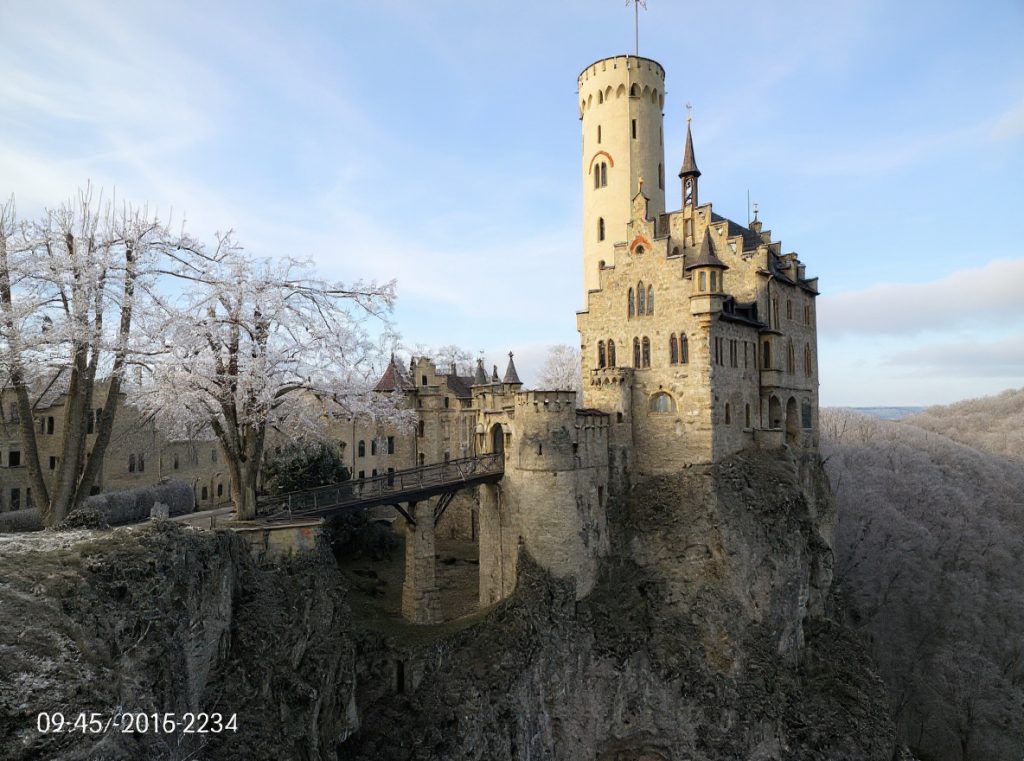
Perched on a sheer cliff above the Echaz valley, Lichtenstein Castle commands one of the most dramatic settings in southern Germany. This Gothic Revival gem rises 817 metres above sea level on the edge of the Swabian Jura. Count Wilhelm of Württemberg built the castle between 1840 and 1842, inspired by Wilhelm Hauff’s 1826 romantic novel. The name means “shining stone” or “bright stone”.
Plan your visit to Lichtenstein Castle
Location of Lichtenstein Castle
The castle overlooks the Echaz valley near Honau in the Reutlingen district of Baden-Württemberg. It sits on an escarpment that marks the northwestern edge of the Swabian Jura. Visitors travelling by car can reach the castle in roughly 45 minutes from Stuttgart or 30 minutes from Tübingen. The site sits some 250 metres above the Echaz River below. The castle administration operates from Schloss Lichtenstein 1, 72805 Lichtenstein. Public transport connects via Reutlingen, where buses serve Honau. A walking path then climbs to the castle grounds. The location offers sweeping views across wooded valleys and the rolling hills of the Swabian Alps.
History of Lichtenstein Castle
Citizens of Reutlingen destroyed an earlier medieval castle on this site between 1377 and 1381. Builders then raised a new fortress in 1390 some 500 metres from the old ruins. People considered the 1390 fortress one of the best-fortified of the Middle Ages, and it withstood every attack. Yet it lost its status as ducal seat in 1567 and deteriorated. In 1802, King Frederick I of Württemberg dismantled part of the structure and rebuilt it as a hunting lodge.
Count Wilhelm von Urach purchased the property from his cousin Frederick I in 1837 because he held a special interest in medieval history and architecture. Architect Carl Alexander Heideloff designed a German medieval knight’s castle for the count in 1840–42, incorporating the foundation walls of the ancient fortress up to the third floor. Construction began in 1840 under architect Heideloff and manager Johann Georg Rupp, while Count Wilhelm influenced the design himself. Builders completed the romantic neo-Gothic knight’s castle in 1842, when the King attended the inauguration.
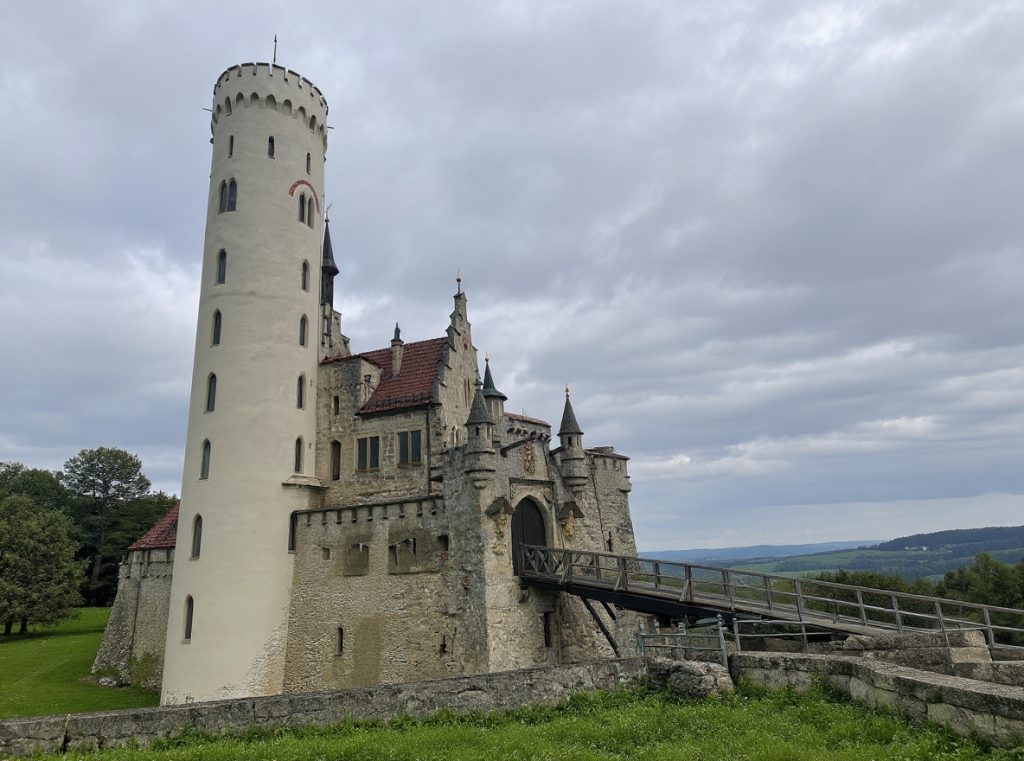
After the Revolution of 1848, Count Wilhelm became Duke of Urach and built outwork caponiers in the style of the Fortress of Ulm. He later added cannons to the bastions. In 1857, he added a formidable barbican and outer bailey featuring imposing corner bastions and slender turrets. The castle served as a residence throughout the late 19th century and into the 20th, though World War II damaged it. Repair efforts began shortly after the war ended.
Current status
Today, the Dukes of Urach still own the castle, though they open it to visitors. Local non-profits helped restore it, and it now attracts many tourists. The castle opens to the public for tours daily from April to October, and on weekends only in February, March, and November. Tours are not available during December and January. The castle grounds include the Gerobau, the chapel, an extensive castle garden and the romantic castle courtyard. The restored chambers of Count Wilhelm display the opulent splendour of late Romantic living culture.
The castle contains a large collection of historic weapons and armour. Guided tours lead visitors through lavishly decorated rooms filled with medieval-style paintings and furnishings. People know it as the ‘fairytale castle of Württemberg’ because its architectural style and furnishings recall the Romantic period and honour the Middle Ages. The three-storey structure rises from its cliff-edge foundation, surrounded by curtain walls and a courtyard. It stands as an example of 19th-century Romanticism and the enduring appeal of chivalric ideals.
Castles near Lichtenstein Castle
Frequently asked questions
Can I visit the interior of Lichtenstein Castle without a tour?
No, the interior of Lichtenstein Castle can only be visited on a guided tour. Tours are in German and run approximately every 20 minutes throughout the day; English handouts are available.
Is Lichtenstein Castle open in winter?
The castle is closed in January and February. It opens in March, November, and December from 10:00 to 16:00, but closes on 24, 25, and 26 December.
Can I buy Lichtenstein Castle tickets online in advance?
No, tickets for Lichtenstein Castle are not available online. All tickets must be purchased at the ticket office at the entrance during opening hours.
How long does it take to walk to Lichtenstein Castle from the car park?
The walk from the main car park to Lichtenstein Castle takes approximately 5 to 10 minutes along a paved path. The car park costs €2 for all-day parking.
What is included in the courtyard ticket at Lichtenstein Castle?
The courtyard ticket (€5 for adults) allows access to the castle courtyard, chapel, and Augusten Tower with views over the Swabian Alps. The full tour ticket includes both courtyard access and the interior guided tour.
Featured listings