
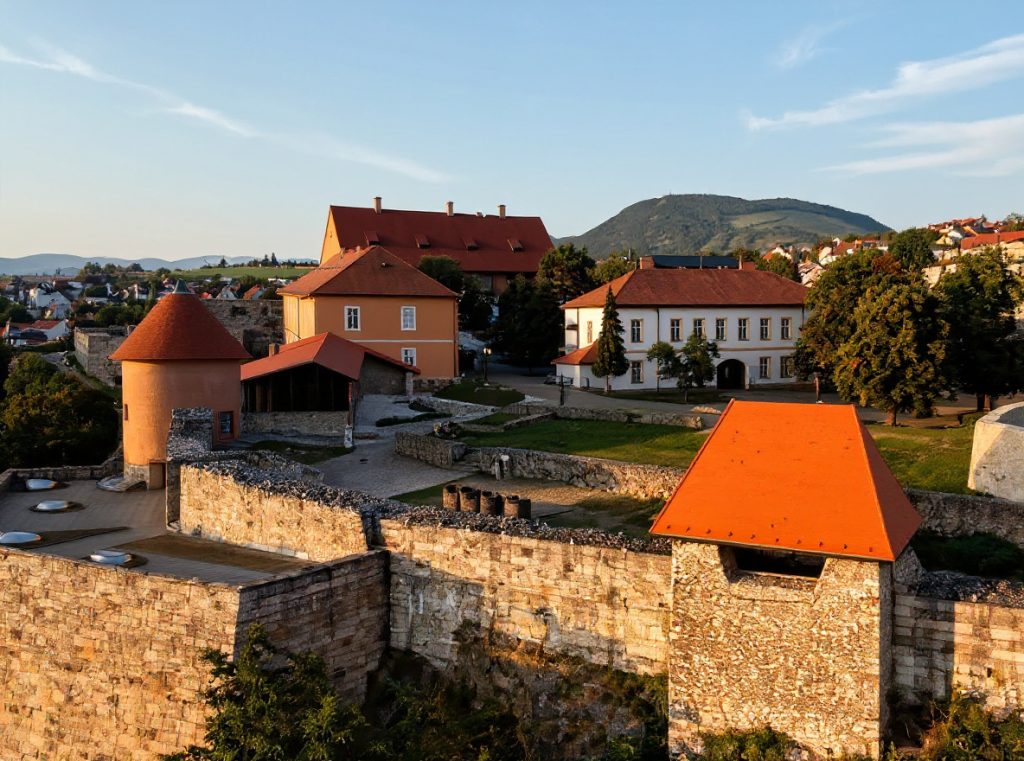
On Castle Hill in the city of Eger, Eger Castle rises as one of Hungary’s most significant fortresses. The stone castle marks the site where a small garrison held out against overwhelming Ottoman forces in 1552. This event entered Hungarian legend through song, novel and national memory. Today this complex of walls, towers and museums draws visitors to explore centuries of Magyar resilience.
Plan your visit to Eger Castle
Location of Eger Castle
The castle sits on the Eger Stream, on hills between the Mátra and Bükk Mountains in northern Hungary. Its address is 3300 Eger, Vár köz 1, in the historic centre of Eger. The fortress dominates the skyline of this county town. Eger lies approximately 130 kilometres east of Budapest. Rail connections link Eger to the capital, while Route 25 provides road access within ninety minutes by car. From the main railway station or central coach terminal, a short walk through the old quarter brings visitors up to the castle gates.
The rocky outcrop on which the fortress stands provided natural defences. Within the town, visitors find baroque architecture, thermal baths and wine cellars, all easily explored on foot. The castle forms part of a broader landscape that includes vineyards on the surrounding slopes. Local vintners have produced the famous Egri Bikavér wine on these slopes since medieval times.
History of Eger Castle
King Saint Stephen founded the Eger Bishopric between 1001 and 1009. After this, builders raised the first cathedral of Eger on Castle Hill. The Mongol invasion in 1241 ransacked and burned the town during Bishop Cletus Bél’s episcopacy. After the Mongol attack, Bishop Lambert of Eger ordered the construction of a surrounding fortress in 1248. Workers built a new castle on the hill, and it developed rapidly. In 1470 builders completed a Gothic palace, reflecting the prosperity of the episcopal seat.
The castle’s greatest fame came in 1552. A Turkish army of 35,000-40,000 soldiers attacked the castle. István Dobó commanded 2,100-2,300 defenders inside. For five brutal weeks, Dobó and about 2,300 defenders thwarted the assault. The siege failed as the Turks suffered heavy casualties. A total of 1,700 of the defenders survived. This victory halted Ottoman expansion for decades. Women joined the defence, hurling stones and boiling liquids onto besiegers below.
Turks besieged the castle again in 1596, resulting in a Turkish victory. The fortress remained under Ottoman control for ninety-one years. Habsburg-led forces reclaimed the city in 1687, ushering in reconstruction. In 1701, the Austrians exploded half of the castle (the Külső vár) to prevent its use by rebels. Archaeological excavations only started in 1925. The army used the castle as barracks until 1957.
Current status
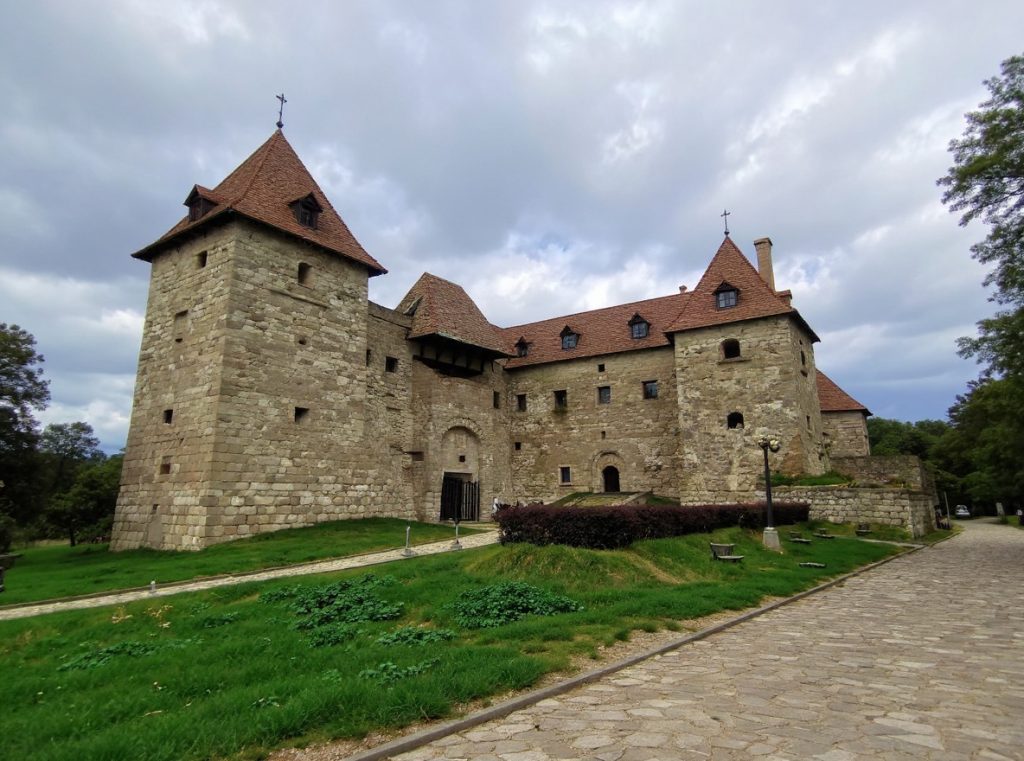
In 1958, the István Dobó Castle Museum moved to Eger Castle, where it still operates today. The museum runs multiple permanent exhibitions across the complex. Visitors explore the Gothic Bishop’s Palace, which displays the castle’s thousand-year history through interactive presentations. The Heroes’ Hall honours the 1552 defenders. Underground casemates reveal the tunnel network that builders constructed in the 1570s. Soldiers moved safely between bastions in these tunnels and detected enemy mines.
The Ruin Garden preserves remnants of the Romanesque and Gothic cathedral. A waxworks exhibition brings the 1552 siege to life through tableaux of Dobó and his soldiers. The castle bakery shows how the fortress sustained its garrison after restorers revived it following centuries of neglect. Outside the walls, ruins of the Valide Sultana Hamam recall the Ottoman occupation.
Eger Castle is one of the most popular museums in Hungary. The fortress welcomes school groups, history enthusiasts and international tourists throughout the year. Admission tickets grant access to ramparts, exhibitions and casemates. From the Zárkándy Bastion and Calvary Hill, the highest point within the fortifications, sweeping views extend across red-tiled roofs. They reach the distant peaks of the Bükk range. These viewpoints offer a soldier’s perspective on the strategic importance of this hill where so many once stood watch.
Castles near Eger Castle
Frequently asked questions
What is included in the Eger Castle ticket?
The ticket covers entry to the castle exhibitions, Heroes' Hall, casemates, prison display, and the Gárdonyi Géza Memorial House in town. The underground corridor system requires a separate guided tour ticket costing 1000 Ft.
Can I visit Eger Castle on national holidays?
Yes, the castle is open on Hungarian national holidays (15 March, 20 August, 23 October) with free entry to exhibitions, though you must still purchase the 800 Ft service ticket. The castle is closed only on 24 and 25 December.
How do I get to Eger Castle from Budapest?
Take a direct train from Budapest Keleti station to Eger (hourly, approximately 2 hours). From Eger station, it's a 10-minute walk uphill to the castle, or you can take local buses 11, 12, or 14.
Is Eger Castle suitable for children?
Yes, children aged 6-26 receive discounted admission (2800 Ft), and children under 6 enter free. The castle has a museum, wax figures, underground passages, and ramparts to explore, making it engaging for families.
What is the historical significance of Eger Castle?
Eger Castle is famous for the 1552 siege when Hungarian defenders led by István Dobó successfully resisted a much larger Ottoman army. This heroic defence became a defining moment in Hungarian history and is commemorated in the castle exhibitions.
Featured listings