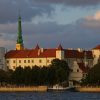

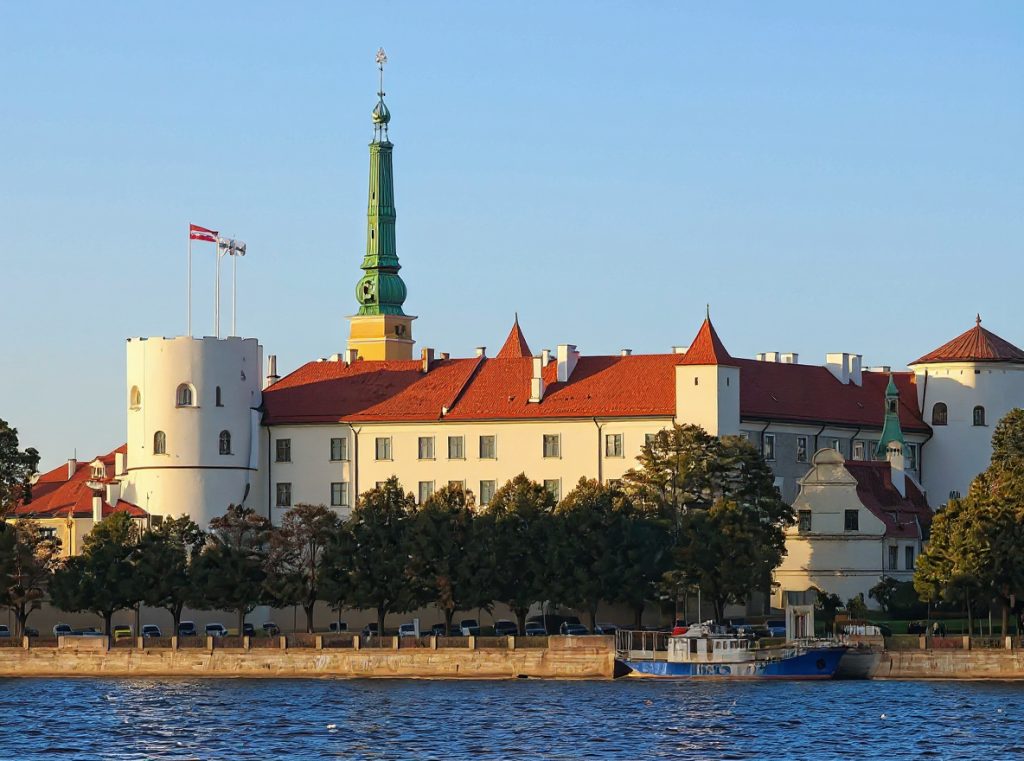
On the banks of the River Daugava in Latvia’s capital, Riga Castle has commanded attention for nearly seven centuries. The Livonian Order founded the castle in 1330, and since then it has weathered destruction, conquest, and reconstruction. Today it serves as the official residence of the President of Latvia and houses several museums. This medieval fortress sits where Old Riga meets the river, with its towers marking the boundary between historic and ceremonial functions.
Plan your visit to Riga Castle
Sun 10:00–17:00Museum: Tue–Thu 10:00–18:00, Fri 10:00–20:00, Sat–Sun 10:00–17:00, closed Mon. Presidential tours by appointment only.
Location of Riga Castle
The Castle sits in the very centre of Old Riga on the bank of River Daugava. Visitors enter from Pils laukums 3, while museum access opens from Daugavas gāte. The castle occupies a prominent riverside position along 11 November Embankment. It forms one of the most recognisable landmarks of the capital as a result. The location places it within easy walking distance of other Old Town attractions. Central Riga’s compact layout means visitors can reach the castle on foot from most hotels in the historic district. The Daugava flows directly past the castle’s walls. This waterfront setting has defined its strategic importance since the medieval period.
History of Riga Castle
Workers built the castle based on a treaty between Riga and the Livonian Order. Before this, Rigans had rebelled and demolished the Order’s original castle in the town centre. Workers laid the foundation stone on 15 June 1330. Yet conflict continued, and the Rigans eventually destroyed the uninhabited castle in 1484. The Rigans had to rebuild the castle after losing the ongoing battle. The reconstruction featured prevalent military technology including two circular towers, which workers completed in 1515. These became the Tower of the Holy Ghost and the Lead Tower. They now hold the Flag of Latvia and the Standard of the President.
When Swedes seized the castle, they constructed spacious annexes in 1641. The fortress underwent continual augmentation and reconstruction between the 17th and 19th centuries. After Russian forces conquered Riga in 1710, the castle became the residence of the governors-general of Livonia. It also housed various administrative offices during this period. Architect Eižens Laube completed renovation work in the 1930s. Then the Latvian government declared the castle its residence in 1938. The castle has served as the residence of the President of Latvia since 1922, when the presidency began.
During Soviet occupation, authorities repurposed the building for new uses. In 1941, the Young Pioneer organisation established a Pioneers Palace in the northern part. Museums occupied other sections throughout the Soviet era. The structure that stands today dates from a thorough rebuilding between 1497 and 1515. However, centuries of modifications have layered different architectural periods onto the medieval core.
Current status
The castle forms an important part of the historical and cultural heritage of Latvia. It ranks as one of the greatest medieval castles in the country. It functions as the official residence of the President of Latvia and home to several museums. The Latvian National Museum of History has occupied the reconstructed wing of the oldest part since 1920. Visitors enter from Daugavas gāte. From 21 March 2026, the museum reopened with the exhibition Streaming Time and restored rooms. After reconstruction, 4,400 square metres opened to the public. This space includes the refectory, chapel and four-storey Lead Tower.
In the cellars, the exhibition “Livonian Castles” tells the story of the Livonian period from the 13th to 16th centuries. The vaulted cellars from the 14th century cover more than 530 square metres. A free audio guide helps visitors explore, whether they come individually or in groups. Visitors who want guided tours in English must book in advance. Parts of the castle remain closed because they house the functioning presidential residence. Riga Castle holds status as a national architectural monument.
The building shows its long history through varied architectural elements. The structure exemplifies late Classicism architecture, though builders constructed the bay tower in Early Baroque style. Several rooms also feature Art Deco interiors from later periods. Stone walls, round towers, and a central courtyard preserve the medieval fortress plan. Along the river embankment, the castle presents an imposing facade that has defined Riga’s skyline for generations. It continues to serve as both a symbol of statehood and a window into Latvia’s layered past.
Castles near Riga Castle
Frequently asked questions
Can I visit the inside of Riga Castle?
Yes. The Latvian National History Museum inside the castle is open to the public Tuesday to Sunday. Tours of the presidential residence are free but require advance application via president.lv.
How much does it cost to visit Riga Castle?
The National History Museum charges €8 for adults, €5 for students and pensioners, and €3 for schoolchildren. Presidential residence tours are free but must be booked in advance.
Is Riga Castle the official residence of Latvia's president?
Yes, Riga Castle has been the official residence of the President of Latvia since 1938. The castle also houses the Latvian National History Museum in a separate wing.
What can I see at Riga Castle museum?
The museum features the 'Streaming Time' exhibition on Latvian history and the 'Livonian Castles' exhibition in the medieval cellars. You can also see restored castle rooms including the Lead Tower, chapel and refectory.
How do I book a tour of Riga Castle presidential residence?
Fill in the application form at president.lv/en/visit-riga-castle for individual visits (up to 9 people). Tours are free, last one hour, and require ID check 15 minutes before your scheduled time.
Featured listings