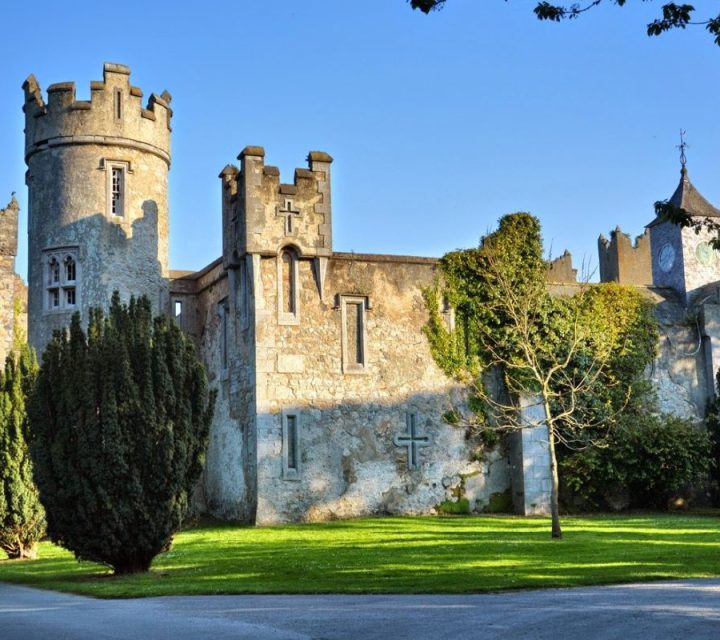
Howth Castle stands proudly on the scenic Howth Peninsula near Dublin, Ireland. It is a fine example of medieval heritage blended with later architecture. For over 800 years, it served as the ancestral home of the St Lawrence family. This makes it one of Ireland’s longest-occupied castles. The castle reflects the region’s social and political history. It also tells the story of a noble family that adapted through changing times. Visitors today come to experience its fascinating story and striking presence.
Plan your visit to Howth Castle
Location of Howth Castle
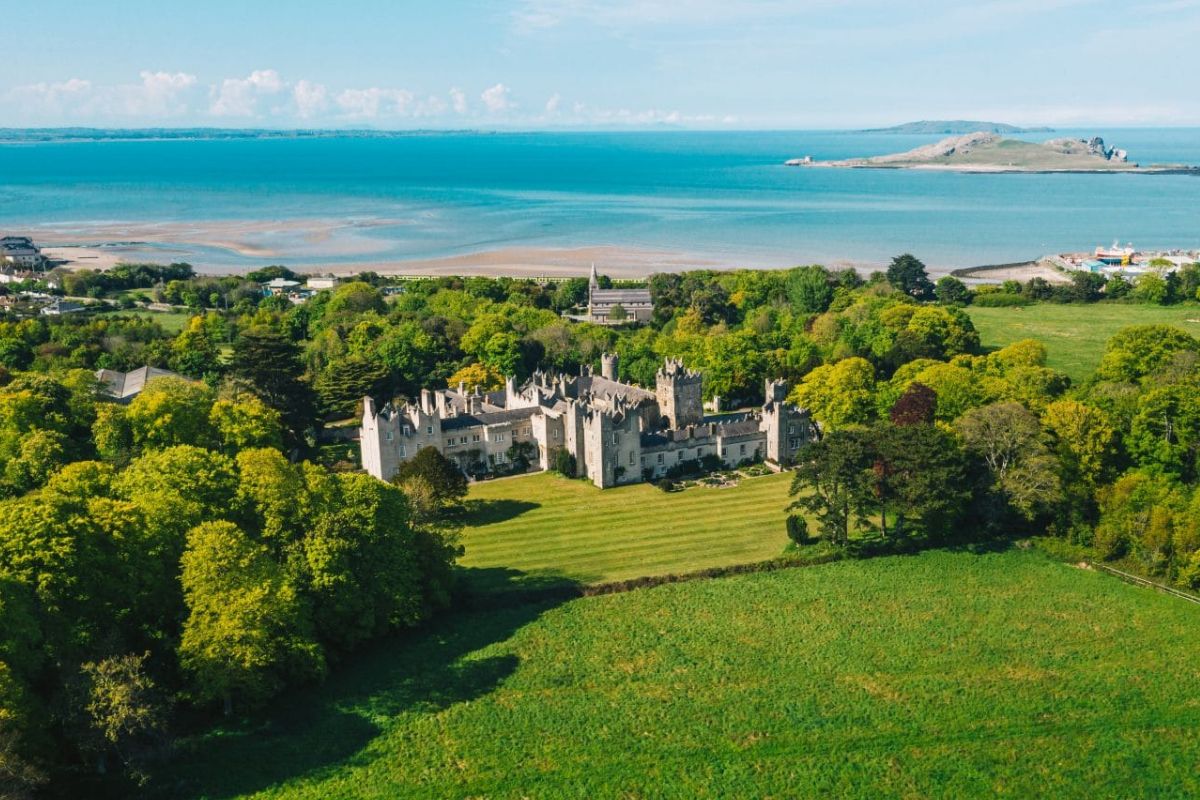
Howth Castle is located on the northern edge of Dublin Bay, on the Howth Peninsula in County Dublin. Just 15 kilometers northeast of central Dublin, it is an easy day trip. The estate is surrounded by rolling hills, ancient woodlands, and manicured lawns. From the grounds, you can see the picturesque harbor of Howth village below. To the east, the Irish Sea stretches to the horizon, with cliffs and coastal paths adding to the view. The area is known for its natural beauty as well as its vibrant fishing and yachting culture.
The village of Howth complements the castle with colorful boats, seafood restaurants, and lively markets. The peninsula also offers dramatic cliffs, lighthouses, and stone ruins. These make the region rich in history and atmosphere. You can reach the castle by car or take the DART train from Dublin in about 30 minutes. Its easy access makes it a favorite for history lovers and casual explorers.
History of Howth Castle
Howth Castle’s story begins with the Norman invasion of Ireland in the late 12th century. Around 1180, Sir Almeric Tristram arrived with John de Courcy’s campaign to Ulster. He received the lands of Howth from King Henry II as a reward. The St Lawrence family, descended from Tristram, established their seat here and stayed for more than eight centuries. The first structure was a simple defensive fort, reflecting the needs of the time.
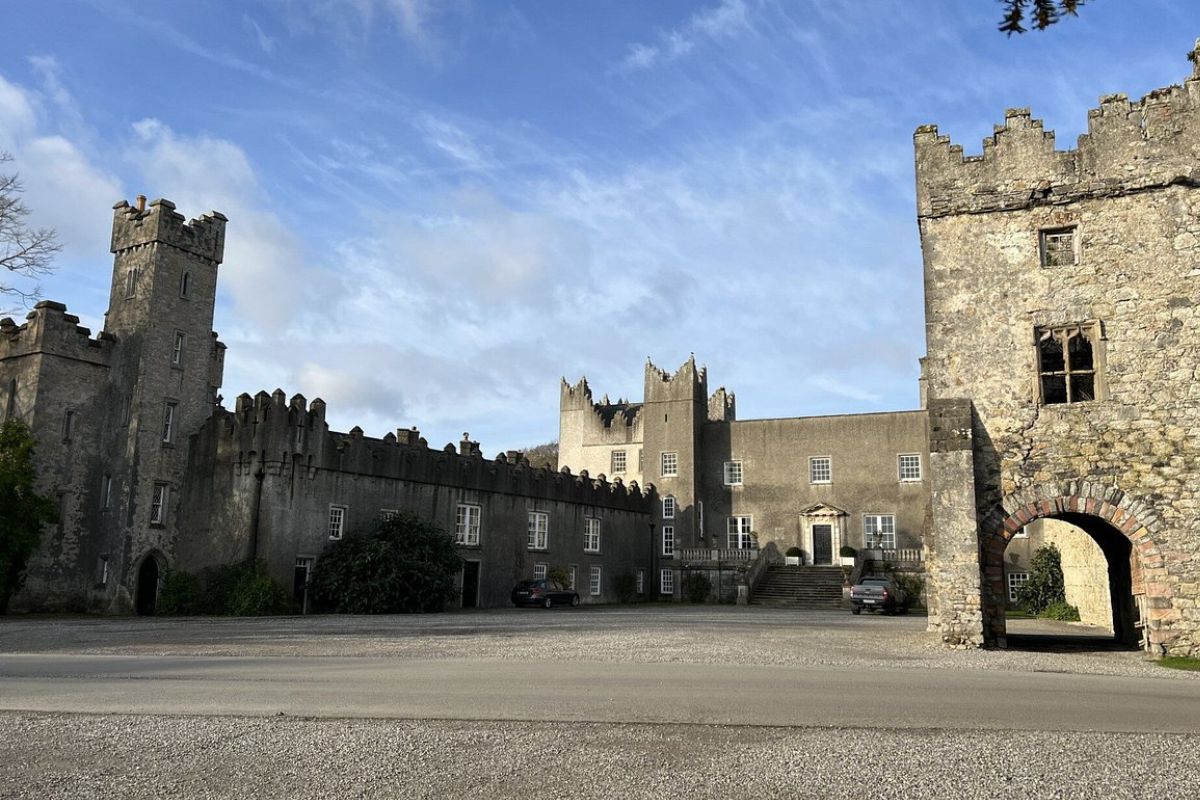
In the 15th century, the family rebuilt the castle in the Anglo-Norman style. Strong stone walls, towers, and battlements were added for protection. In 1576, the legendary pirate Grace O’Malley, also called the Pirate Queen, visited uninvited. She was turned away at the gate, which offended her deeply. In response, she kidnapped the young heir of the St Lawrence family. To secure his return, the family agreed never again to close their gates to unexpected visitors. This tradition is said to continue symbolically to this day.
During the 18th and 19th centuries, the castle underwent major renovations. In the early 20th century, the celebrated architect Sir Edwin Lutyens designed much of the current facade. His work blended medieval features with Tudor Revival and Gothic details. The grounds were also landscaped and planted with rhododendrons, which remain a seasonal highlight. Throughout Ireland’s turbulent 20th century, the castle continued to serve as a private family home. Its quiet persistence made it a symbol of continuity amid national change. In later years, the St Lawrence line merged with the Gaisford family. They retained the property until its sale in the 21st century to private investors.
Current satus
Today, Howth Castle welcomes visitors as one of Ireland’s most beloved historic sites. The estate is managed through a partnership between private owners, Fáilte Ireland, and the Office of Public Works. This ensures both preservation and public access. Visitors can explore the stately rooms on guided tours at certain times of the year. Inside, you can admire a unique mix of medieval grandeur and Georgian elegance. Guides share stories of the St Lawrence family, Grace O’Malley’s bold visit, and the castle’s folklore.
The gardens are open year-round and are a highlight of any visit. They feature extensive rhododendron walks, a charming walled garden, and quiet forest trails. The Deer Park Golf Course, located on the estate, offers recreation in a historic setting. Food lovers will enjoy the castle’s café and cooking events. The former kitchens now serve as a cookery school where you can learn traditional and modern Irish recipes.
Howth Castle also hosts weddings, private events, and cultural programs. Outdoor theater performances, antique fairs, and living history days bring its past to life. The estate is a vibrant hub that blends history with community activity. FAI (Fondo Ambiente Italiano) works with Irish heritage bodies to oversee ongoing restoration and conservation. Their efforts keep the castle authentic and structurally sound for future generations.
Whether you come for the gardens, the stories, or the views, Howth Castle offers something for everyone. Walk through its halls, explore the grounds, and experience a piece of Ireland’s noble past. This remarkable site invites you to connect with centuries of history in a beautiful coastal setting.
Castles near Howth Castle
Frequently asked questions
Can I visit Howth Castle without a guided tour?
No, the castle interior is only accessible on guided tours that must be booked in advance. However, the estate grounds are free to explore between dawn and dusk, including rhododendron walks and paths to Muck Rock summit.
Is Howth Castle still a private residence?
Yes, Howth Castle has been continuously inhabited since 1177 and remains a private home. Public access is limited to guided tours at select times, which allows visitors to see the principal rooms and learn about its 800-year history.
What is the legend of Grace O'Malley at Howth Castle?
In 1576, pirate queen Grace O'Malley visited the castle but was denied hospitality. She abducted the Earl's son and only released him when the family promised to keep the gates open to unexpected visitors and set an extra place at every meal.
How do I get to Howth Castle from Dublin city centre?
Take the DART train from central Dublin stations to Howth (approximately 30 minutes). From Howth station, the castle is about a 20-minute uphill walk through the village.
What else can I do on the Howth Castle estate?
Besides the castle tour, you can walk the extensive estate grounds including rhododendron gardens, ancient beech hedges from 1710, cliff paths with views of Dublin Bay, and Ireland's Eye. The estate also houses a cookery school, golf courses and the National Transport Museum.
Featured listings