
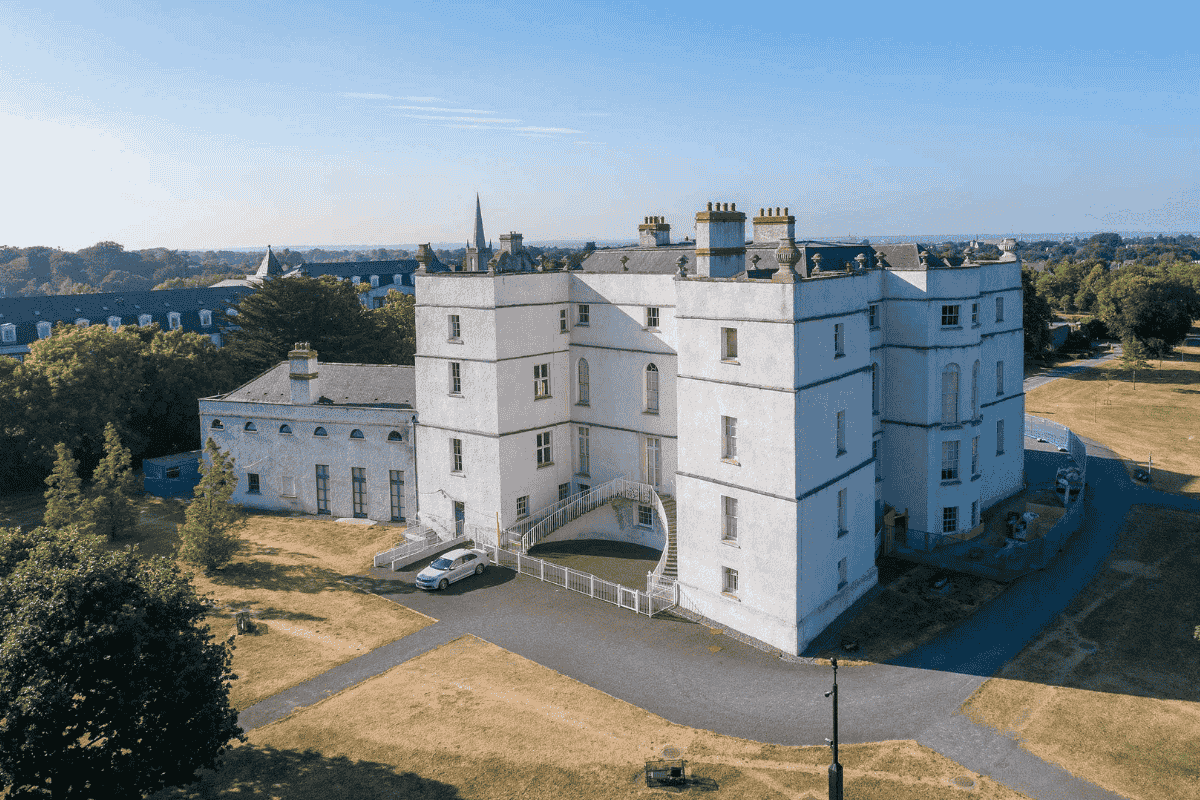
Rathfarnham Castle is a 16th‑century fortified house located in Rathfarnham, South Dublin, Ireland. It was originally built for Adam Loftus, an influential clergyman and statesman, as a blend of defensive architecture and a dwelling fit for a high churchman. Over time it grew from a fortified stronghold into a more comfortable Georgian mansion, yet elements of its earlier form remain.
Plan your visit to Rathfarnham Castle
Wed–Sun 10:30–16:15May–Sept daily 09:30–17:30; Oct–Apr Wed–Sun 10:30–17:00. Closed 23–27 Dec.
Rathfarnham Castle matters both for Ireland’s architectural heritage and for its history of political conflict, religious influence, and changing ownership. Today it stands as a State‑care monument, restored, accessible to the public, and surrounded by parklands.
Location of Rathfarnham Castle
The castle is situated in Rathfarnham, a suburban village south of Dublin city centre, in County Dublin. It lies not too far from the River Dodder. The surrounding landscape includes mature woodlands, ponds, formal gardens, playgrounds, and paths which are part of Rathfarnham Castle Park. The grounds also border parts that are occupied by the Castle Golf Club.
Transport‑wise, the castle is reachable by Dublin public transport, and is relatively accessible for people coming from the city.
History of Rathfarnham Castle
The Eustace family of Baltinglass originally owned the lands of Rathfarnham Castle, but the crown confiscated them after the Second Desmond Rebellion.Around 1583 Adam Loftus, then a rising figure in the church and politics, acquired these lands. He built the present fortified house, combining defensive features with residential comfort.
Shortly after its construction, in 1600, Rathfarnham Castle was attacked by Irish clans from the nearby Wicklow Mountains during the Nine Years’ War.
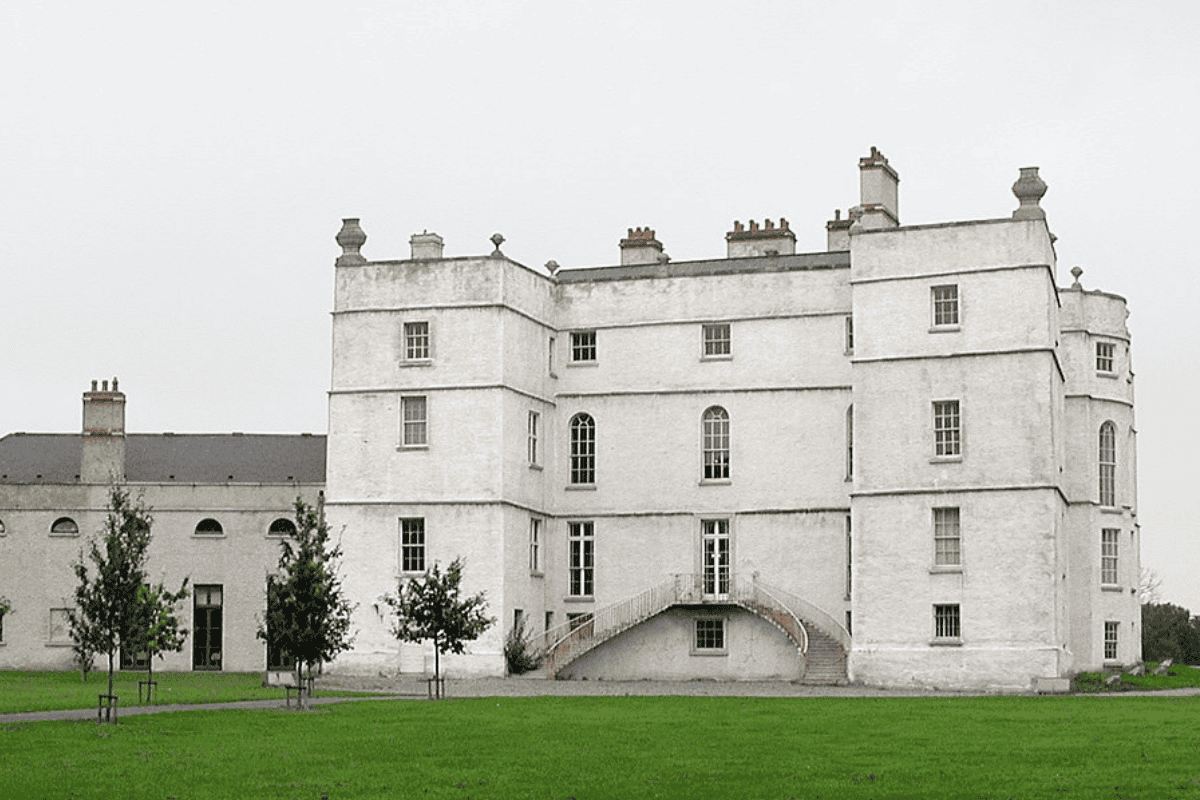
The property passed through marriages and sales, ultimately returning to the Loftus family line in the person of Henry Loftus, Earl of Ely. Henry Loftus initiated major renovations, transforming Rathfarnham from a fortified house to a Georgian mansion. Architects such as Sir William Chambers and James “Athenian” Stuart were involved. Changes included enlarging mullioned windows and replacing battlements with ornamented coping and urns. A semi‑circular eastern extension was added, along with a new entrance porch.
Also in this period the family built what is now known as “Ely’s Arch”, a triumphal arch entrance inspired loosely by Roman forms, to mark their status as Earls of Ely.
19th and early 20th century decline and varied use. In 1812 the family leased out the estate; they removed many valuable possessions. The castle and its lands passed through several hands, including the Ropers and later the Lord Chancellor Francis Blackburne. By mid‑19th century the castle had fallen into some disrepair; the gardens overgrown; fish ponds clogged; the building was partly used for farming.
Current status
Rathfarnham Castle is now managed by the Office of Public Works as a National Monument. It is open to visitors. Parts of the castle have been restored so that you can see both architectural features and interior decoration from various eras.
The grounds around the castle form Rathfarnham Castle Park, about 7 hectares in size. You will find mature woodland, formal ponds and a woodland pond, playgrounds, and walks among the grounds. The castle remains a strong symbol of Dublin’s layered history—ecclesiastical, political, and architectural. It is preserved not just as a museum piece but as a living cultural asset.
Castles near Rathfarnham Castle
Frequently asked questions
What can I see inside Rathfarnham Castle?
Rathfarnham Castle features elegant 18th-century Georgian interiors designed by Sir William Chambers and James 'Athenian' Stuart, including a grand ballroom, ornate Gilt Room and family portrait collection. The Elizabethan fortified structure with four corner towers dates from 1583.
How much does Rathfarnham Castle cost to visit?
Adult admission is €5, seniors and groups €4, students €3, and a family ticket is €13. Entry is free on the first Wednesday of each month for independent visitors and families.
Is Rathfarnham Castle suitable for children?
Yes, the castle is family-friendly with accessible facilities including a lift, ramps and an on-site tearoom in the Victorian Kitchen. Children under 12 accompanied by an adult go free.
Can I take a guided tour of Rathfarnham Castle?
Guided tours are available and cover the main rooms including the Entrance Hall, Ballroom and decorated Georgian interiors. Group tours must be booked in advance by calling 01 493 9462 or emailing rathfarnhamcastle@opw.ie.
What else is near Rathfarnham Castle?
The Pearse Museum is 1.9 km away in St Enda's Park, offering two museums, two cafés, parkland walks and a playground for a full family day out. Casino Marino, a unique 18th-century garden temple, is about 5 km north.
Featured listings