
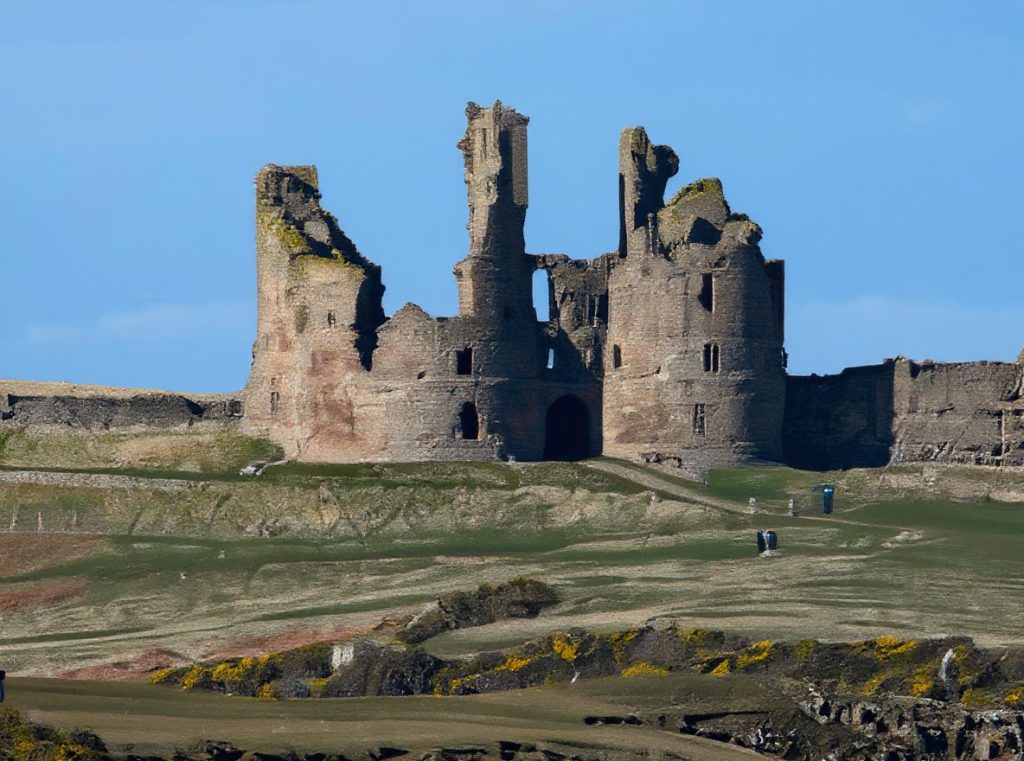
Commanding a remote basalt headland on the wild Northumberland coast, Dunstanburgh Castle ranks as one of England’s most dramatic fortress ruins. Thomas, Earl of Lancaster, began construction in 1313 when he created what would become the largest castle in Northumberland. The earl built on a massive scale because he wanted to proclaim his rivalry with King Edward II through stone and mortar. Today the spectacular ruins defend their coastal promontory much as they did seven centuries ago, reached only by a beautiful coastal walk that adds to their sense of isolation.
Plan your visit to Dunstanburgh Castle
Location of Dunstanburgh Castle
Dunstanburgh Castle sits on the coast of Northumberland in northern England, between the villages of Craster and Embleton. You can reach the castle on foot from the nearby village of Craster via a beautiful 1.3-mile walk along the rugged Northumberland Coast. The path crosses working farmland as you approach. No road reaches the castle itself, so visitors must walk the coastal path. Yet the journey forms part of the experience. The castle sits atop high cliffs on a promontory overlooking the North Sea. The coastal footpath offers ever-changing views as you approach. Craster lies roughly eight miles northeast of Alnwick. The nearest railway station sits at Chathill, about five miles distant. The walk from Craster takes around twenty-five minutes at a steady pace. The castle’s silhouette grows more imposing with each step.
History of Dunstanburgh Castle
People probably first occupied the site in prehistoric times. A promontory fort featuring earthwork defences occupied the same location at the end of the Iron Age, possibly from the 3rd century BC into the Roman period. Construction began in May 1313 when workers excavated a ditch on the castle’s western side and built a great gatehouse. An account for the first year’s work shows these details. King Edward II granted a formal license to crenellate on August 21st, 1316, though by that time the castle neared completion. Thomas built this fortress during his escalating conflict with the king, possibly seeking a northern refuge far from royal forces.
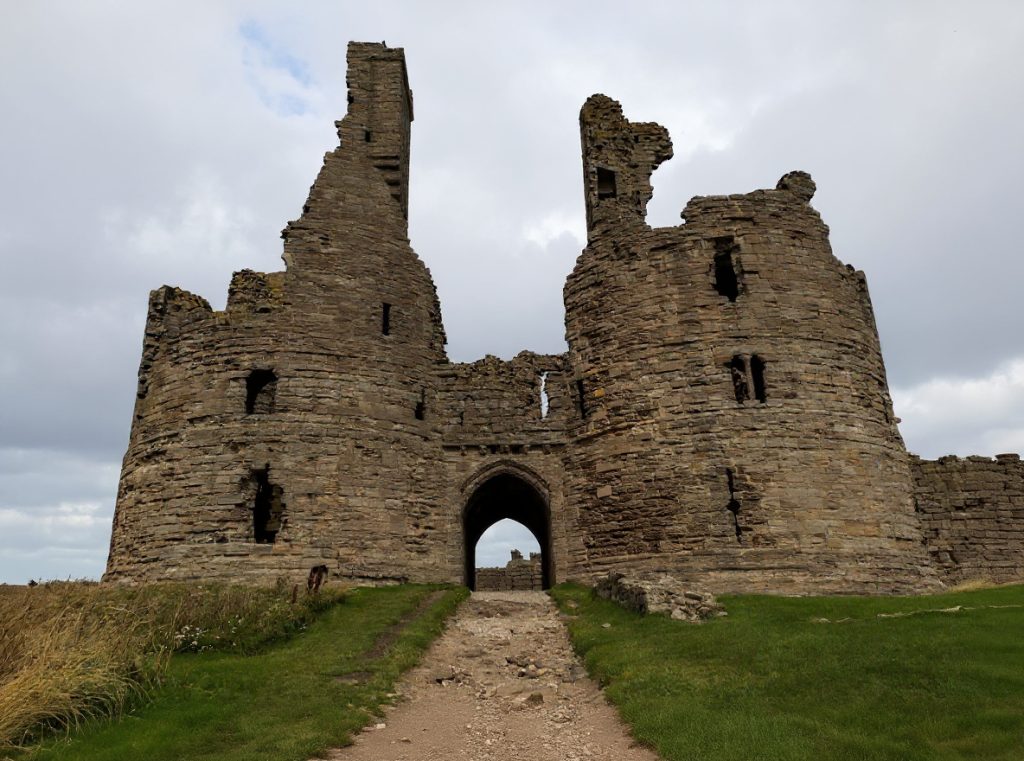
In August 1319 Earl Thomas passed through Dunstanburgh en route to the siege of Berwick. This visit was almost certainly the only time he ever saw his new castle. In 1322, on his way to Dunstanburgh, soldiers captured the Earl of Lancaster. Executioners killed him at Pontefract Castle after civil war broke out between Edward II and his barons. The castle then passed into royal hands. Edward III’s fourth son, John of Gaunt, inherited Dunstanburgh Castle in 1362 as part of the Duchy of Lancaster. He gained it by right of his marriage to Blanche. John of Gaunt inspected the border defences in 1380 and then began three years of work to modernize Dunstanburgh. Workers blocked the original gatehouse passage and built a new gatehouse nearby.
Dunstanburgh Castle served as a Lancastrian stronghold during the Wars of the Roses. Cannon fire inflicted heavy damage, which left the castle in ruins. As the Scottish border became more stable, James I sold the castle into private ownership in 1604-05. It then passed to Sir Ralph Grey of Howick Hall and the Grey family.
Current status
In the 21st century, the National Trust owns the castle while English Heritage runs it. Visitors can explore the ruins throughout the year, though opening hours vary seasonally. The castle charges admission, though National Trust members enter free with valid membership cards. The most prominent part of the castle is the Great Gatehouse, a massive three-storey fortification. Historians consider it “one of the most imposing structures in any English castle”. The curtain walls still enclose nearly ten acres. Visitors can walk among the towered walls with their sheer drops to the sea on the north side.
The castle sits within a designed medieval landscape. Builders constructed Dunstanburgh surrounded by three artificial lakes called meres covering a total of 4.25 hectares. These occasionally flood after heavy rain and restore the castle to its medieval island-like appearance. The grounds host many seabirds nesting around the ruins. The cliffs provide habitat for kittiwakes and oystercatchers. The castle has earned recognition for its environmental work when it received a Bronze Green Impact Award for its conservation efforts.
The coastal location and remote access preserve something of the castle’s original atmosphere. Artists have long drawn inspiration from these ruins, including J.M.W. Turner, who captured their romantic silhouette in several works. The walk from Craster remains an integral part of visiting. The castle gradually reveals itself across the coastal landscape as you approach. The ruins command their headland just as Thomas of Lancaster intended, a monument to baronial ambition frozen in stone against the North Sea.
Castles near Dunstanburgh Castle
Frequently asked questions
Can you drive directly to Dunstanburgh Castle?
No, there is no vehicle access to Dunstanburgh Castle. Visitors must park in Craster village and walk 1.3 miles along a coastal path to reach the castle.
Is Dunstanburgh Castle open in winter?
Yes, but with reduced hours. The castle is open weekends only (Saturday and Sunday) from November to March, 10am to 4pm, except during February school holidays when it may open daily.
How long does it take to visit Dunstanburgh Castle?
Allow 2 to 2.5 hours total, including the 25-30 minute coastal walk each way from Craster and time to explore the ruins. The walk itself is approximately 1.3 miles each way over uneven terrain.
Are National Trust members entitled to free entry at Dunstanburgh Castle?
Yes, National Trust members receive free entry with a valid membership card. The castle is owned by the National Trust but managed by English Heritage, and members of both organisations enter free.
What can you see at Dunstanburgh Castle today?
The ruins include the imposing Great Gatehouse, sections of the curtain wall, and several towers. The coastal setting offers views of seabirds nesting on Gull Crag in spring and summer, and panoramic views across the Northumberland coastline.
Popular right now
Featured listings