
Deep in the forest of Burgundy, Guédelon Castle rises from an abandoned quarry as a living monument to medieval craftsmanship. This extraordinary construction project recreates a 13th-century fortress using only the techniques, materials and tools that builders used 800 years ago. Since 1997, stonemasons, carpenters, blacksmiths and other craftspeople have transformed raw stone and timber into towers, walls and ramparts before the eyes of thousands of visitors each year. The castle offers an unparalleled experiment in archaeology, where every chisel stroke and timber joint reveals secrets lost for centuries.
Plan your visit to Guédelon Castle
Location of Guédelon Castle
Guédelon Castle sits in the Puisaye region of northern Burgundy, near the village of Treigny in the Yonne department. The site occupies a former sandstone quarry in the Guédelon forest, so it provides all materials needed for medieval construction: stone, wood, clay, sand and iron ore. The location lies roughly two hours south of Paris, between the A77 and A6 motorways. Visitors reach the site via the D955 road. No public transport serves the castle directly, so most arrive by car. The nearest substantial town, Saint-Sauveur-en-Puisaye, lies about five kilometres northeast.
History of Guédelon Castle
Michel Guyot, owner of the nearby Château de Saint-Fargeau, conceived the Guédelon project after years restoring historic castles. He recognised that restoration work alone could not answer fundamental questions about how medieval builders actually worked. In 1997, Guyot assembled archaeologists, historians and craftspeople to launch an unprecedented experiment. They would build a new castle exactly as builders would have raised it in the 13th century. Architect Jacques Moulin designed Guédelon based on the Philippian model, the fortress style that Philip II of France standardised during his reign. The team created a fictional narrative: a minor lord named Guilbert receives royal permission in 1228 to build a modest fortified residence. This story provides historical context for every architectural decision.
Workers cleared the quarry site and marked out the castle perimeter in 1997. By 1998, the foundations and outer walls reached about one metre high, and the site opened to the public. Construction has progressed season by season, limited to the warmer months when medieval builders would have worked. The project initially aimed for completion within 25 years, though the team now estimates the castle will reach completion between 2030 and 2035. Progress slowed during the COVID-19 pandemic because discoveries about medieval techniques sometimes require adjustments to plans. By 2014, annual visitor numbers reached 300,000. Documentaries including the BBC series Secrets of the Castle and a 2004 film about medieval Europe have featured the castle. In fact, techniques that workers redeveloped at Guédelon even helped inform the restoration of fire-damaged Notre-Dame Cathedral in Paris.
Current status
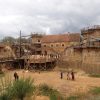
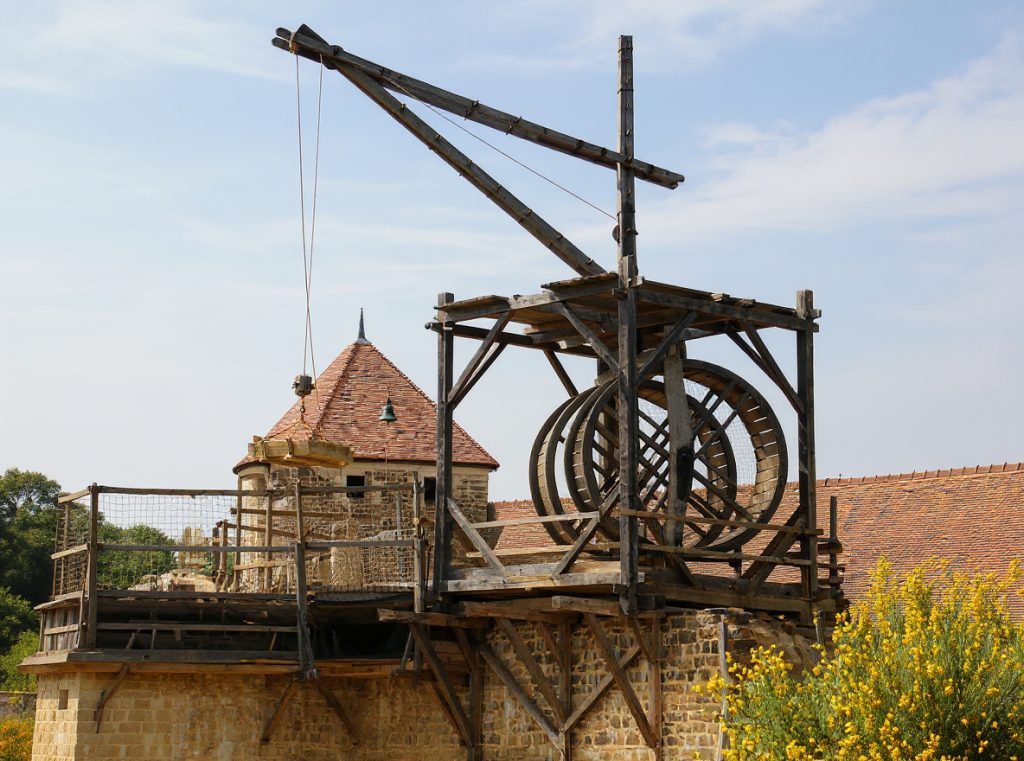
Today, around forty skilled workers build Guédelon under the guidance of Maryline Martin, CEO and co-founder alongside Guyot. The castle operates as both construction site and open-air museum, managed as an experimental archaeology project. Quarrymen extract sandstone blocks, while stonemasons dress and position them. Blacksmiths forge tools and hinges, carpenters shape oak beams with axes, and rope-makers braid hemp for lifting tackle. Tile-makers fire clay roof coverings in a wood-burning kiln. All materials come from the site or its immediate surroundings. Visitors walk among the workers during the construction season, which runs from late March through early November. The site closes in winter when medieval builders would have ceased work.
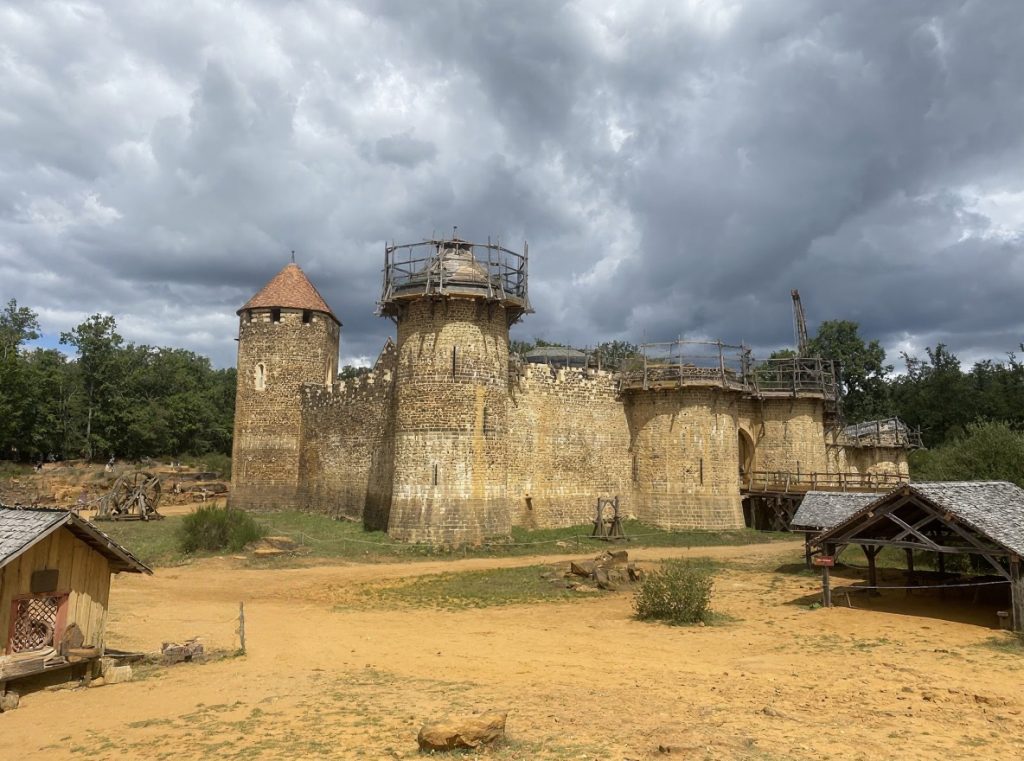
The fortified enclosure now stands substantially complete, with four corner towers rising above curtain walls. Inside, the main residential building, chapel, kitchen and great hall take form. Masons have constructed ribbed vaults over archery ranges, and painters apply pigments mixed from ochre and other natural materials to bedroom walls. Half the rampart walk allows visitors to survey the forest from medieval battlements. Craftspeople demonstrate their skills and explain how archaeological evidence informs their methods. Admission charges support continued construction and research. Schools and universities use Guédelon as an educational resource. The project has created employment for the region and become Yonne’s most visited attraction. Guédelon reveals not just how medieval masons built, but why they made specific choices—knowledge that reshapes our understanding of the castles that still stand across Europe. When complete, this new fortress will be the only medieval castle in the world built entirely with period authenticity, a bridge between past and present constructed one dressed stone at a time.
Castles near Guédelon Castle
Frequently asked questions
Is Guédelon Castle finished?
No, construction began in 1997 and continues using only 13th-century techniques. Completion is estimated around 2030–2033, depending on work pace and funding.
What makes Guédelon Castle unique?
It is the world's only medieval castle being built entirely from scratch using period materials, tools and techniques. Around 50 craftspeople work on site in trades like stonemasonry, carpentry and blacksmithing.
Can you watch the builders at Guédelon Castle?
Yes, visitors can watch quarrymen, stonemasons, carpenters, blacksmiths and other craftspeople at work. The site is a live construction project, and workers answer questions about medieval building methods.
Are guided tours available at Guédelon Castle?
Yes, guided tours last approximately 1 hour 15 minutes and cost €5 per person in addition to admission. Tours in English are available; online booking is strongly recommended.
Is Guédelon Castle open year-round?
No, the site closes in winter to allow uninterrupted construction work. The 2026 season ran from 2 April to 1 November; during winter, construction continues but the site is closed to visitors.

Top Rated Castle 2026
Guédelon Castle is one of the best rated castles in Europe: 4.7 stars from 17,715 visitors on Google. See all winners.
Is this your castle? Show the award on your website
Copy this code into your website:
Popular right now
Featured listings