
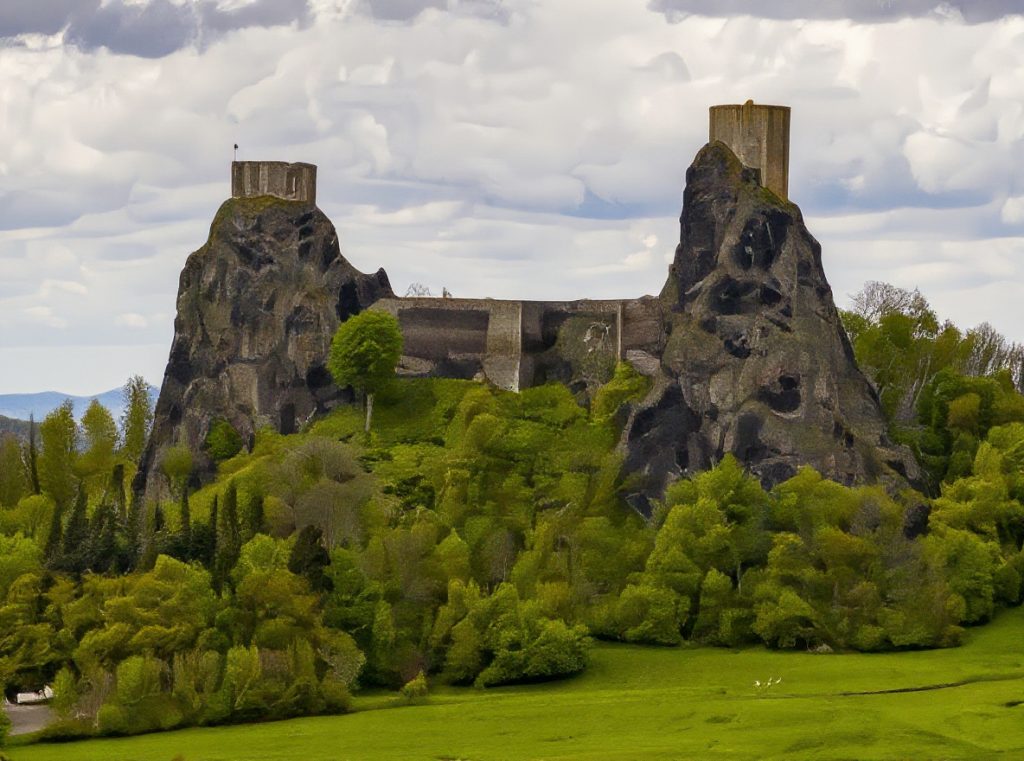
Trosky Castle rises on two volcanic plugs in the Czech Republic, creating one of the most distinctive silhouettes in central Europe. The ruined castle draws fame from its two basalt towers, Baba and Panna, which rise from separate volcanic plugs. The government protects the castle as a national cultural monument because of its value. People call Trosky the symbol or landmark of Bohemian Paradise for its unique appearance and origin.
Plan your visit to Trosky Castle
Location of Trosky Castle
The castle ruin lies in the municipality of Troskovice in the Liberec Region of the Czech Republic, about 10 kilometres south of Semily. The highest point reaches 488 m above sea level at Trosky hill. Two 14th-century ruins sit high on the summits of two basalt volcanic plugs, 15 km from Turnov. The castle sits within the Bohemian Paradise Protected Landscape Area, a region celebrated for its rock formations and medieval heritage. Trosky Castle stands on a unique rocky formation of volcanic origin. Two lava vents erupted from the earth’s interior during the Tertiary period. Visitors can reach the castle from Prague by car, then climb the steep approach through the protected landscape. The castle ruin draws more tourists than most other sights in the Czech Republic.
History of Trosky Castle
Čeněk of Vartenberg completed the construction between 1380 and 1390. He built an inner castle with residential palaces between them. Defensive and residential towers rose on the tops of the rocks. The lower tower had five sides and two stories, and residents could probably access it from the palace on the north side. The taller, four-sided tower reached three stories high and housed the castle chapel. Its unmistakable landmark consists of two towers – the taller Panna (Maiden) (57 m) and the shorter Baba (Old Woman) (47 m) – built on top of basalt rocks.
Čeněk exhausted his own resources and money with this very demanding construction. So during his lifetime, in 1394, he ceded Trosky to the Czech king Wenceslas IV, to whom he owed a large part of the finances used to build the castle. After four years, the king sold the castle to the powerful Berg family. During the Hussite Wars, when Ota the Elder and Ota the Younger of Berg owned the castle, Trosky served as an important stronghold of the Catholic side. The castle withstood multiple sieges during this turbulent period.
In 1469, King George’s forces besieged Trosky, Budyně nad Ohří, Hrubá Skála, and Návarov. Trosky’s garrison surrendered after August 28, 1469, and royal troops occupied the castle. The Bergs managed Trosky until 1455, when the last of the family, Jan, sold the Trosky estate to Jan Zajíc of Házmburk, owner of the nearby Kost Castle. In 1468 the castle became property of William of Hasenburg who kept it until 1497. After that several noble families owned the castle, although its significance declined. During the Thirty Years’ War, the Swedish army conquered the castle and burned it down, and it has remained a ruin ever since.
Current status
The last noble family to own Trosky Castle since 1821 – and at that time it was really just ruins of the original castle – was the Aerenthal family. At the beginning of the 20th century, the Aerenthals transferred Trosky to the Bohemian Paradise Tourist Association, and the Czech Tourist Club administered the castle. In 1925, the ruins became the property of the Czech state. Since 1925, Trosky Castle has belonged to the state. The Czech state owns Trosky and the National Heritage Institute administers it.
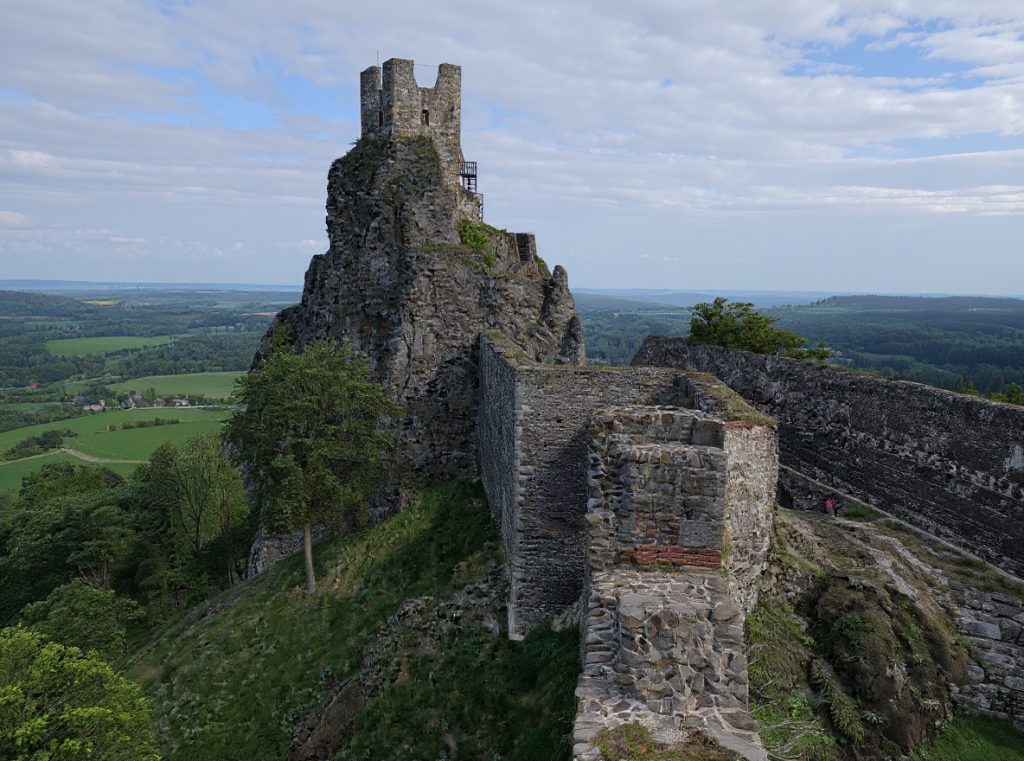
Today, the castle operates as a state monument open to visitors during the warmer months. The castle ranks among the most visited tourist destinations of the Liberec Region. Visitors can climb the steep stairs to observation platforms on the Baba tower and beneath the Panna tower, where they gain sweeping views across the Bohemian Paradise region. The castle charges admission, and guided tours reveal the fortress’s architectural features and turbulent history. Recent restoration work has included new flooring and steel observation decks, ensuring safe access while preserving the romantic atmosphere of the ruins.
The twin towers command the landscape, their dark basalt silhouettes stark against the sky. From the ramparts, forests and meadows stretch toward distant mountains, while legends of hidden treasure and underground lakes still echo through the ancient stones.
Castles near Trosky Castle
Frequently asked questions
Can you climb both towers at Trosky Castle?
Yes, the admission includes access to both the Baba tower (138 steps) and the Panna tower. The Baba tower offers one of the best panoramic views across Bohemian Paradise and the surrounding countryside.
Is Trosky Castle open in winter?
No, Trosky Castle is seasonal and closed from November to March. The 2026 season runs from 2 April to 1 November, with reduced opening days in April and October.
How difficult is the walk to Trosky Castle?
From the car park there is a 500-metre paved but steep uphill path that takes about 10–15 minutes. The towers themselves have metal staircases with uneven steps, so wear sturdy shoes.
What is special about the two towers of Trosky Castle?
The castle is built on two volcanic basalt peaks called Panna (the Maiden) and Baba (the Old Woman). The ruins have stood on these distinctive rock formations since the 14th century and are the most recognisable symbol of Bohemian Paradise.
Can you reach Trosky Castle by public transport from Prague?
Yes, but it takes about 2.5–3 hours each way. Take a train from Prague to Turnov, then a local train to Borek pod Troskami or Ktová, followed by a 3.5 km walk on a marked trail to the castle.
Popular right now
Featured listings