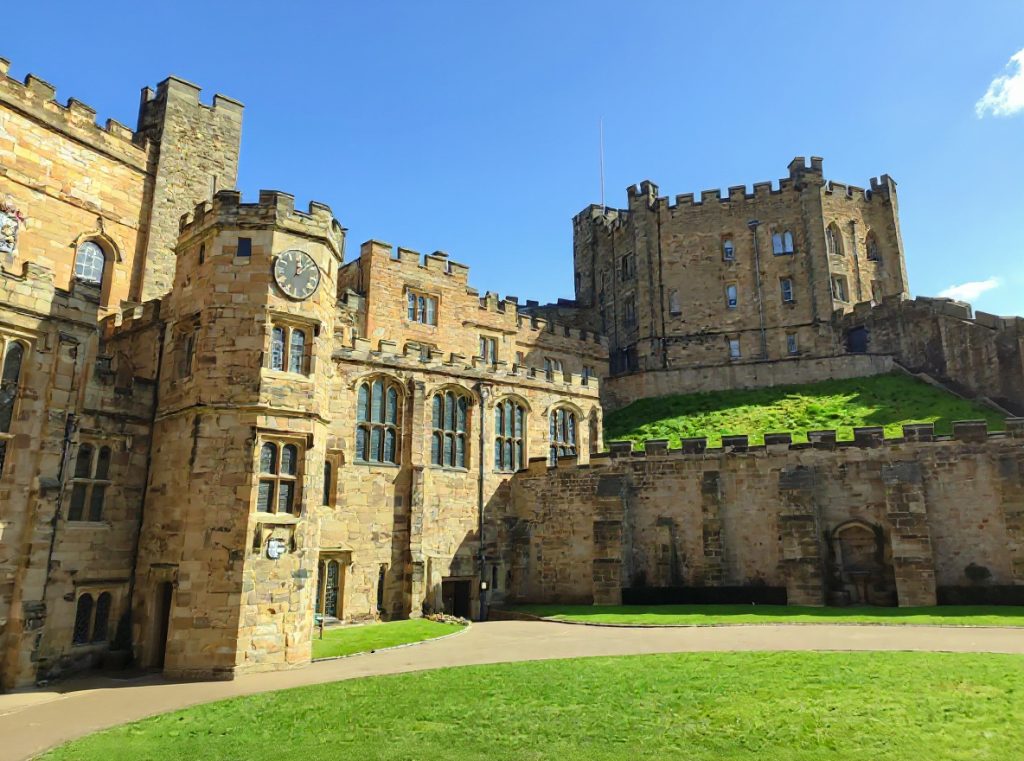
Commanding a dramatic peninsula above the River Wear, Durham Castle rises alongside Durham Cathedral to form one of England’s most powerful symbols of Norman conquest. William the Conqueror ordered its construction in 1072 as a fortress to secure his hold over the rebellious North. Over eight centuries it evolved into a lavish palace for England’s prince-bishops. Since 1837 students have called this ancient stronghold home, so the castle remains a living building where medieval stone meets modern university life.
Plan your visit to Durham Castle
Location of Durham Castle
Durham Castle stands on top of a hill above the River Wear on Durham’s peninsula, opposite Durham Cathedral. The castle sits on Palace Green in the city centre. Visitors arriving by train or bus can take the Cathedral Bus, which stops directly opposite Palace Green Library in the Market Place. Walking from the Market Place takes about ten minutes uphill through the old streets of Owengate or Dun Cow Lane. The Durham Cathedral bus runs every twenty minutes. It links the railway station, North Road bus station, Market Place, and car parks with the cathedral and castle. Car parks operate at Prince Bishops Shopping Centre, though visitors should expect a steep uphill walk to reach the castle entrance. The UNESCO World Heritage Site occupies a compact, walkable area. Both castle and cathedral dominate the skyline from almost every approach to the city.
History of Durham Castle
William the Conqueror commissioned Durham Castle in 1072 to ensure Norman control in the North of England. Builders constructed it in the traditional motte and bailey style. Construction began in 1076 under the Earl of Northumberland, Waltheof. He rebelled against the King and faced execution. Initially the structures likely used wood, though stone construction began before the end of the eleventh century. Workers cut stone for the new buildings from the cliffs below the walls. They then moved it up using winches.
The castle became the seat of the Bishops of Durham, who enacted royal authority in the area. Each new tenant altered it to reflect his wealth and status. This unique status allowed the bishop to raise armies, collect taxes, and mint coins, effectively acting as a regional ruler. The bishops also served as a defensive barrier against Scottish invasions and local uprisings. In May 1080 rebels from Northumbria attacked and besieged the castle for four days. Later in 1177 King Henry II of England seized the castle. The castle has a well preserved Norman chapel dating from 1080. It also features the magnificent fourteenth century Great Hall. The Hall features stained glass windows and a large collection of portraiture.
Successive bishops expanded and embellished the fortress over the centuries. Bishop Antony Bek created a large Great Hall in the early fourteenth century. Today the Hall measures fourteen metres high and over thirty metres long. By the middle of the twelfth century builders had rebuilt the gatehouse and the keep in stone. The castle then grew over the years until the Civil War in the seventeenth century. During that conflict the Scottish army occupied and severely damaged it. The Castle remained the seat of the Bishops of Durham until 1832.
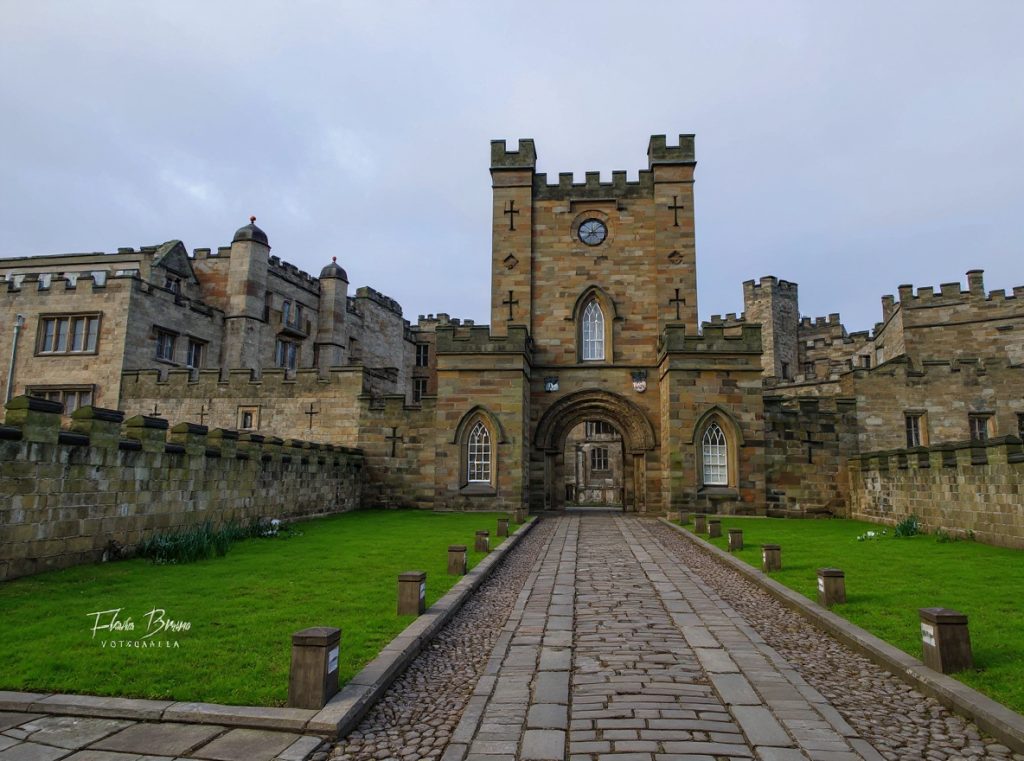
Current status
UNESCO designated Durham Castle a cultural World Heritage Site in 1986 along with Durham Cathedral. The castle opens to the general public, but only through guided tours, since it operates as a working building. Over one hundred students call it home. Today Durham University, Durham Cathedral, Durham County Council and St John’s College steward the site. Durham Castle operates as a working college of Durham University. For this reason visits are available only through guided tours. Today it serves as a place of learning as the home of University College, the founding college of Durham University.
Visitors wishing to take part in a guided tour need to purchase tickets at Palace Green Library. They then meet the tour guide outside Durham Castle. The historic nature and layout of the Castle means the majority of the building remains inaccessible to wheelchair users. The tour route involves many steps and staircases, some of which are uneven. During the summer, on selected dates in the months of July, August and September, the castle runs self-guided days with optional audio guides. The castle releases available dates one month in advance. Durham Castle opens for guided tours throughout the year. Tours run in the afternoons during academic term and mornings and afternoons during university holidays. Durham Cathedral stands as the largest and most perfect monument of Norman style architecture in England. Within the Castle the astral chapel, with its groined vaults, represents one of the most precious testimonies to Norman architecture circa 1080 AD.
The ancient fortress continues to evolve while preserving nearly a thousand years of history. Students still dine in the Great Hall where medieval bishops once feasted. They sleep in chambers where prince-bishops wielded extraordinary power.
Castles near Durham Castle
Frequently asked questions
Can I visit Durham Castle without a guided tour?
No, Durham Castle is a working university college housing students, so entry is by guided tour only. Tours must be pre-booked and are released one month in advance on the Durham University website.
How long is a Durham Castle tour?
Guided tours last approximately 45 to 60 minutes. The tour includes the Norman Chapel from the 1080s, the Great Hall, Tunstall Chapel and other historic areas accessible within the working college.
Is Durham Castle suitable for wheelchair users?
Most of Durham Castle is inaccessible to wheelchair users due to its historic layout. The tour route involves many steps and uneven staircases, as this is an 11th-century building that now serves as student accommodation.
When are Durham Castle tours available?
Tour times vary by university term. Tours typically run in the afternoons during term time and both mornings and afternoons during university holidays. The castle closes 23 December to 5 January and occasionally for graduation ceremonies.
How do I get to Durham Castle from the train station?
Durham station is a 10-minute walk to the castle on Palace Green. Alternatively, take the Cathedral Bus (routes 40/40A) which runs Monday to Saturday and stops directly opposite Palace Green Library near the castle entrance.
Featured listings