Rising from the Tagus estuary, Belém Tower commands the western approaches to Lisbon as a fortified sentinel of Portugal’s maritime age. King Manuel I commissioned this fortress between 1514 and 1519, while military architect Francisco de Arruda designed it. The tower served as a point of embarkation and disembarkation for Portuguese explorers and symbolises Portugal’s maritime and colonial power in early modern Europe. Officials classified it as a National Monument and a UNESCO World Heritage Site, and it also ranks as one of the 7 Wonders of Portugal.
Plan your visit to Belém Tower
Tue–Sun 09:00–17:30
Location of Belém Tower
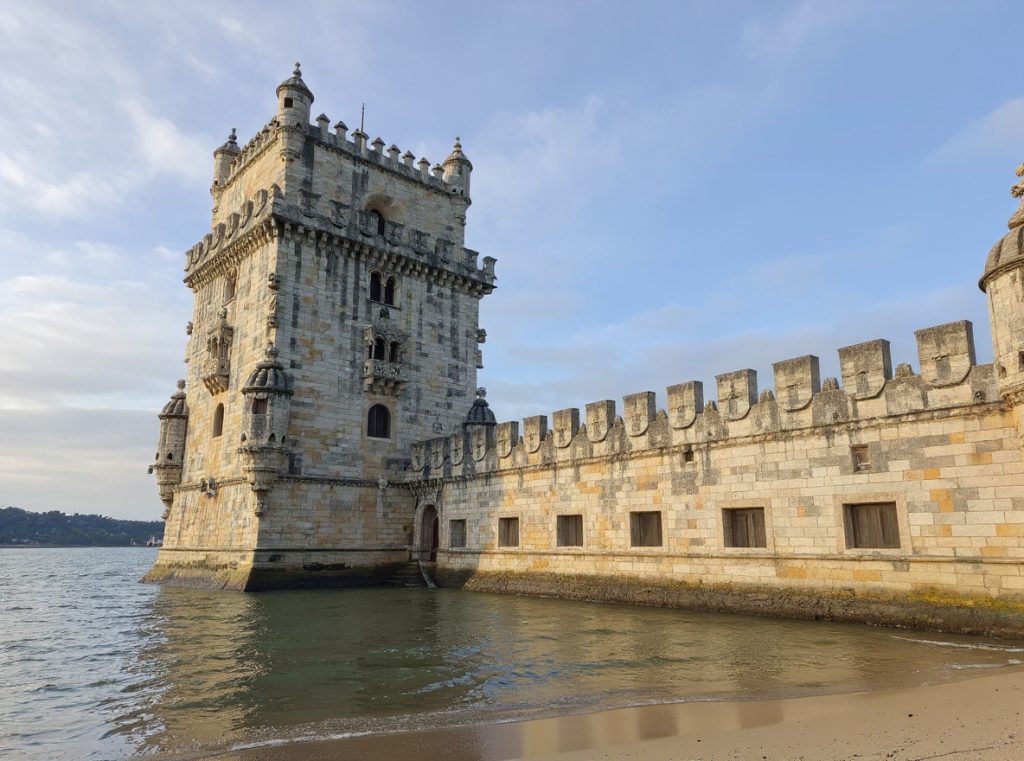
Belém is a freguesia and district of Lisbon located in western Lisbon, to the west of Ajuda and Alcântara. Builders constructed the tower over a basaltic outcrop, entirely in the river, about 250 metres away from the shore. Today the river has shifted course, so the tower now sits practically swallowed up by the bank. The fortress occupies a position along Avenida Brasília in the Belém district, about six kilometres west of central Praça do Comércio. Visitors reach it easily by tram 15E from the city centre or by suburban train to Belém station. The tower stands beside formal gardens that stretch along the riverfront, while the Jerónimos Monastery sits visible a short walk inland. Multiple bus routes serve the area, since Belém concentrates many of Lisbon’s major monuments in a walkable riverside precinct.
History of Belém Tower
King D. João II of Portugal commissioned the Tower of Belém as part of a tripartite defensive network to protect the Port of Lisbon. Construction didn’t begin, though, until the reign of his successor, Manuel I, between 1514 and 1519. By 1514, when construction began, Portugal stood at the apex of European maritime power. Vasco da Gama had returned from India in 1499 with a cargo so valuable it remade Lisbon’s economy. Pedro Álvares Cabral had reached Brazil in 1500, and Afonso de Albuquerque had captured Goa, Malacca, and Hormuz between 1510 and 1515. The tower formed one part of a planned three-point defensive system intended to catch enemy vessels in a crossfire as they entered the harbour. It worked with a fort on the opposite bank at Caparica and the older fortress at Cascais.
Officials handed the project over to Diogo Boitaca, master of the construction works of the kingdom, and construction started the following year. In 1516, though, Francisco de Arruda, Master of the works of the Belém stronghold, took responsibility for the construction work. Its low hexagonal bastion formed a genuine artillery platform, mounting a battery of cannon at water level. Above the bastion rose the slender tower itself, combining the functions of a keep, a watchtower and a statement of royal power. Officials originally dedicated it to Saint Vincent, Lisbon’s patron, and some still call it the Tower of St Vincent.
The tower served three roles across its history: a defensive fortress guarding Lisbon’s harbour, a state customs house collecting duties on incoming ships, and a prison for political dissidents during the 19th and 20th centuries. It surrendered to the Spanish in 1580 and later served as a state prison during the Philippine Dynasty.
Current status
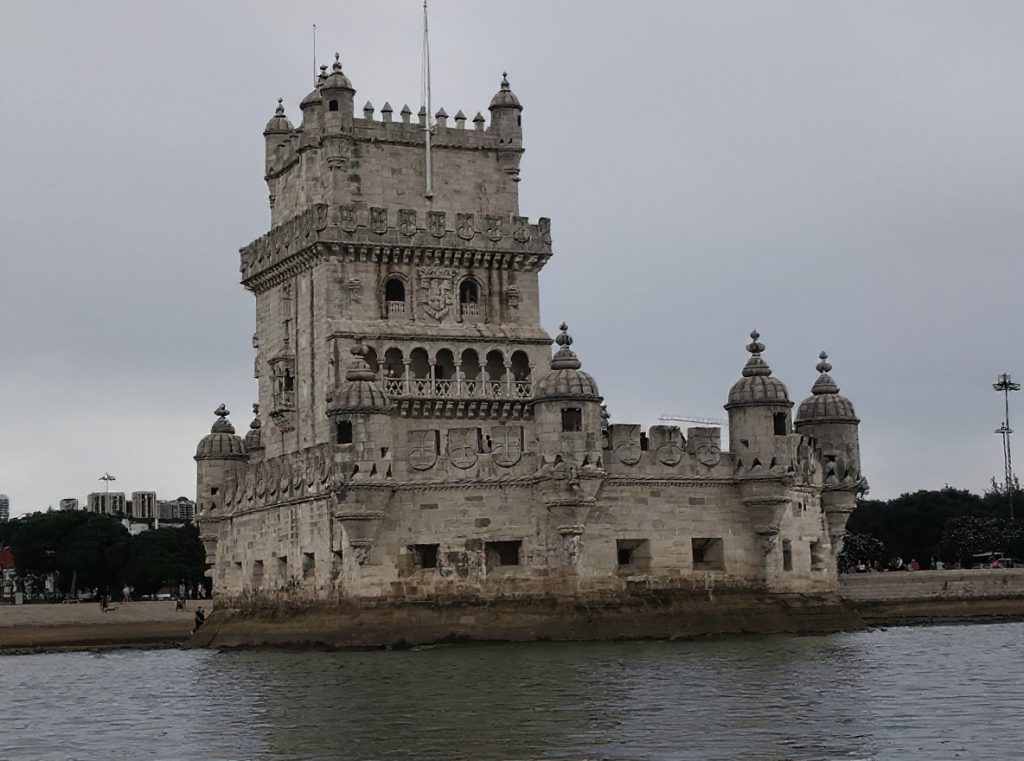
UNESCO inscribed the Belém Tower on the World Heritage List in 1983, and it stands as an identity symbol of the city of Lisbon and Portugal in the world. The monument has a director and operates under the address Torre de Belém, Av. Brasília, 1400-038 Lisboa, with an email at geral.mjeronimos@museusemonumentos.pt. The tower reopened on 27 May 2026 after a year of restoration work. UNESCO classified the tower as a World Heritage Site in 1983, and it received more than 400,000 visitors annually before closing for renovations. After more than a year of restoration, visitors now tour the tower by time slots. Entry occurs at a fixed time with limited places.
Margarida Donas Botto, the director, pointed out the characteristics of the Lioz stone, a limestone originating from Lisbon, with a very light colour. When clean, it has a much brighter and more pleasant appearance for the visitor. The Directorate-General for Cultural Heritage runs the monument as a museum. Tickets cost €15 for adults, though residents in Portugal enter national museums and monuments free of charge up to 52 times per year. The tower opens Tuesday to Sunday from 9:30 AM to 5:30 PM, closed on Mondays and certain public holidays. Visitors climb narrow spiral staircases through four interior levels to reach the rooftop terrace, where the Tagus spreads wide below and the Atlantic horizon draws the eye westward.
Builders constructed the tower during the height of the Portuguese Renaissance, and it exemplifies the Portuguese Manueline style. It also incorporates other architectural styles, such as the minarets, which draw inspiration from Moorish architecture. Lisbon’s Tower of Belém has an exquisitely rich exterior with sculpted balconies and limestone ornaments.
Castles near Belém Tower
Frequently asked questions
How much does it cost to visit Belém Tower?
Adult tickets cost €15, with reduced rates of €7.50 for ages 13-24 and seniors 65+. Children under 12 enter free, and Portuguese residents have free entry 52 days per year.
Do I need to book Belém Tower tickets in advance?
Yes, since reopening in May 2026 the tower operates with timed entry slots to manage visitor numbers (around 900 per day). Booking online is strongly recommended as slots sell out, especially in peak season.
What are the opening hours of Belém Tower?
Belém Tower is open Tuesday to Sunday from 9:30am to 5:30pm, with last entry at 5pm. It is closed on Mondays and on 1 January, Easter Sunday, 1 May, 13 June, and 25 December.
Is Belém Tower accessible for people with limited mobility?
Access is very limited as the tower's five floors are connected only by narrow spiral staircases without lifts. Wheelchair users can access the ground floor only.
Can I visit Belém Tower and Jerónimos Monastery on the same day?
Yes, the two UNESCO World Heritage Sites are a 15-minute walk apart along the waterfront. Combined tickets are available for around €34, or both are included free with the Lisboa Card.
Featured listings