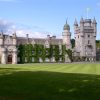
Set within Royal Deeside in the wild beauty of the Cairngorms, Balmoral Castle has served as the private Scottish residence of the British Royal Family since 1852. Builders crafted this grand estate house from local granite in the Scottish Baronial style. The design combines romantic turrets and towers with the practical needs of a working Highland estate. King Charles III continues the tradition that Queen Victoria and Prince Albert began. Visitors experience a rare view of royal life surrounded by forests, moorland and the River Dee.
Plan your visit to Balmoral Castle
Tue–Sat 10:00–16:00
Sun ClosedOpen Tue–Sat 10:00–16:00 (late Sept–1 Nov); extended winter opening continues through December with varied schedule.
Location of Balmoral Castle
Balmoral Castle sits near the village of Crathie in Aberdeenshire, about nine miles west of Ballater and fifty miles west of Aberdeen. The estate lies within Cairngorms National Park at an elevation of 926 feet above sea level. The castle stands on the right bank of the River Dee. Visitors travelling from Aberdeen follow the A93 west through Royal Deeside, a scenic route that winds through forest and Highland scenery. The remote setting provides privacy while remaining accessible to those exploring northeast Scotland. Hills, ancient woodland and heather moorland create a dramatic backdrop around the castle. This landscape captured Queen Victoria’s heart and continues to draw visitors today.
History of Balmoral Castle
King Robert II of Scotland maintained a hunting lodge on these lands in the 14th century. In 1390 Sir William Drummond built a stone castle here. The property passed through several Scottish families over the centuries. The Gordon Earls of Huntly acquired it, then sold it to the Farquharsons of Inverey in 1662. James Farquharson of Balmoral supported Bonnie Prince Charlie during the Jacobite risings. Financial troubles forced the Farquharsons to sell the estate in 1798.
In 1830 Sir Robert Gordon obtained a long-term lease. He then commissioned architect John Smith to add baronial-style extensions to the existing 16th-century tower house. Queen Victoria and Prince Albert first leased Balmoral in 1848 when they visited Scotland. The Highland scenery reminded Prince Albert of his native Germany. The couple fell deeply in love with the estate as a result. After Sir Robert Gordon died in 1847, Prince Albert purchased Balmoral for Queen Victoria in 1852. He paid just over £30,000 for full ownership.
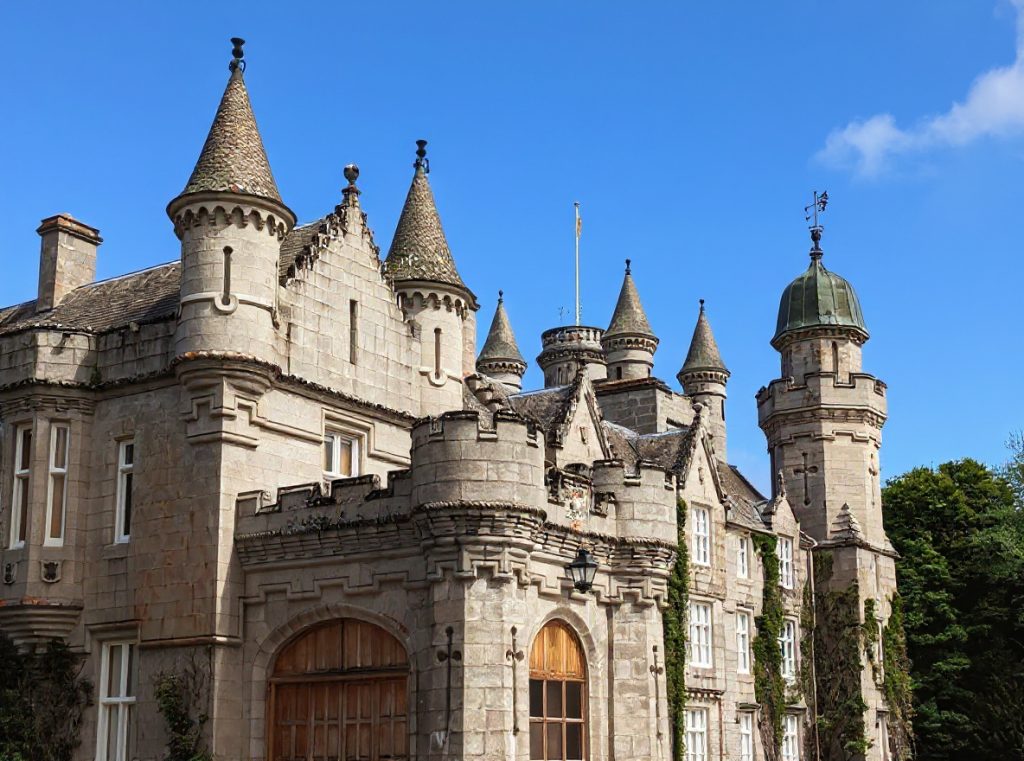
The original castle proved too small for the royal family’s needs. Prince Albert personally designed a new, larger castle with Aberdeen architect William Smith in 1853. Workers quarried granite from nearby Glen Gelder to build the structure entirely by hand. Queen Victoria laid the foundation stone in September 1853. She placed a signed parchment recording the date beneath it. Construction took three years. The new castle stood complete in 1856, featuring a tall tower, turrets and crow-stepped gables in full Scottish Baronial splendour. Workers demolished the old castle shortly after, though a stone on the front lawn commemorates its location.
Current status
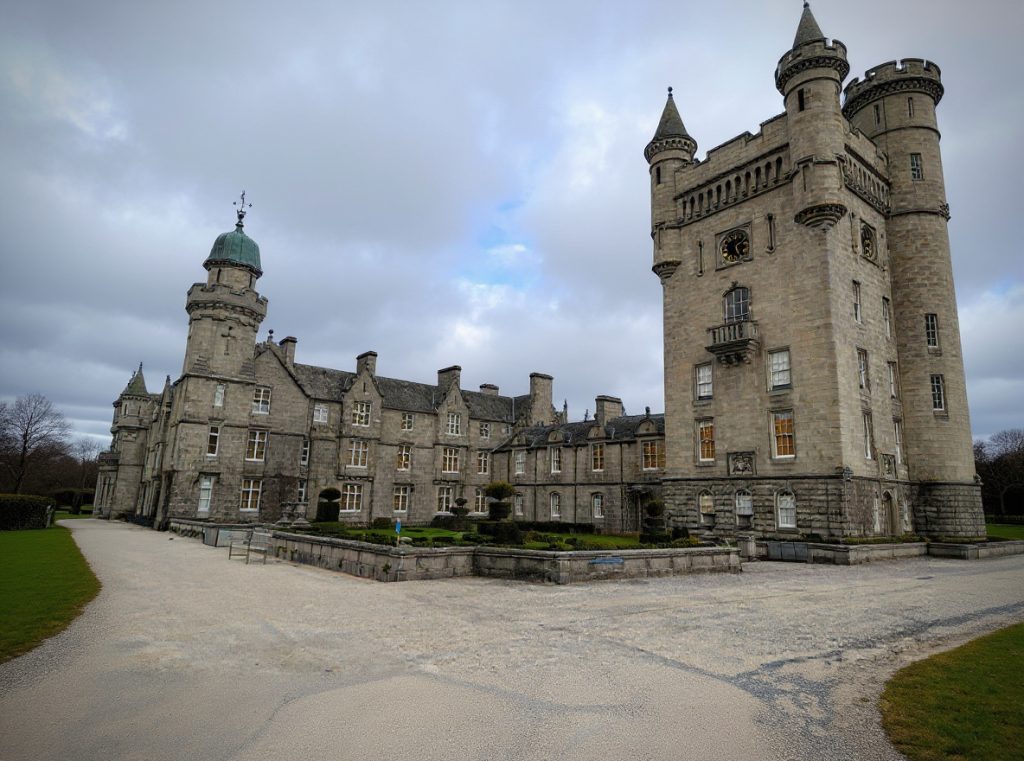
Balmoral remains the private property of the monarch. It does not form part of the Crown Estate. King Charles III inherited the estate when Queen Elizabeth II died here on 8 September 2022. The property spans over 53,000 acres of working Highland estate. This includes grouse moors, forestry, farmland and managed herds of deer, Highland cattle, sheep and ponies. Prince Albert started the gardens in the 1850s. Successive royals have expanded them since then. They now cover three acres of formal plantings designed to bloom between August and October when the family traditionally visits.
In 2024 King Charles III opened Balmoral Castle’s interior to the public for the first time since its construction in 1856. Visitors can now explore the Castle Ballroom, grounds, gardens and exhibitions from late January through autumn. The estate closes when the Royal Family stays in residence during summer. Guided tours, afternoon teas and seasonal events run throughout the visitor season. The Mews Gift Shop and café welcome guests. Woodland walks and riverside paths allow exploration of the wider estate. Historic Environment Scotland classifies Balmoral as a Category A listed building because of its architectural and historical importance. It stands as one of the finest examples of 19th-century Scottish Baronial architecture.
Castles near Balmoral Castle
Frequently asked questions
Can you go inside Balmoral Castle?
Only the Castle Ballroom is accessible to the public, which houses an exhibition on royal life at Balmoral. The royal apartments and private rooms are never open to visitors.
When is Balmoral Castle open to visitors?
The estate is typically open from April to late July (when the Royal Family is away), then reopens in autumn from late September through December with limited access. The castle closes in August when the Royal Family is in residence.
How do I get to Balmoral Castle from Aberdeen?
Take the 201 bus from Aberdeen Union Square Bus Station to Crathie (approximately 1h 40m–2h), then walk 5 minutes to the main gates. By car, the journey is about 1h 15m on the A93 through Royal Deeside.
Is Balmoral Castle worth visiting?
Balmoral offers beautiful grounds, gardens and royal history, but interior access is limited to the ballroom only. It's best suited to those interested in the Royal Family or who want to explore the scenic estate and riverside setting.
What can you see at Balmoral Castle?
Visitors can explore the formal gardens, kitchen garden, woodland walks, and the Castle Ballroom exhibition. The estate also has a restaurant and gift shop, but the main castle interiors remain private.
Featured listings