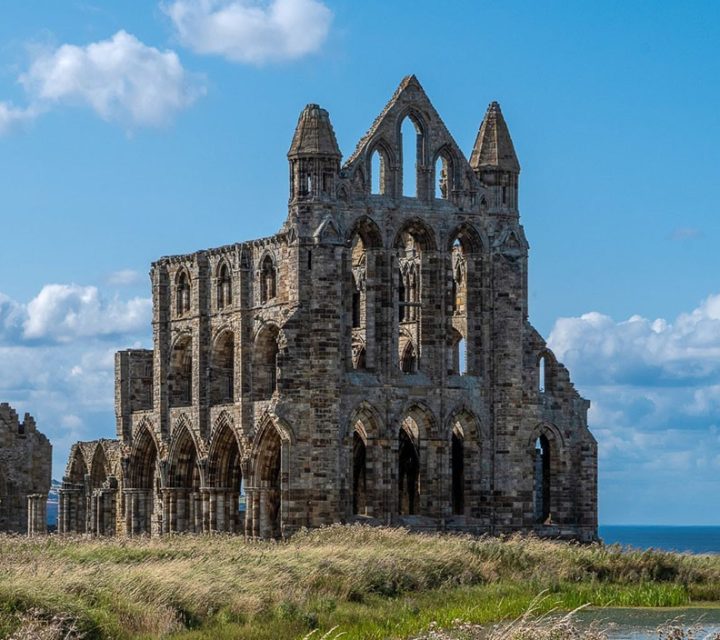
Whitby Abbey, located on the North Yorkshire coast of England, stands as one of the most iconic and atmospheric ruins in Europe. The abbey’s towering, skeletal remains dominate the landscape. It provides a striking view over the seaside town of Whitby and the North Sea. Known for its dramatic architecture and spiritual significance, it has played a key role in literature and culture. Whitby Abbey has captured the imagination of countless visitors throughout the centuries.
Plan your visit to Whitby Abbey
Can’t wait to visit the Abby? Book your Whitby Abbey tour online.
Location of Whitby Abbey
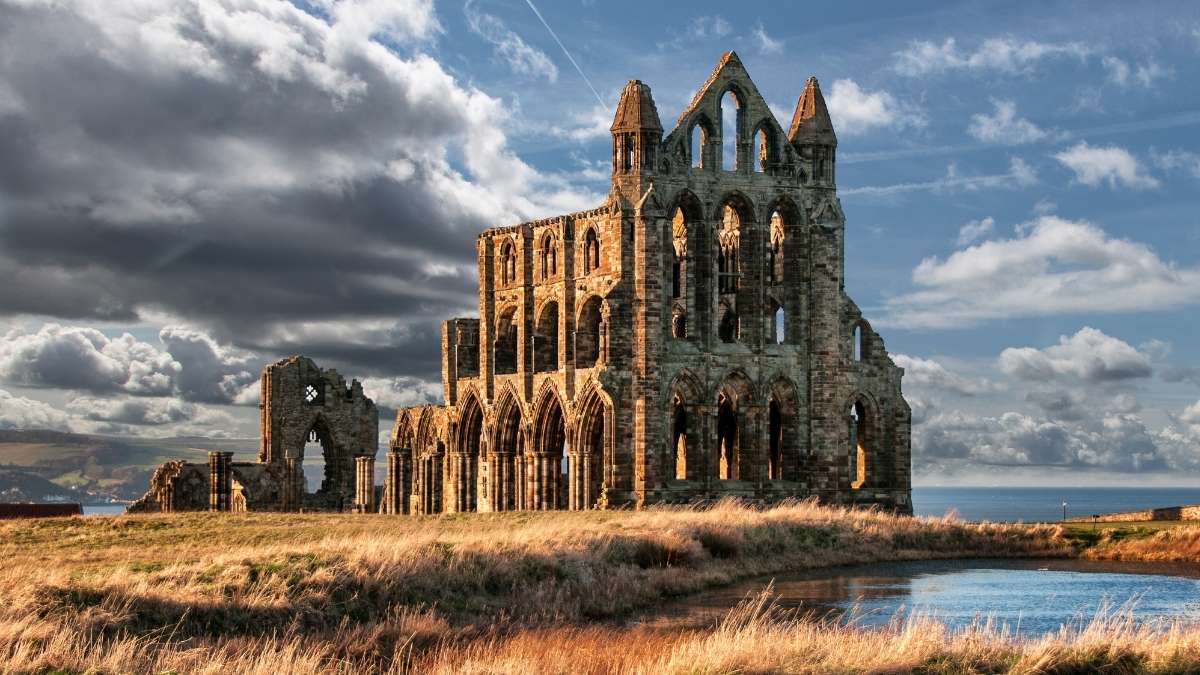
Situated atop the East Cliff in Whitby, North Yorkshire, Whitby Abbey commands an impressive position. It overlooks both the town and the harbor below. It is set against the rugged coastline of the North Sea, with steep cliffs adding to the abbey’s imposing presence. The abbey’s location has always played a pivotal role in its history. The nearby River Esk and the surrounding countryside contributed to the site’s strategic importance. This was particularly true during its early years. To access the abbey, one must ascend 199 stone steps from the town below. This has long been a pilgrimage route for visitors and worshippers alike.
The abbey is easily reachable by road from major towns in North Yorkshire. This has made it a popular destination for both domestic and international tourists. The dramatic setting of the abbey, perched high above Whitby, enhances its historical and religious importance. It also plays a central role in the region’s tourism industry.
History of Whitby Abbey
Whitby Abbey’s history is deeply rooted in the early Christian tradition of England. The abbey was founded in 657 AD by King Oswiu of Northumbria. It was established as a monastery for both monks and nuns. St. Hilda, who became its first abbess, led this early religious community. Known then as Streoneshalh, the abbey quickly grew in prominence. It became one of the most important religious centres in the Anglo-Saxon world.
The Synod of Whitby, held in 664 AD, marked a significant event in the abbey’s early history. It was during this synod that King Oswiu declared his support for Roman rather than Celtic Christianity. This decision shaped the future of the Christian church in England. It united the differing traditions and practices of the early Christian church in Britain under Roman authority. This event gave the abbey a lasting place in ecclesiastical history.
However, Whitby Abbey did not remain untouched by the turbulent events of England’s medieval period. It was destroyed by Viking raids in the 9th century. Afterward, the site lay in ruins for several centuries. It was not until after the Norman Conquest in 1066 that the abbey was rebuilt. This second incarnation of the abbey was constructed in the Gothic style. It became one of the most spectacular examples of ecclesiastical architecture in England. The monastery thrived until the Dissolution of the Monasteries under Henry VIII in the 16th century. It was abandoned once again, and the ruins that remain today were left.
Whitby Abbey also played a significant role in literature and popular culture. Most notably, it featured in Bram Stoker’s “Dracula,” published in 1897. The abbey’s eerie ruins inspired Stoker to use it as the backdrop for several scenes in his Gothic novel. This further cemented the site’s association with dark romance and horror.
Current status
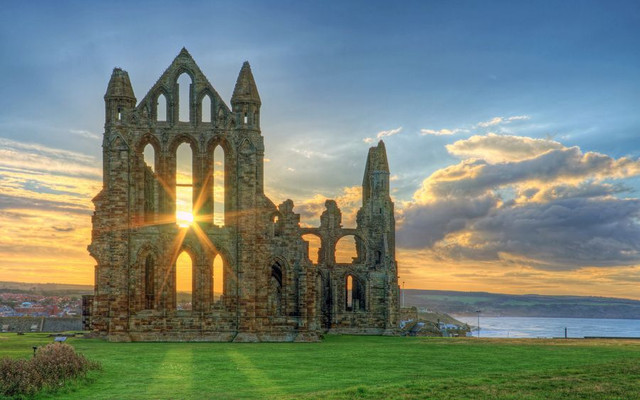
Today, Whitby Abbey stands as a haunting and evocative ruin. It is managed by English Heritage. Despite its current state of decay, the abbey’s grandeur and architectural brilliance remain clearly visible. The tall, arched windows and towering columns create a sense of awe. The sheer scale of the remaining structure allows visitors to glimpse its former glory. The ruins are set within well-maintained grounds. This allows visitors to explore the site while enjoying panoramic views of the coastline and town below.
Various preservation efforts have been undertaken. These efforts ensure that the abbey remains accessible to future generations. English Heritage has carefully managed the site. This protects it from further deterioration while also providing educational resources and interpretive displays. These efforts help visitors understand the abbey’s historical and cultural significance.
Castles near Whitby Abbey
Frequently asked questions
Can you visit Whitby Abbey without climbing the 199 steps?
Yes, there is road access from the A171 directly to the clifftop car park beside the abbey entrance. The 199 steps from the harbour are the traditional route but not the only way to reach the site.
Is Whitby Abbey the place that inspired Dracula?
Yes, Bram Stoker visited Whitby in 1890 and was inspired by the abbey ruins and town atmosphere to write his Gothic novel Dracula. The abbey features in the book as a dramatic clifftop landmark.
What is inside Whitby Abbey today?
The site contains the roofless Gothic ruins of the 13th-century Benedictine church and a visitor centre in Cholmley House displaying Anglo-Saxon carved stones, medieval artefacts and exhibits about the abbey's history. An audio guide is included with entry.
Is Whitby Abbey wheelchair accessible?
The site has ramped entrance from the car park and wheelchair access around the main grounds. However, the ruins themselves have uneven and sometimes grassy terrain that may be challenging in wet weather.
What was the Synod of Whitby Abbey in 664?
The Synod of Whitby was a church council held at the abbey that decided the date of Easter for the English church, choosing the Roman calculation over Celtic tradition. This decision shaped Christian practice across England for centuries.
Featured listings