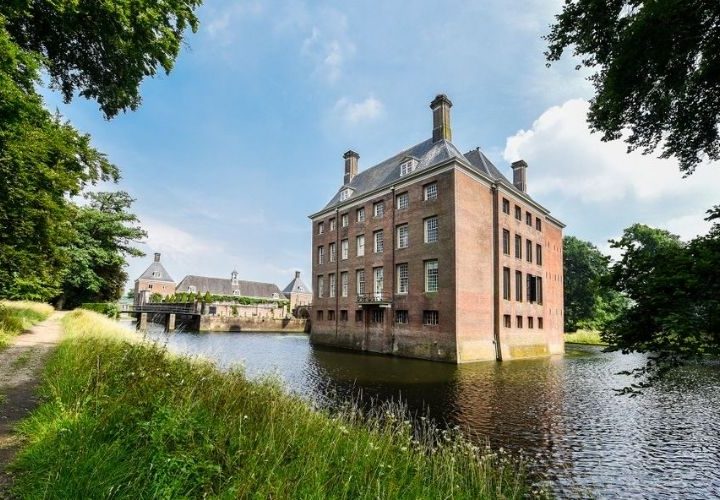
Amerongen Castle, known as Kasteel Amerongen in Dutch, stands as one of the Netherlands’ most remarkable historic estates. With its elegant appearance, centuries-old history, and connection to European nobility, the castle offers visitors a glimpse into the grandeur of the past. Set amidst beautifully landscaped gardens and a serene natural environment, Amerongen Castle reflects the aristocratic lifestyle of the Dutch elite. Its long and eventful history, combined with its well-preserved interiors, makes it a fascinating site. It appeals to those interested in heritage, architecture, and the stories of the families who once resided there.
Plan your visit to Amerongen Castle
Tue–Sun 11:00–17:00
Location of Amerongen Castle
Amerongen Castle is located in the province of Utrecht, in the central Netherlands. It lies near the small village of Amerongen, which is part of the municipality of Utrechtse Heuvelrug. The estate is situated along the Lower Rhine (Neder-Rijn) river, a strategic location that historically played a role in its prominence. The castle is surrounded by a vast park and gardens, offering a tranquil setting that contrasts with its turbulent history. Easily accessible from major cities such as Utrecht and Arnhem, Amerongen Castle remains an important cultural landmark within the Dutch landscape.
History of Amerongen Castle
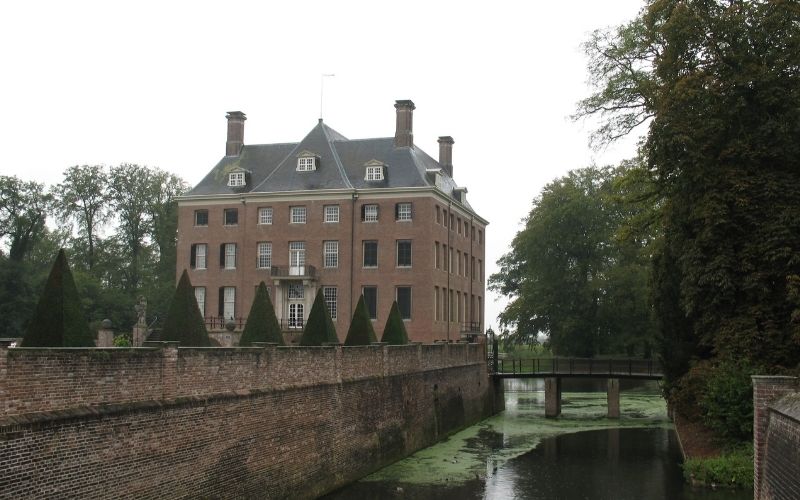
The origins of Amerongen Castle date back to the late 13th century when it was first constructed as a medieval stronghold. The Van Amerongen family, a noble lineage with significant influence in the region, initially owned the castle. The original structure was designed as a fortified residence to protect its occupants from territorial disputes and conflicts. Over the centuries, Amerongen Castle underwent numerous modifications, reflecting changing architectural styles and the evolving needs of its owners.
In the 17th century, a significant transformation took place after the castle was destroyed by French troops during the Franco-Dutch War in 1673. Godard Adriaan van Reede, the then-owner, commissioned the rebuilding of the castle, leading to the Baroque-style mansion that stands today. The new design was more refined and stately, incorporating classical architectural elements and elegant interiors that highlighted the status of the Van Reede family.
One of the most notable historical events associated with Amerongen Castle occurred in 1918 when it served as the place of exile for Kaiser Wilhelm II of Germany. Following Germany’s defeat in World War I, Wilhelm sought refuge in the Netherlands, where Queen Wilhelmina granted him political asylum. He resided at Amerongen Castle for over a year before eventually moving to Huis Doorn, another historic estate in the Netherlands. During his stay, he formally signed his abdication, marking the end of the German monarchy.
Throughout the 20th century, Amerongen Castle remained in private hands, carefully preserved by the Van Reede family and later by the Van Aldenburg Bentinck family. The estate continued to function as a noble residence, hosting dignitaries and maintaining its cultural significance. In 1977, ownership of the castle was transferred to a foundation dedicated to its preservation, ensuring that its rich heritage would be safeguarded for future generations.
Current status
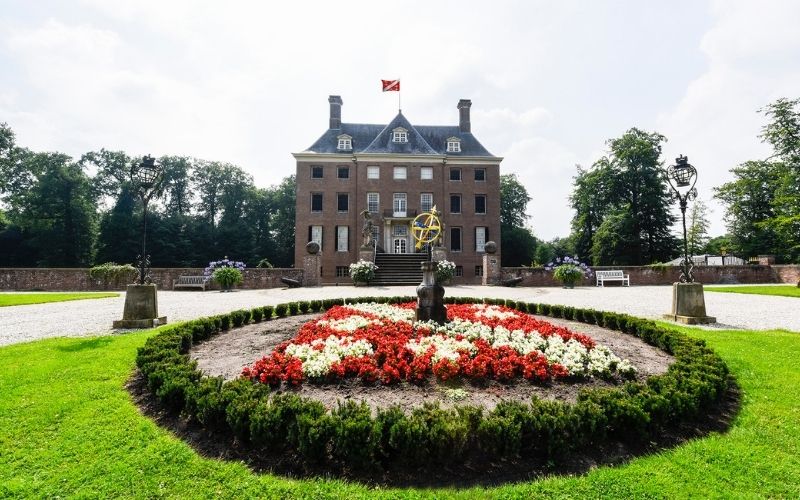
Today, Amerongen Castle is open to the public as a historic house museum. Its interior has been meticulously maintained, with original furnishings, artwork, and personal belongings of its former residents still on display. Visitors can explore the beautifully decorated rooms, including the grand hall, dining room, and library. Each of these offers insight into the lifestyle of Dutch nobility.
The castle’s gardens and parklands remain an integral part of the experience. The landscape, designed in the formal Dutch style, includes symmetrical lawns, ornamental flower beds, and winding pathways that provide a picturesque setting. The estate also features a collection of ancient trees and water features that contribute to its timeless charm.
Regular exhibitions and cultural events take place at Amerongen Castle, including concerts, lectures, and historical reenactments. Guided tours allow visitors to learn about the castle’s history in depth. Seasonal festivities bring the estate to life throughout the year. Special programs focusing on the castle’s role in European history, including its connection to Kaiser Wilhelm II, offer additional context for those interested in political and royal history.
As a well-preserved example of Dutch aristocratic architecture, Amerongen Castle continues to attract visitors. Many appreciate its historical significance and architectural beauty. It remains a symbol of resilience and refinement, standing as a testament to the Netherlands’ rich cultural heritage.
Castles near Amerongen Castle
Frequently asked questions
Can I visit Amerongen Castle with a Museumkaart?
Yes, the Museumkaart, Rembrandtkaart, and several other museum passes are accepted. You must be able to scan your valid card on site; digital copies are not accepted.
Are guided tours at Amerongen Castle available in English?
English guided tours are offered on Saturdays at 12:00. On other days, you can explore the castle at your own pace with guides in the rooms to answer questions.
Is Amerongen Castle accessible for visitors with mobility issues?
Unfortunately, the castle is not accessible for people with limited mobility. The castle is in its authentic state with stairs and no lift.
What happened at Amerongen Castle in 1918?
German Kaiser Wilhelm II lived at Amerongen Castle for 18 months after World War I and signed his abdication here in 1918. The desk where this historic event took place is still part of the castle collection.
Can I visit just the gardens at Amerongen Castle?
Yes, you can purchase a gardens-only ticket at the on-site ticket office. The gardens include four sections: a forest park, flower garden, rosarium, and historic conservatory.
Featured listings