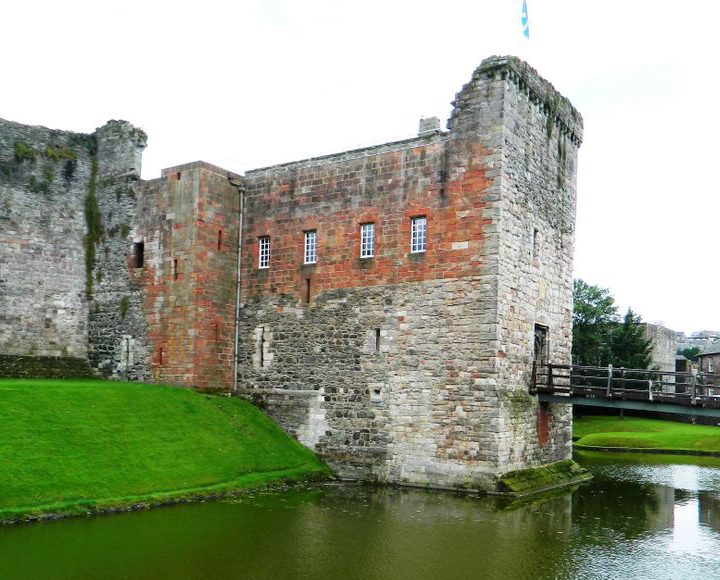
Rothesay Castle stands as a testament to the rich history and architectural evolution of Scotland. Located on the Isle of Bute, this medieval stronghold has witnessed numerous historical events and transformations over the centuries. Renowned for its distinctive circular design and formidable fortifications, Rothesay Castle offers a fascinating glimpse into the past. It captivates historians, architects, and visitors alike.
Plan your visit to Rothesay Castle
Location of Rothesay Castle
Situated in the town of Rothesay on the Isle of Bute, Rothesay Castle enjoys a strategic position that has historically contributed to its defensive significance. The Isle of Bute nestles in the Firth of Clyde, off the western coast of Scotland. The castle’s location in Rothesay places it within the picturesque surroundings of the island, characterized by its lush landscapes and scenic vistas. This idyllic setting not only enhances the castle’s aesthetic appeal but also underscores its historical role as a key defensive and administrative center.
History of Rothesay Castle
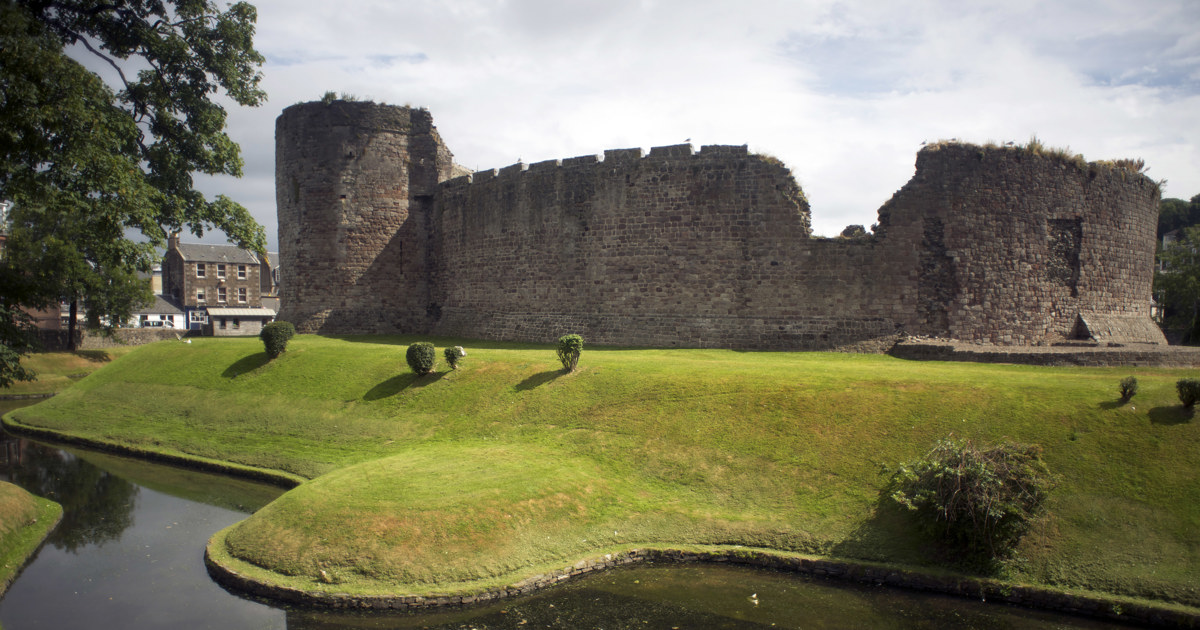
Rothesay Castle dates back to the early 13th century. Alan, the High Steward of Scotland, directed its construction to defend against Norse incursions. The castle’s unique circular plan, rare for Scottish castles, likely drew inspiration from French architectural styles, reflecting broader European trends of the time.
Throughout its history, Rothesay Castle has played a pivotal role in Scotland’s turbulent past. In the 13th century, Norse forces led by King Håkon IV of Norway besieged the castle, marking a significant event in the ongoing conflicts between Scotland and Norway. Despite these attacks, the castle remained a crucial stronghold. Successive generations of the Scottish nobility later expanded and fortified it.
The 15th century saw modifications under the Stewart kings, who used the castle as a royal residence. During this period, the castle’s defenses were strengthened. Additional buildings, including a great hall and residential quarters, were constructed within the courtyard. However, the castle’s fortunes declined during the late 16th century. It suffered damage from various conflicts and fell into a state of disrepair.
By the 17th century, Rothesay Castle had lost much of its strategic importance and was partially dismantled during the Wars of the Three Kingdoms. Efforts to restore and preserve the castle began in the 19th century, reflecting a renewed interest in Scotland’s medieval heritage. These restoration efforts were instrumental in stabilizing the remaining structures and protecting the site for future generations.
Current status
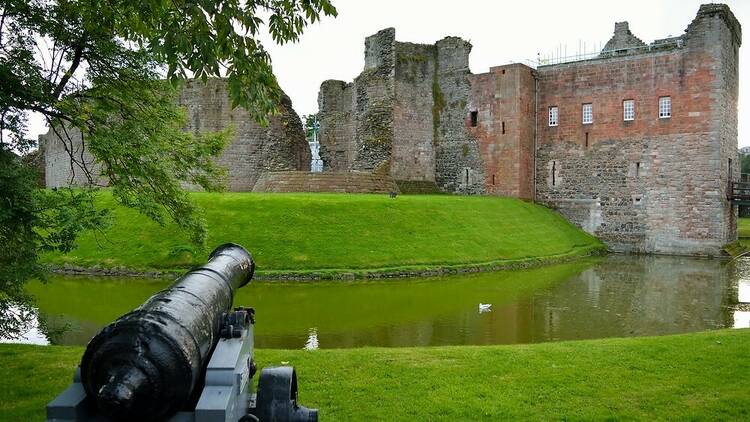
Visitors can explore the castle’s impressive ruins, including the circular curtain wall, moat, and gatehouse remains. Interpretive displays and informative plaques provide insights into the castle’s storied past. These allow visitors to appreciate its architectural and historical significance.
The central keep features robust stone walls and commanding views of the landscape. Additionally, it remains one of Rothesay Castle’s most striking features. The well-maintained grounds and tranquil moat enhance the visitor experience. These offer a peaceful retreat amidst the echoes of history. Furthermore, special events and guided tours frequently engage the public and foster understanding of Scotland’s medieval heritage.
In conclusion, Rothesay Castle embodies the architectural ingenuity and historical complexity of medieval Scotland. It also serves as a vibrant cultural hub today. Whether you are a history enthusiast, architecture aficionado, or curious traveler, a visit promises a rewarding experience.
Castles near Rothesay Castle
Frequently asked questions
What makes Rothesay Castle unique?
Rothesay Castle has Scotland's only circular curtain wall with four round towers added after a Norse siege in 1263. The medieval structure is remarkably well preserved with a moat, restored great hall and displays on the Stewart royal dynasty.
How do I get to Rothesay Castle from Glasgow?
Take a train from Glasgow Central to Wemyss Bay (52 minutes), then board the CalMac ferry to Rothesay (35 minutes). The castle is a short walk from Rothesay ferry terminal in the town centre.
Is Rothesay Castle suitable for children?
Yes, the castle offers a family-friendly visit with a moat, courtyard and accessible towers to explore. A free quiz is available for children to complete as they tour the site.
When is Rothesay Castle closed?
From October to March the castle is closed Thursdays and Fridays. It closes for lunch daily from 12 noon to 1pm year-round and from 25 December to 2 January.
Can I walk around the moat at Rothesay Castle?
Yes, visitors can walk around the exterior moat for excellent views of the circular curtain wall and towers. Ducks and waterfowl live in the moat year-round.
Featured listings