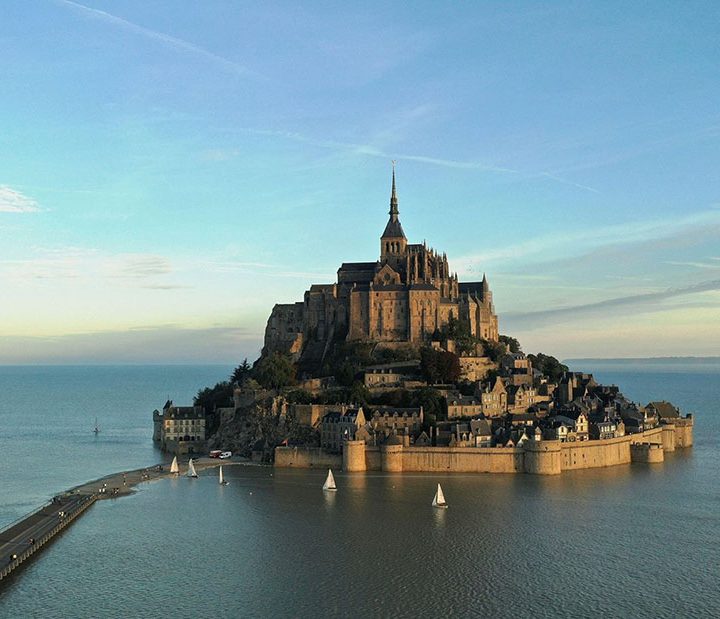
Mont Saint-Michel is undoubtedly one of Europe’s most enchanting and unique castles. From the moment they arrive, visitors are captivated by its dramatic location and medieval charm. Notably, this iconic fortified island is crowned by a medieval abbey dedicated to the Archangel Michael. It stands proudly in the Normandy region of France. Furthermore, rising above sweeping tidal sands and accessed by a causeway, Mont Saint-Michel inspires with its medieval architecture, religious devotion, and historical resilience. In addition, its rich history, unique geographical position, and evolving role over centuries make Mont Saint-Michel a truly fascinating destination. For these reasons, history enthusiasts and travelers alike are drawn to this incredible site.
Plan your visit to Mont Saint-Michel
Location of Mont Saint-Michel
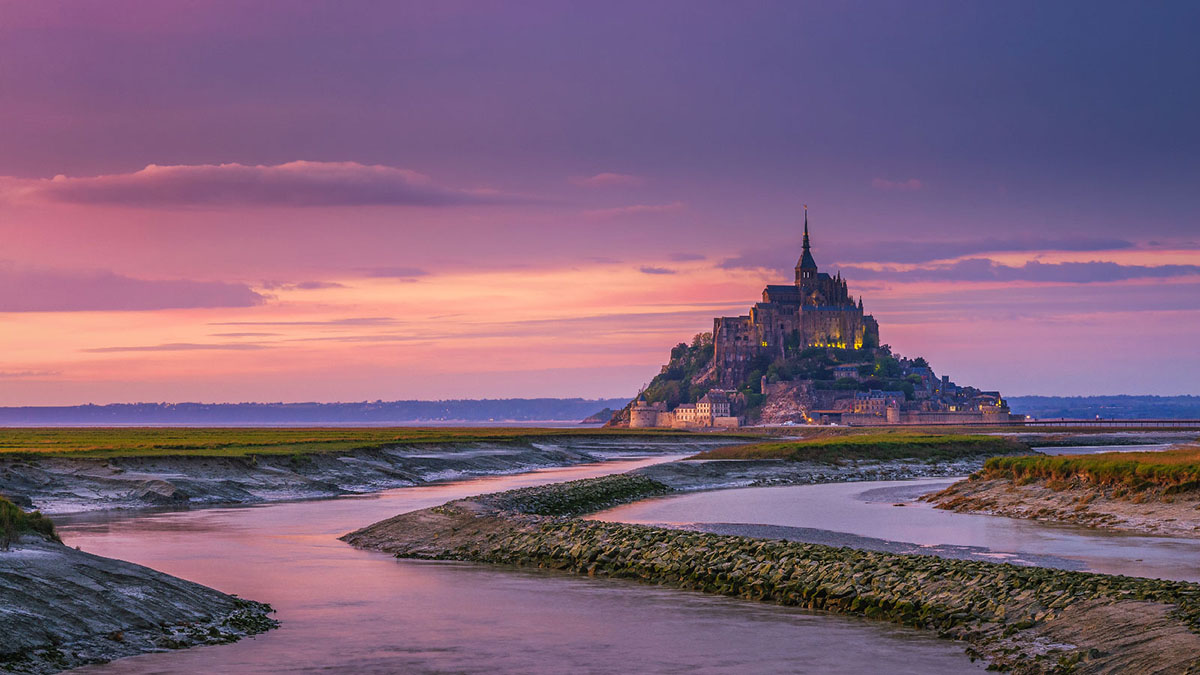
Mont Saint-Michel is located about one kilometer off the coast of Normandy, France. It lies where the regions of Normandy and Brittany meet. The island fortress sits at the mouth of the Couesnon River. Shifting tides and sweeping sands create a natural moat around the island. This tidal phenomenon not only provides Mont Saint-Michel with natural defenses. It also creates a breathtaking view, as the island appears isolated from the mainland at high tide. This creates a picturesque and mystical atmosphere. At low tide, visitors can walk across the sandy plains that connect the island to the mainland. However, modern access is made easier by a permanent causeway. This causeway allows visitors to approach the island without needing to time their visit according to the tide.
History of Mont Saint-Michel
The history of Mont Saint-Michel spans over a thousand years and is steeped in legend, faith, and strategic importance. According to tradition, the Archangel Michael appeared to Bishop Aubert of Avranches in 708 AD, instructing him to build a sanctuary on the island. Following this vision, Aubert established a small chapel, which soon became a significant pilgrimage site.
Over the centuries, this sanctuary developed into a grand abbey complex, aided by pilgrim contributions. By the 10th century, Benedictine monks had settled there, and Mont Saint-Michel grew in religious influence and architectural prominence. During the medieval era, thousands of pilgrims journeyed to the abbey, drawn by its religious significance. The abbey’s location also made it strategically valuable. During the Hundred Years’ War in the 14th and 15th centuries, Mont Saint-Michel withstood English attempts to conquer it. The fortified walls and surrounding tidal sands rendered it nearly impenetrable, making it one of the few sites in France to remain unconquered. This defense cemented its role as a symbol of resilience.
Following the French Revolution, Mont Saint-Michel saw a shift from spiritual to secular use, eventually becoming a prison under Napoleon Bonaparte. This use continued until 1863, though the site’s architectural integrity suffered due to neglect.
In the late 19th century, the castle was declared a historic monument, leading to restoration efforts that revived its grandeur. In 1979, Mont Saint-Michel and its bay were designated a UNESCO World Heritage Site, ensuring its preservation as one of Europe’s most cherished landmarks.
Current status
Today, the castle stands as one of the most popular tourist destinations in France. It attracts millions of visitors each year. It is managed as both a historic site and a place of active religious significance. The abbey continues to serve as a site for Christian worship and pilgrimage. Regular masses are held in the abbey. Special ceremonies are also conducted to honor the Archangel Michael. This preserves the spiritual legacy that inspired its original construction.
The site has undergone extensive restoration projects to maintain its structural integrity. These efforts also aim to enhance visitor experience. The abbey itself is open to the public. Visitors can explore its Gothic architecture, towering spires, and awe-inspiring interiors. Among the highlights are the cloister, the grand halls, and the refectory, where monks once gathered for meals. These architectural marvels, along with stunning views of the surrounding bay, make Mont Saint-Michel an unforgettable experience.
Modern visitor facilities have also been established. A dedicated visitor center on the mainland offers educational exhibits, guided tours, and historical information. Despite modern improvements, efforts have been made to retain the island’s historical character. Its narrow cobblestone streets, traditional stone buildings, and limited commercial development within the medieval walls preserve its old-world charm.
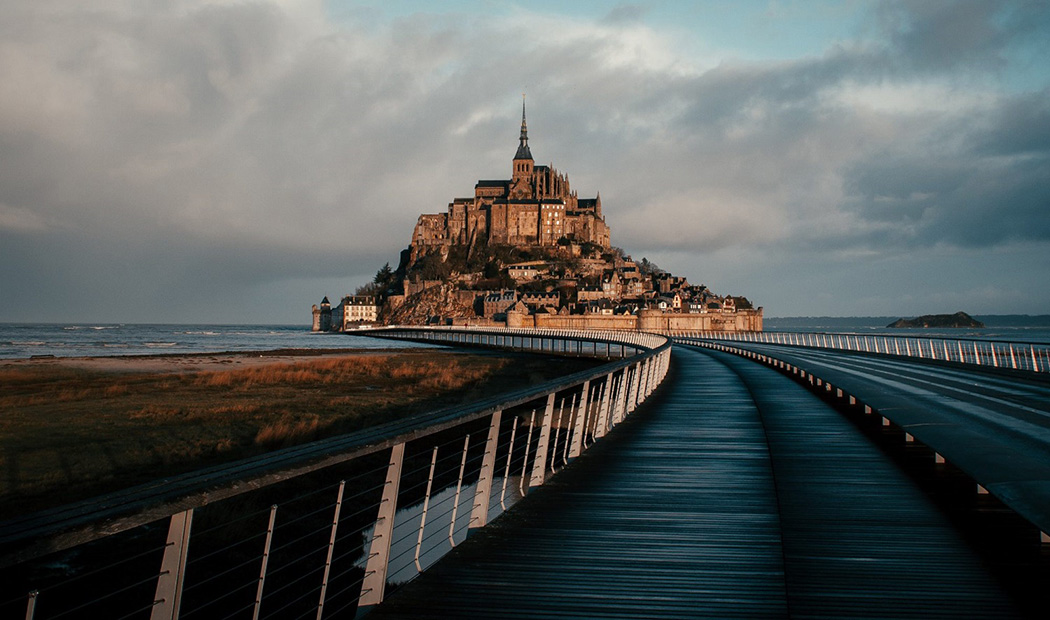
Recent conservation efforts have focused on preserving the unique tidal ecosystem surrounding the island. A project was undertaken to remove the previous causeway and replace it with a pedestrian bridge. This allowed the natural flow of tides to return, preserving the island’s iconic tidal effect. The environmental restoration project was completed in 2015.
Castles near Mont Saint-Michel
Frequently asked questions
Is Mont Saint-Michel free to visit?
The village and island are free to enter and accessible 24/7. Only the abbey interior requires a ticket (€16 high season, €13 low season), unless you qualify for free admission.
How do I get to Mont Saint-Michel by public transport?
From Rennes, take a direct Kéolis bus (daily, year-round, about 1h 15m) to the shuttle terminus. From Paris, take the TGV to Rennes then the bus, or a direct train to Pontorson station with a connecting shuttle.
Where do I park at Mont Saint-Michel?
Cars park at the mainland car park (4,000 spaces), 2.5 km from the island. From there, take the free 'Le Passeur' shuttle (7:30am–midnight, every 12 minutes) or walk the causeway (about 40 minutes).
When is Mont Saint-Michel Abbey open?
The abbey opens daily 9:00–19:00 from May to August and 9:30–18:00 from September to April (last admission one hour before closing). It closes on 1 January, 1 May and 25 December.
Do I need to book tickets in advance for Mont Saint-Michel?
Yes, official abbey tickets are timed-entry and released one month in advance. Booking online is strongly recommended to secure your preferred time slot and avoid queues.
Featured listings