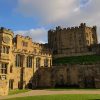

On the eastern edge of Paris, Château de Vincennes rises above the vast Bois de Vincennes as France’s largest surviving medieval royal fortress. Its massive keep soars 52 metres into the sky, the tallest of its kind in Europe. Builders raised the castle during the turbulent 14th century, when the Hundred Years’ War shook France. This formidable fortress served kings as both palace and stronghold. Within its kilometre-long fortified walls, visitors discover a royal chapel with soaring Gothic windows and military architecture of astonishing scale. The castle holds eight centuries of French history.
Plan your visit to Château de Vincennes
Location of Château de Vincennes
The fortress sits next to the town of Vincennes, on the eastern edge of Paris, alongside the Bois de Vincennes. Its address is Avenue de Paris, 94300 Vincennes. The château lies less than two kilometres from the Paris ring road. Metro Line 1 terminates at Château de Vincennes station, which brings visitors directly to the entrance. RER Line A also stops nearby. The fortress borders the Bois de Vincennes, Paris’s largest public park, so a visit combines wonderfully with walks through landscaped gardens and woodland. The location proved strategic when Louis VII chose it in the 12th century. It stood close to the capital and near several communication routes, both land and river. The vast surrounding forest made it perfect for royal hunting. Today, the park attracts families, cyclists and joggers, while the château itself draws history enthusiasts from around the world.
History of Château de Vincennes
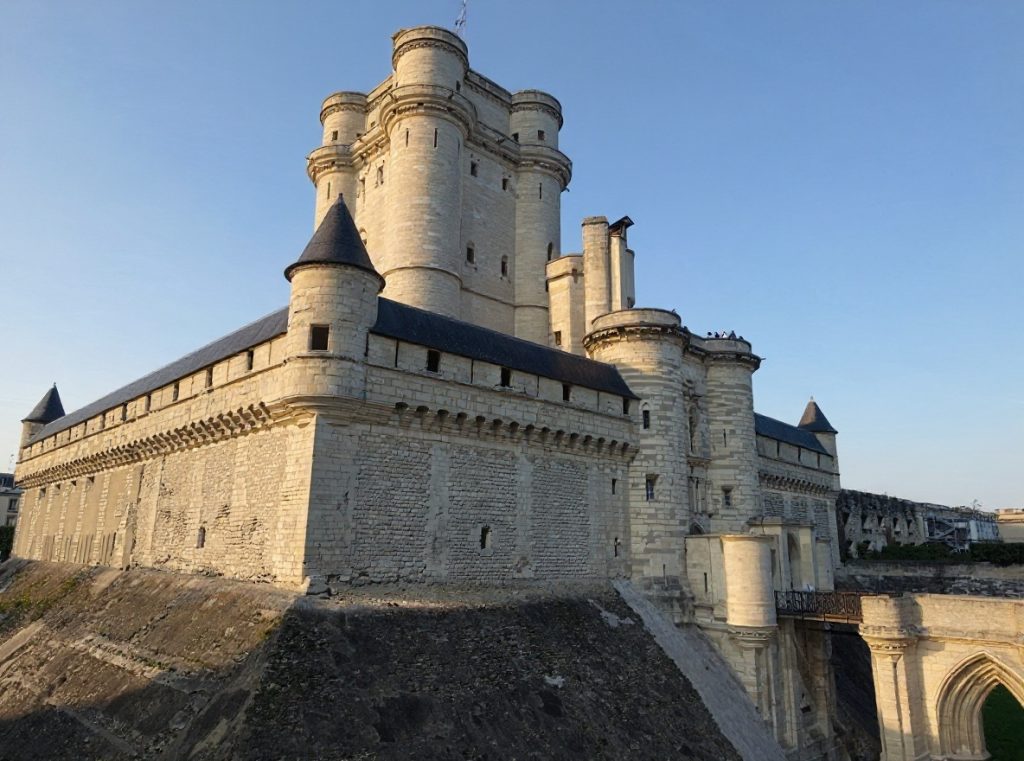
King Louis VII established a royal manor and hunting lodge within the forest of Vincennes before 1178. In the 13th century, with the reign of Louis IX (Saint Louis), Vincennes became a place of royal power. King Louis IX often retreated to Vincennes for reflection and governance. The modest manor served as a country retreat for several generations. Everything changed during the Hundred Years’ War, though. On 22 February 1358, Étienne Marcel led an attack against the Palais de la Cité, where the future Charles V resided. This riot profoundly affected him and encouraged him to build a new fortress. In 1361, construction of the main tower began, building on foundations that Philip VI had erected twenty-five years earlier. Under King Charles V, born at Vincennes in 1364, workers completed the donjon around 1369. Between 1372 and 1380, builders erected a large fortified enclosure featuring multiple towers and gates. Charles V began construction of another wall and laid the foundations of the Sainte-Chapelle de Vincennes to hold sacred relics that Louis IX had obtained. Construction began on the chapel in 1379 but craftsmen did not complete it until 1552. The chapel became an exceptional example of Flamboyant Gothic architecture.
The château served as a preferred residence of French kings from the 14th to 16th century. Its role changed repeatedly, though. Because of its fortifications, rulers often used it as a royal sanctuary in times of trouble. It also served as a prison and military headquarters. From the early 15th century to the 1800s, the keep functioned as a prison. Famous figures such as Fouquet, the Marquis de Sade and Mirabeau all spent time imprisoned here. Louis XIV commissioned architect Louis Le Vau to build two royal pavilions in the 17th century.
Current status
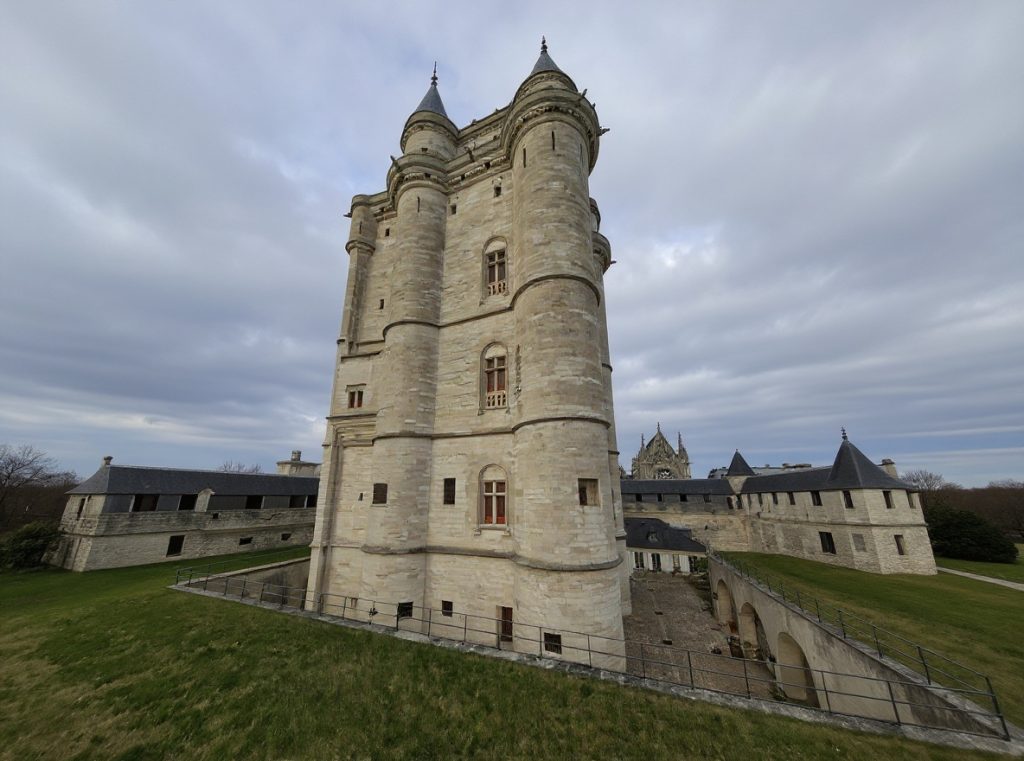
Since 1948, the site has housed the French Defence Historical Service. Today the château houses the archives of the French military. Authorities listed the chapel as an historic monument in 1853 and the keep in 1913. Restoration efforts began in the late 20th century, when archaeologists conducted excavations from 1992 to 1996. Conservation work continued in 2016. The Centre des Monuments Nationaux manages the property and welcomes visitors throughout the year. Most of the building now opens to the public. Visitors can climb the massive keep and explore the royal chapel with its magnificent stained glass. They can also walk the ramparts and discover the courtyard where kings once held court. Guided tours in French run daily, and the site hosts concerts and cultural events within the Sainte-Chapelle. Free admission applies to those under 18 and to EU residents aged 18 to 25. The first Sunday of each month from November to March, entry costs nothing for all visitors.
At the entrance to the Bois de Vincennes, this fortress remains a monument to royal ambition and military engineering. The towering keep still commands the skyline, much as it did when Charles V watched over his troubled kingdom. Sunlight streams through Gothic windows onto ancient stone. The deep moat encircles walls that have witnessed revolution, siege and restoration. Château de Vincennes endures as a monument to medieval France, where power, faith and architecture merged into one extraordinary creation.
Castles near Château de Vincennes
Frequently asked questions
Is the Château de Vincennes included in the Paris Museum Pass?
Yes, the €13 entry is fully covered by the Paris Museum Pass. No reservation is required; simply show your pass at the entrance.
Can I climb to the top of the keep at Château de Vincennes?
Yes, visitors can climb all six floors of the 52-metre donjon, the tallest fortified medieval tower in Europe. The top floor offers panoramic views over Paris and the Bois de Vincennes.
What are the opening hours of the Sainte-Chapelle at Château de Vincennes?
The Sainte-Chapelle opens at 10:00 and closes 30 minutes before the château closes. It also closes daily for lunch between 13:00 and 14:00.
How far is Château de Vincennes from central Paris?
The château is 8 km east of central Paris, directly accessible via Métro line 1 terminus. Journey time from Châtelet is approximately 15 minutes.
Was Château de Vincennes really a royal prison?
Yes, from the 16th to 19th centuries the fortress served as a state prison. Notable prisoners included the Marquis de Sade, the Count of Mirabeau, and the philosopher Diderot.
Featured listings