
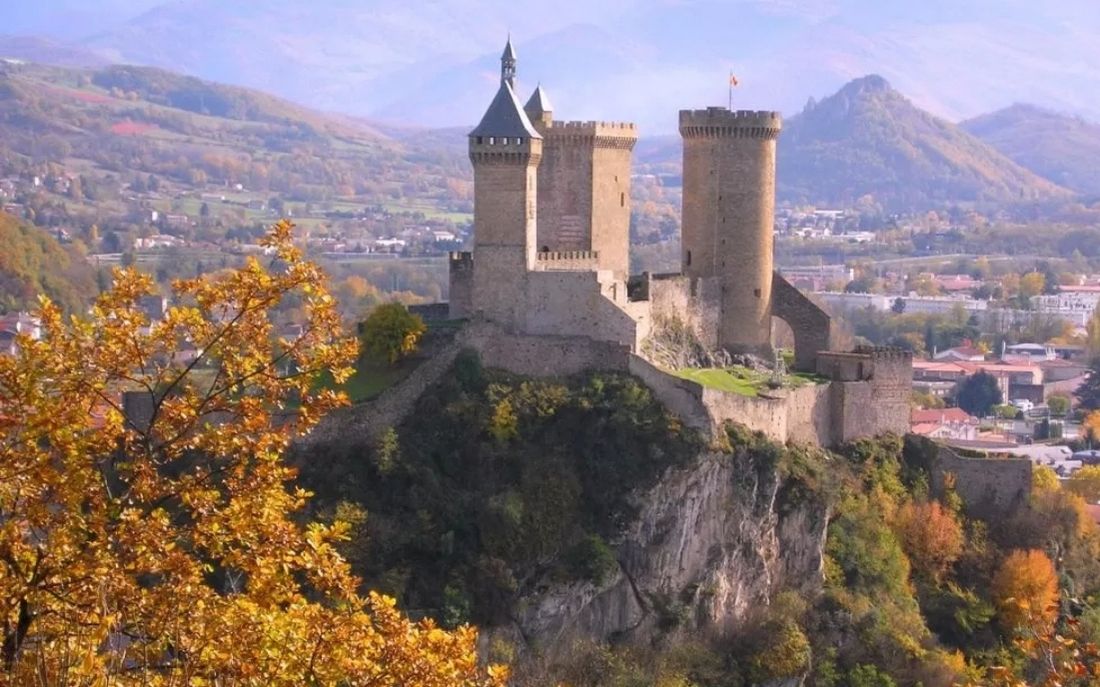
Situated majestically on a rocky promontory overlooking the town of Foix in southwestern France, the Château de Foix stands as one of the most iconic medieval strongholds in the Occitanie region. Its formidable silhouette, composed of robust stone towers and ramparts, reflects its powerful design. This structure evokes the turbulent centuries during which it served as both a military bastion and a noble residence. Frequently visited for its architectural grandeur and historical significance, the castle draws countless visitors each year. It continues to inspire admiration and curiosity among people from all over Europe and beyond.
Plan your visit to Château de Foix
Recognised for its deep historical roots and well-preserved structures, the Château de Foix invites exploration into the fascinating world of the Middle Ages. Every wall and tower of this fortress carries the memory of feudal power struggles, religious conflicts, and noble legacies. Its commanding position enabled the castle to serve as a powerful defensive stronghold. It not only protected the valley beneath but also exerted political influence throughout the region during its prime.
Location of Château de Foix
The Château de Foix is located in the town of Foix, which serves as the administrative centre of the Ariège department in the Occitanie region of southern France. Perched atop a steep limestone rock at an altitude of approximately 400 metres, the castle commands attention from every angle. It dominates the surrounding landscape and offers panoramic views of the Ariège valley and the Pyrenees mountains. The site can be found near the confluence of the Ariège and Arget rivers, a position that has historically enhanced its strategic and defensive value.
Access to the castle is facilitated through the town of Foix, which is well connected by road and rail networks to nearby cities such as Toulouse and Carcassonne. The setting not only enhances the castle’s strategic importance but also provides a picturesque backdrop that enriches the visitor experience.
History of Château de Foix
The origins of the Château de Foix can be traced back to at least the early 10th century. The first documented reference dates from 987, when it was mentioned in connection with Count Roger I of Foix. Built upon even older foundations, possibly dating to Roman times, the fortress served a strategic purpose from the beginning. It was initially constructed as a defensive outpost to secure the region from incursions and assert the power of local nobility.
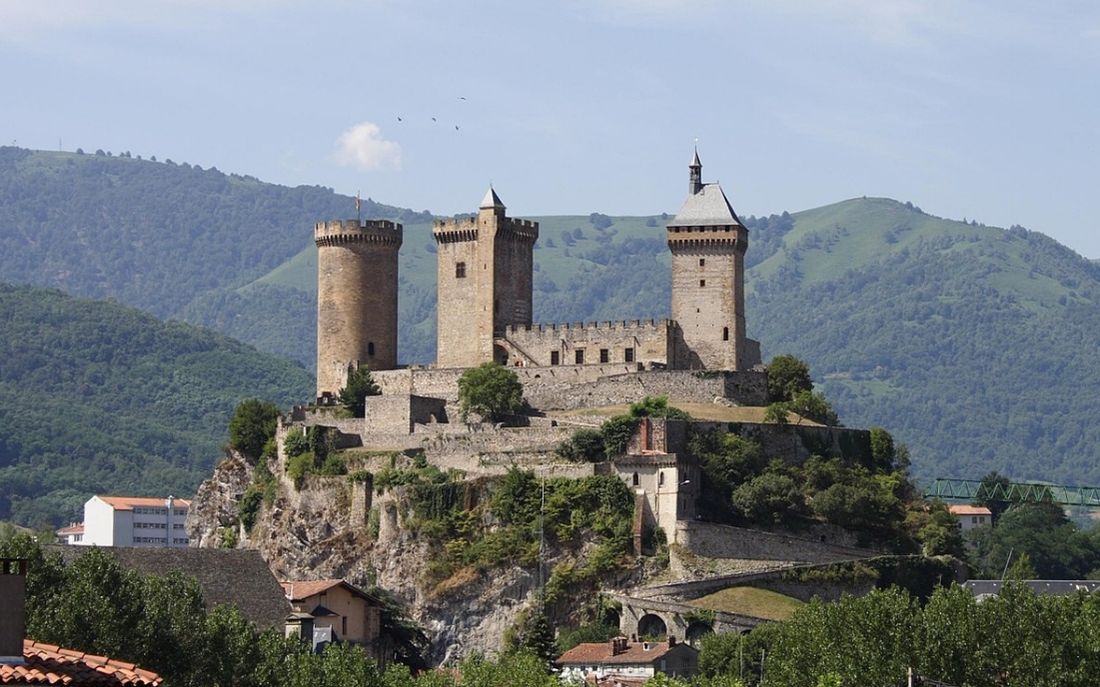
Throughout the Middle Ages, the castle gained prominence as the seat of the Counts of Foix, a powerful feudal family who wielded considerable influence across the Pyrenees. By the 11th century, the castle had been significantly expanded with high stone walls and three imposing towers. These included the iconic square tower and two circular towers, which still stand today.
During the 13th century, the Château de Foix played a key role in the Albigensian Crusade. This campaign was launched by the Catholic Church against the Cathar heresy that had spread throughout the Languedoc region. The counts of Foix were known for their support of the Cathars, and as a result, the castle became a centre of resistance against royal and papal forces. Despite several sieges, it managed to withstand attack due to its formidable defences and its near-inaccessible location.
In the 14th and 15th centuries, the counts of Foix expanded their influence through strategic marriages and political alliances. Their holdings were eventually merged with the Kingdom of Navarre. The castle continued to serve as a regional seat of power until the integration of Foix into the French crown under Henry IV in the late 16th century. Its military role diminished thereafter, although it remained an important administrative centre.
Current status of Château de Foix
Today, the Château de Foix has been fully restored and transformed into a major cultural and historical attraction. Its status as a protected monument historique, granted in the 19th century, highlights its cultural importance. This designation has ensured that considerable care has been taken in preserving its architectural integrity and historical authenticity. The castle is currently managed by the Conseil Départemental de l’Ariège and serves as a key component of the town’s tourist appeal.
The castle complex now houses the newly renovated Musée Départemental de l’Ariège. This museum offers a rich and immersive experience into the history of the region. Within the museum, visitors are presented with a variety of exhibitions showcasing medieval weaponry and daily life in the Middle Ages. The displays also explore the complex history of the Counts of Foix. Advanced museographic techniques, including interactive displays and reconstructed scenes, have been employed to enhance understanding and engagement.
Visitors are welcome to explore the three towers, each offering a unique perspective on the castle’s evolution and strategic function. The round towers provide exceptional views of the Pyrenees and the valley below. The square tower, dating from the 11th century, serves as a powerful symbol of the castle’s early defensive might. Events such as medieval reenactments, educational workshops, and guided tours further enrich the experience, especially for families and school groups.
For those seeking to delve into the feudal past of the Pyrenean foothills, the Château de Foix provides the perfect starting point. It offers an unforgettable journey into the heart of medieval Occitania. Through its preserved walls and commanding views, the Château de Foix reveals its historical significance. Thoughtfully curated exhibitions further provide a deeper understanding of the region’s turbulent history and noble legacy.
Castles near Château de Foix
Frequently asked questions
What can I see inside Château de Foix?
The visit includes an interactive departmental museum with medieval displays and multimedia exhibits about the Counts of Foix, plus the castle's three towers with furnished rooms (guard room, banquet hall, bedchamber). Daily workshops demonstrate medieval weapons, war machines, stone-cutting and blacksmithing.
Is Château de Foix accessible for visitors with mobility issues?
The museum at the base is fully wheelchair accessible with a lift. The castle towers themselves are not accessible due to narrow spiral stone staircases with steep steps leading to the three towers.
How long does a visit to Château de Foix take?
Most visitors spend 2 to 3 hours exploring the museum and castle. If you attend all the daily medieval workshops (trebuchet, crossbow shooting, blacksmithing), a full visit can take up to 4 hours.
Do I need to book tickets in advance for Château de Foix?
Advance booking is generally not required for standard admission. You can buy tickets at the on-site ticket office (open until 17:00, 18:00 in July–August) or online through the official booking site.
Can I reach Château de Foix by public transport?
Yes, regional TER trains from Toulouse reach Foix station in about 1 hour 20 minutes. From the station it's a 10-minute walk to the castle, or you can take local Agglobus lines 1, 2 or 4 to the town centre.
Featured listings