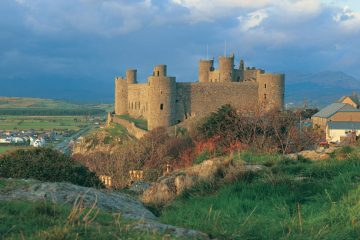
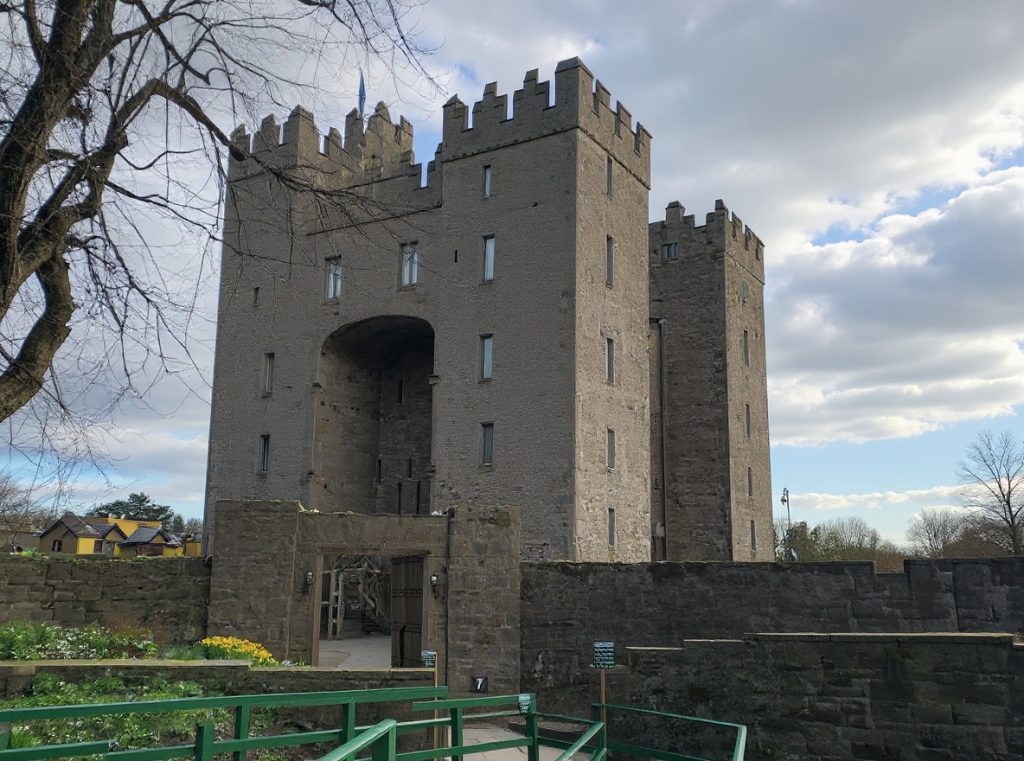
On the banks of the River Ratty where it flows toward the Shannon Estuary, Bunratty Castle commands attention with its formidable stone towers. This remarkable 15th-century tower house ranks as Ireland’s most complete and authentic medieval fortress. The MacNamara family built the castle in 1425 on a site that witnessed Viking raids, Norman ambitions, and Irish resistance. Today, visitors walk the same halls where the Earls of Thomond once ruled over Munster.
Plan your visit to Bunratty Castle
Location of Bunratty Castle
Bunratty Castle sits in the centre of Bunratty village, by the N18 road between Limerick and Ennis, near Shannon Town and its airport. The fortress occupies a strategic position along Ireland’s Wild Atlantic Way in County Clare. You’ll find the castle just off the N18 Limerick/Ennis Road, only ten minutes from Shannon Airport. Bunratty village sits just 20 minutes from Limerick city and an hour from Galway city. Regular bus services connect the village to Dublin, Limerick, and Ennis. The castle’s commanding location has drawn travelers for centuries, from medieval merchants to modern tourists.
History of Bunratty Castle
The story of Bunratty Castle begins in 1250, when the Norman adventurer Robert De Muscegros decided this bend of the River Shannon offered the perfect spot for a fortress. His first effort consisted of a traditional motte and bailey Norman-style structure with a strong wooden tower atop an earthen motte. King Henry III later revoked the lands and granted them to Thomas De Clare, a descendant of Strongbow, who built the first stone castle on the site.
In 1318, Irish forces killed Thomas and his son Richard De Clare at the Battle of Dysert O’Dea during the Irish Bruce Wars. De Clare’s wife then set fire to the castle and town before sailing for England. Irish chieftains destroyed a rebuilt castle in 1332, and though Sir Thomas Rokeby restored it 21 years later, Irish forces attacked and destroyed it once again.
The current castle, built in 1425 by the MacNamaras, remains one of Ireland’s best-preserved medieval strongholds. Builders constructed it in a rectangular tower house style. The powerful MacNamara family built Bunratty in 1425 before passing it to their close allies the O’Briens in 1475. During the Tudor period, the Earls of Thomond ruled north Munster from Bunratty Castle and lived in splendour with beautiful gardens and a herd of 3,000 deer. English armies occupied the stronghold in 1646 during the Irish Confederate Wars, though Confederates eventually took control after a prolonged siege until the O’Briens regained it. In the early 18th century the castle came into the possession of the Studdert family, who built Bunratty House in 1804. The Studderts moved into the more comfortable Bunratty House nearby in 1804 and left the castle to crumble quietly into ruin. By the mid-20th century it had nearly vanished forever.
Current status
Lord Gort (the 7th Viscount Gort) purchased the derelict castle in 1953 for $1,000. With advice from art dealer John Hunt and collaboration with Inspector of National Monuments Percy Le Clerc, workers restored Bunratty at a total cost of £25,000. Seven and a half years of restoration work reached completion in May 1960. Lord Gort made an immense effort to restore and furnish the castle building because of his passionate interest in Irish medieval history. Later Lord and Lady Gort gave Bunratty Castle to the Irish people as a donation.
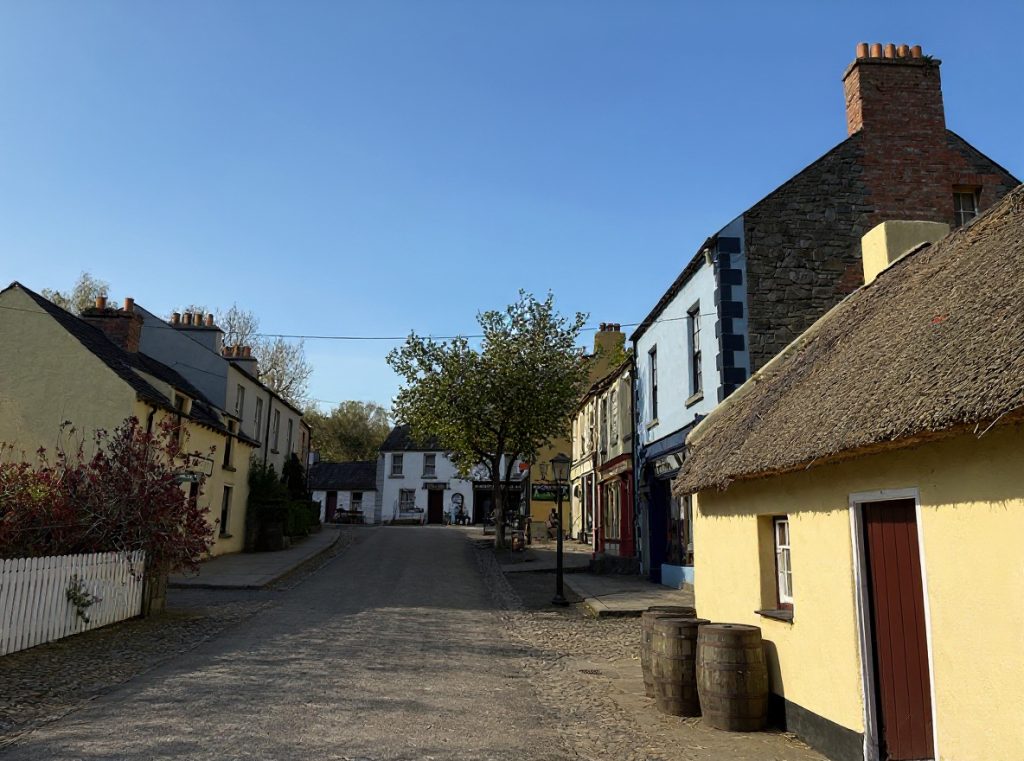
Today Clare Tourism Development East manages Bunratty Castle and Folk Park as a major tourist attraction. The site forms part of the Clare Collection, which Clare County Council operates. Visitor numbers at Bunratty Castle and Folk Park exceeded 344,000 in 2023. The guided tour shines a light on its fascinating history—visitors see the Great Hall, feast their eyes on a remarkable array of medieval and early Renaissance art and furniture, and venture below into the cool damp dungeons. The castle hosts medieval banquets throughout the year. Surrounding the fortress, the Folk Park recreates 19th-century Irish village life across 26 acres of Clare countryside.
From its towers, panoramic views sweep across the Irish landscape much as they did when the O’Brien earls surveyed their domains. The River Ratty still flows past stone walls that have witnessed nearly 600 years of Ireland’s tumultuous history. Bunratty stands not merely as a preserved monument but as a living connection to the medieval world, where stone corridors echo with centuries of stories.
Castles near Bunratty Castle
Frequently asked questions
What is included in a Bunratty Castle ticket?
A single ticket includes access to both the 15th-century castle with its four floors of medieval furnishings and the 26-acre folk park recreating 19th-century Irish village life. Live entertainment from musicians and village characters is included during opening hours.
How long does it take to visit Bunratty Castle and Folk Park?
Allow 2 to 3 hours to explore both the castle and folk park properly. The castle itself takes about 45 minutes to tour, whilst the folk park with its farmhouses, village street, walled gardens and fairy trail can easily occupy another 1.5 to 2 hours.
Can you visit Bunratty Castle without booking in advance?
Yes, walk-up tickets are available at the door during opening hours (9:00–17:30 daily, last entry 16:45). However, booking online in advance gets you a 10% discount on the ticket price, and tickets are non-refundable once purchased.
Is the medieval banquet at Bunratty Castle included in admission?
No, the daytime admission ticket covers only the castle and folk park. The medieval banquet is a separate evening event with its own ticket, typically held at 17:30 and 20:45, featuring a four-course meal with entertainment by castle singers.
How do I get to Bunratty Castle from Limerick by public transport?
Take Bus Éireann route 343 or 317A from Limerick city centre (Sarsfield Bridge or Arthur's Quay stations) directly to Bunratty stop. Buses run every 30 minutes and the journey takes 20–30 minutes; the castle is a 10–12 minute walk from the bus stop.
Featured listings