<?xml version="1.0" encoding="UTF-8"?><rss version="2.0"
	xmlns:content="http://purl.org/rss/1.0/modules/content/"
	xmlns:wfw="http://wellformedweb.org/CommentAPI/"
	xmlns:dc="http://purl.org/dc/elements/1.1/"
	xmlns:atom="http://www.w3.org/2005/Atom"
	xmlns:sy="http://purl.org/rss/1.0/modules/syndication/"
	xmlns:slash="http://purl.org/rss/1.0/modules/slash/"
	>

<channel>
	<title>famous Archives - Europe&#039;s Castles</title>
	<atom:link href="https://europescastles.com/tag/famous/feed/" rel="self" type="application/rss+xml" />
	<link>https://europescastles.com/tag/famous/</link>
	<description>Explore the timeless majesty of Europe&#039;s castles</description>
	<lastBuildDate>Sun, 22 Dec 2024 18:14:20 +0000</lastBuildDate>
	<language>en-US</language>
	<sy:updatePeriod>
	hourly	</sy:updatePeriod>
	<sy:updateFrequency>
	1	</sy:updateFrequency>
	<generator>https://wordpress.org/?v=6.9.4</generator>

<image>
	<url>https://europescastles.com/wp-content/uploads/2024/05/cropped-favicon-32x32.png</url>
	<title>famous Archives - Europe&#039;s Castles</title>
	<link>https://europescastles.com/tag/famous/</link>
	<width>32</width>
	<height>32</height>
</image> 
	<item>
		<title>Twelve famous women of the Middle Ages</title>
		<link>https://europescastles.com/famous-persons/twelve-famous-women-of-the-middle-ages/</link>
					<comments>https://europescastles.com/famous-persons/twelve-famous-women-of-the-middle-ages/#respond</comments>
		
		<dc:creator><![CDATA[europescastles]]></dc:creator>
		<pubDate>Sat, 21 Sep 2024 05:13:23 +0000</pubDate>
				<category><![CDATA[Famous persons]]></category>
		<category><![CDATA[History]]></category>
		<category><![CDATA[famous]]></category>
		<category><![CDATA[middle ages]]></category>
		<category><![CDATA[woman]]></category>
		<guid isPermaLink="false">https://europescastles.com/?p=9913</guid>

					<description><![CDATA[<p>The Middle Ages produced many extraordinary women whose contributions to politics, culture, religion, and warfare continue to resonate in European history. Often connected to castles—either as military strategists, rulers, or cultural influencers—these women shaped medieval society. This article explores Twelve Famous Women of the Middle Ages, their legacies, and the castles that played a part [&#8230;]</p>
<p>The post <a href="https://europescastles.com/famous-persons/twelve-famous-women-of-the-middle-ages/">Twelve famous women of the Middle Ages</a> appeared first on <a href="https://europescastles.com">Europe&#039;s Castles</a>.</p>
]]></description>
										<content:encoded><![CDATA[<p>The Middle Ages produced many extraordinary women whose contributions to politics, culture, religion, and warfare continue to resonate in European history. Often connected to castles—either as military strategists, rulers, or cultural influencers—these women shaped medieval society. This article explores Twelve Famous Women of the Middle Ages, their legacies, and the castles that played a part in their stories.</p>
<h2>Empress Theodora of Byzantium (c. 500 – 548): Power behind the Byzantine Throne</h2>
<p>Empress Theodora, born around 500 and deceased in 548, remains one of the most significant female figures in Byzantine history. As the wife of Emperor Justinian I, Theodora played an essential role in political decision-making and legal reforms. While her influence was most prominent in the Eastern Roman Empire, her legacy indirectly influenced governance across Europe, including the structure of castles in the West.</p>
<p><img fetchpriority="high" decoding="async" class="alignnone wp-image-9914 size-full" src="https://europescastles.com/wp-content/uploads/2024/09/Empress-Theodora-of-Byzantium.jpeg" alt="Empress Theodora of Byzantium" width="609" height="348" srcset="https://europescastles.com/wp-content/uploads/2024/09/Empress-Theodora-of-Byzantium.jpeg 609w, https://europescastles.com/wp-content/uploads/2024/09/Empress-Theodora-of-Byzantium-300x171.jpeg 300w" sizes="(max-width: 609px) 100vw, 609px" /></p>
<p><strong>Blachernae Palace</strong> in Constantinople (modern-day Istanbul, Turkey) was one of the major residences of the Byzantine Emperors. Although not a castle in the Western European sense, Blachernae had significant fortifications typical of medieval strongholds.</p>
<p>&nbsp;</p>
<h2>Hilda of Whitby (614 – 680): A pivotal religious figure</h2>
<p>Hilda of Whitby was born in 614 and passed away in 680. As the abbess of the important monastery at Whitby, she became a powerful religious leader. Although not directly linked to castles, her abbey&#8217;s fortified location was similar to many medieval fortresses, designed to protect its inhabitants and their precious knowledge.</p>
<p><img decoding="async" class="alignnone size-full wp-image-9915" src="https://europescastles.com/wp-content/uploads/2024/09/Hilda-of-Whitby.jpg" alt="Hilda of Whitby" width="840" height="460" srcset="https://europescastles.com/wp-content/uploads/2024/09/Hilda-of-Whitby.jpg 840w, https://europescastles.com/wp-content/uploads/2024/09/Hilda-of-Whitby-300x164.jpg 300w, https://europescastles.com/wp-content/uploads/2024/09/Hilda-of-Whitby-768x421.jpg 768w" sizes="(max-width: 840px) 100vw, 840px" /></p>
<p><strong><a href="https://europescastles.com/castle/whitby-abbey/">Whitby Abbey</a></strong>, while not a military castle, stood on a strategic cliff overlooking the North Sea in Northumbria (modern-day England). This fortified religious site was critical during a time of religious and political turmoil.</p>
<p>&nbsp;</p>
<h2>Aethelflaed, Lady of the Mercians (c. 870 – 918): Defender of Mercia’s castles</h2>
<p>Aethelflaed, born around 870 and died in 918, was the daughter of Alfred the Great and the ruler of Mercia. As a military strategist, she is well known for defending and building fortifications to protect her lands from Viking invasions.</p>
<p><img decoding="async" class="alignnone size-full wp-image-9916" src="https://europescastles.com/wp-content/uploads/2024/09/Aethelflaed.webp" alt="Aethelflaed" width="620" height="412" srcset="https://europescastles.com/wp-content/uploads/2024/09/Aethelflaed.webp 620w, https://europescastles.com/wp-content/uploads/2024/09/Aethelflaed-300x199.webp 300w, https://europescastles.com/wp-content/uploads/2024/09/Aethelflaed-360x240.webp 360w" sizes="(max-width: 620px) 100vw, 620px" /></p>
<p><strong><a href="https://europescastles.com/castle/tamworth-castle/">Tamworth Castle</a></strong>, located in Mercia (modern-day Staffordshire, England), was one of the central fortresses during her reign. Aethelflaed was instrumental in the fortification of this castle and many others across her kingdom.</p>
<p>&nbsp;</p>
<h2>Matilda of Tuscany (1046 – 1115): A Strategic castle builder</h2>
<p>Born in 1046 and deceased in 1115, Matilda of Tuscany was a powerful noblewoman who controlled a vast swathe of northern Italy. Her involvement in the Investiture Controversy between the pope and the Holy Roman Emperor marked her as one of the most important political figures of her time.</p>
<p><img loading="lazy" decoding="async" class="alignnone wp-image-9919 size-full" src="https://europescastles.com/wp-content/uploads/2024/09/Matilda-of-Tuscany-1.jpeg" alt="Matilda of Tuscany" width="800" height="450" srcset="https://europescastles.com/wp-content/uploads/2024/09/Matilda-of-Tuscany-1.jpeg 800w, https://europescastles.com/wp-content/uploads/2024/09/Matilda-of-Tuscany-1-300x169.jpeg 300w, https://europescastles.com/wp-content/uploads/2024/09/Matilda-of-Tuscany-1-768x432.jpeg 768w" sizes="(max-width: 800px) 100vw, 800px" /></p>
<p>Canossa Castle, in northern Italy, was one of Matilda&#8217;s key strongholds. This castle became famous when Pope Gregory VII sought refuge there in 1077, during the conflict with Emperor Henry IV.</p>
<p>&nbsp;</p>
<h2>Hildegard of Bingen (1098 – 1179): A spiritual leader in a Fortress-Like monastery</h2>
<p>Hildegard of Bingen, born in 1098 and passed away in 1179, was a Benedictine abbess, writer, composer, and mystic. Her intellectual and spiritual contributions made her one of the most influential religious figures of the Middle Ages.</p>
<p><img loading="lazy" decoding="async" class="alignnone size-full wp-image-9920" src="https://europescastles.com/wp-content/uploads/2024/09/Hildegard-of-Bingen.webp" alt="Hildegard of Bingen" width="790" height="480" srcset="https://europescastles.com/wp-content/uploads/2024/09/Hildegard-of-Bingen.webp 790w, https://europescastles.com/wp-content/uploads/2024/09/Hildegard-of-Bingen-300x182.webp 300w, https://europescastles.com/wp-content/uploads/2024/09/Hildegard-of-Bingen-768x467.webp 768w" sizes="(max-width: 790px) 100vw, 790px" /></p>
<p>Eibingen Abbey, near Rüdesheim in Germany, served as her religious home and can be seen as a spiritual fortress. The abbey operated much like a medieval castle, with its fortified structure protecting not only its inhabitants but also the knowledge stored within.</p>
<p>&nbsp;</p>
<h2>Eleanor of Aquitaine (1122 – 1204): A Queen who shaped castles across Europe</h2>
<p>Eleanor of Aquitaine, born in 1122 and died in 1204, was the queen of both France and England. Her life was filled with political intrigue, and she held great influence over the construction and refurbishment of many castles during her time.</p>
<p><img loading="lazy" decoding="async" class="alignnone size-full wp-image-9921" src="https://europescastles.com/wp-content/uploads/2024/09/Eleanor-of-Aquitaine.jpg" alt="Eleanor of Aquitaine" width="686" height="385" srcset="https://europescastles.com/wp-content/uploads/2024/09/Eleanor-of-Aquitaine.jpg 686w, https://europescastles.com/wp-content/uploads/2024/09/Eleanor-of-Aquitaine-300x168.jpg 300w" sizes="(max-width: 686px) 100vw, 686px" /></p>
<p>Château de Chinon in France was one of the many castles Eleanor was connected to during her reign. As the seat of Plantagenet power, Chinon Castle was crucial to the Angevin Empire, which Eleanor helped control.</p>
<p>&nbsp;</p>
<h2>Marie de France (late 12th century): A Literary voice from the courts</h2>
<p>Marie de France, active in the late 12th century, was one of the earliest female poets. She lived in courtly environments where literature and art flourished, and her Lais became popular across the noble classes who resided in castles.</p>
<p><img loading="lazy" decoding="async" class="alignnone size-full wp-image-9922" src="https://europescastles.com/wp-content/uploads/2024/09/Marie-de-France.jpg" alt="Marie de France" width="1200" height="630" srcset="https://europescastles.com/wp-content/uploads/2024/09/Marie-de-France.jpg 1200w, https://europescastles.com/wp-content/uploads/2024/09/Marie-de-France-300x158.jpg 300w, https://europescastles.com/wp-content/uploads/2024/09/Marie-de-France-1024x538.jpg 1024w, https://europescastles.com/wp-content/uploads/2024/09/Marie-de-France-768x403.jpg 768w" sizes="(max-width: 1200px) 100vw, 1200px" /></p>
<p><strong><a href="https://europescastles.com/castle/dover-castle/">Dover Castle</a></strong> in England, while not directly tied to Marie, represents the type of courtly environment where literature thrived. This castle housed many nobles and provided the setting for the flourishing of medieval culture, including the works of writers like Marie de France.</p>
<p>&nbsp;</p>
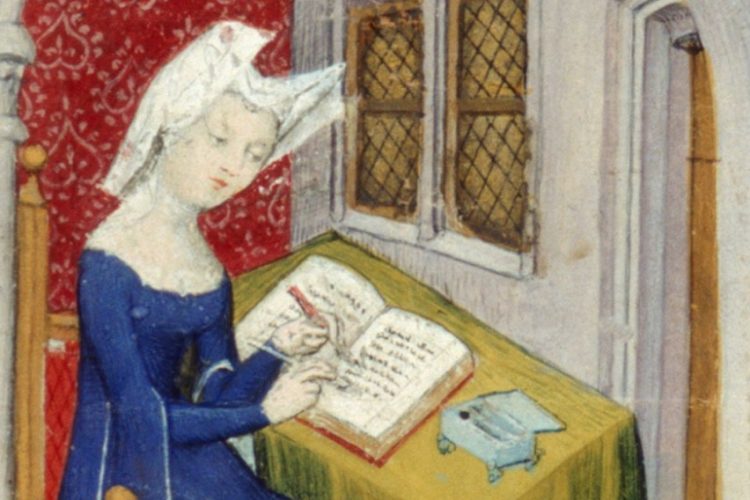
<h2>Christine de Pizan (1364 – c. 1430): A castle of ideas and feminism</h2>
<p>Christine de Pizan, born in 1364 and deceased around 1430, was one of the first women to earn a living through her writing. She advocated for women&#8217;s rights and defended their intellectual and moral abilities in her works, particularly The Book of the City of Ladies.</p>
<p><img loading="lazy" decoding="async" class="alignnone size-full wp-image-9923" src="https://europescastles.com/wp-content/uploads/2024/09/Christine-de-Pizan.jpg" alt="Christine de Pizan" width="852" height="601" srcset="https://europescastles.com/wp-content/uploads/2024/09/Christine-de-Pizan.jpg 852w, https://europescastles.com/wp-content/uploads/2024/09/Christine-de-Pizan-300x212.jpg 300w, https://europescastles.com/wp-content/uploads/2024/09/Christine-de-Pizan-768x542.jpg 768w" sizes="(max-width: 852px) 100vw, 852px" /></p>
<p>Louvre Castle in Paris, originally a medieval fortress, served as the setting for much of Christine’s work. She lived in the French court during this time. Although today known as a museum, the Louvre was a residence of kings and a center of intellectual activity during Christine&#8217;s life.</p>
<p>&nbsp;</p>
<h2>Joan of Arc (1412 – 1431): The warrior who defended castles</h2>
<p>Joan of Arc, born in 1412 and executed in 1431, remains one of the most iconic figures in French history. Her military campaigns, particularly during the Hundred Years&#8217; War, were crucial in recapturing castles and fortresses from English control.</p>
<p><img loading="lazy" decoding="async" class="alignnone size-full wp-image-9924" src="https://europescastles.com/wp-content/uploads/2024/09/Joan-of-Arc.jpg" alt="Joan of Arc" width="720" height="405" srcset="https://europescastles.com/wp-content/uploads/2024/09/Joan-of-Arc.jpg 720w, https://europescastles.com/wp-content/uploads/2024/09/Joan-of-Arc-300x169.jpg 300w" sizes="(max-width: 720px) 100vw, 720px" /></p>
<p>Château de Chinon is again significant here. It was at this castle that Joan met with Charles VII, persuading him to let her lead his army. This castle played a pivotal role in Joan’s story and in the history of France.</p>
<p>&nbsp;</p>
<h2>Julian of Norwich (1342 – after 1416): A visionary from the shadows of castles</h2>
<p>Julian of Norwich, born in 1342 and deceased sometime after 1416, was a mystic and theologian whose spiritual writings influenced religious thought throughout medieval Europe. While not directly associated with castles, her visions were read by many nobles and clergy who lived within them.</p>
<p><img loading="lazy" decoding="async" class="alignnone size-full wp-image-9925" src="https://europescastles.com/wp-content/uploads/2024/09/Julian-of-Norwich.jpg" alt="Julian of Norwich" width="920" height="656" srcset="https://europescastles.com/wp-content/uploads/2024/09/Julian-of-Norwich.jpg 920w, https://europescastles.com/wp-content/uploads/2024/09/Julian-of-Norwich-300x214.jpg 300w, https://europescastles.com/wp-content/uploads/2024/09/Julian-of-Norwich-768x548.jpg 768w" sizes="(max-width: 920px) 100vw, 920px" /></p>
<p>Norwich Castle, located in Julian’s home city, symbolizes the close relationship between religious mysticism and the power structures of the Middle Ages. The castle dominated the cityscape, providing both military defense and a center of governance.</p>
<p>&nbsp;</p>
<h2>Margery Kempe (c. 1373 – after 1438): A spiritual pilgrim in the world of castles</h2>
<p>Margery Kempe, born around 1373 and alive after 1438, was another mystic. She chronicled her spiritual journeys in <em>The Book of Margery Kempe</em>, considered one of the earliest autobiographies in English. Her religious fervor brought her into contact with the noble classes and clergy, many of whom resided in castles.</p>
<p><img loading="lazy" decoding="async" class="alignnone size-full wp-image-9926" src="https://europescastles.com/wp-content/uploads/2024/09/Margery-Kempe.webp" alt="Margery Kempe" width="768" height="586" srcset="https://europescastles.com/wp-content/uploads/2024/09/Margery-Kempe.webp 768w, https://europescastles.com/wp-content/uploads/2024/09/Margery-Kempe-300x229.webp 300w" sizes="(max-width: 768px) 100vw, 768px" /></p>
<p>King’s Lynn Castle in Norfolk, England, where Margery lived, was an important medieval stronghold. It stood as a backdrop to her life as she navigated the religious and social landscapes of the time.</p>
<h2>Castles as witnesses to female power</h2>
<p>They twelve famous women of the Middle Agesnot only shaped the history of their time. They also left their marks on the castles and fortresses that dominated the medieval landscape. From Empress Theodora’s reign in Byzantium to Joan of Arc’s defense of French fortresses, each woman contributed in unique ways to the evolution of Europe’s castles. These structures, whether military strongholds, religious sanctuaries, or centers of courtly life, bear witness to the complex and multifaceted roles women played during the medieval period. Their stories remain intertwined with the architectural heritage of Europe&#8217;s castles, inspiring both scholars and visitors to this day.</p>
<p>The post <a href="https://europescastles.com/famous-persons/twelve-famous-women-of-the-middle-ages/">Twelve famous women of the Middle Ages</a> appeared first on <a href="https://europescastles.com">Europe&#039;s Castles</a>.</p>
]]></content:encoded>
					
					<wfw:commentRss>https://europescastles.com/famous-persons/twelve-famous-women-of-the-middle-ages/feed/</wfw:commentRss>
			<slash:comments>0</slash:comments>
		
		
			</item>
		<item>
		<title>Famous French castles: Exploring a journey through history</title>
		<link>https://europescastles.com/exploring/famous-french-castles-exploring-a-journey-through-history/</link>
					<comments>https://europescastles.com/exploring/famous-french-castles-exploring-a-journey-through-history/#respond</comments>
		
		<dc:creator><![CDATA[europescastles]]></dc:creator>
		<pubDate>Tue, 28 May 2024 19:08:25 +0000</pubDate>
				<category><![CDATA[Exploring]]></category>
		<category><![CDATA[castles]]></category>
		<category><![CDATA[famous]]></category>
		<category><![CDATA[french]]></category>
		<guid isPermaLink="false">https://europescastles.com/?p=9340</guid>

					<description><![CDATA[<p>France, a country renowned for its rich history and stunning architecture, boasts some of the most famous castles in the world. Indeed, these magnificent structures have stood the test of time. Furthermore, they offer a glimpse into the opulent lifestyles of nobility and the strategic importance of these fortresses. In this article, we shall explore [&#8230;]</p>
<p>The post <a href="https://europescastles.com/exploring/famous-french-castles-exploring-a-journey-through-history/">Famous French castles: Exploring a journey through history</a> appeared first on <a href="https://europescastles.com">Europe&#039;s Castles</a>.</p>
]]></description>
										<content:encoded><![CDATA[<p>France, a country renowned for its rich history and stunning architecture, boasts some of the most famous castles in the world. Indeed, these magnificent structures have stood the test of time. Furthermore, they offer a glimpse into the opulent lifestyles of nobility and the strategic importance of these fortresses. In this article, we shall explore the allure of famous French castles, their historical significance, and the architectural marvels they represent.</p>
<h2>The timeless charm of famous French castles</h2>
<p>The allure of famous French castles has captivated historians, architects, and travelers for centuries. Indeed, these castles, with their intricate designs and historical significance, serve as a testament to France&#8217;s cultural and architectural heritage. Moreover, it is within these walls that one can witness the grandeur of medieval and Renaissance architecture, often surrounded by breathtaking landscapes.</p>
<h2>The history behind renowned French castles</h2>
<p>The history embedded within famous French castles is vast and varied. Builders constructed many of these castles during the medieval period as fortifications against invasions. Over time, they evolved into symbols of power and opulence. One can observe the transition from defensive structures to lavish residences in many famous French castles, where builders transformed strategic strongholds into elegant châteaux.</p>
<h2>Architectural marvels of iconic French castles</h2>
<p>Architectural innovation is a hallmark of famous French castles. From the imposing fortifications of the Château de Vincennes to the delicate Renaissance artistry of the Château de Chambord, each castle showcases a unique blend of architectural styles. The Château de Chenonceau, for example, features distinctive arches spanning the River Cher, while the Château de Fontainebleau showcases an amalgamation of medieval, Renaissance, and classical styles.</p>
<h2>The three most famous castles to visit in France</h2>
<p>For those planning to explore the grandeur of famous French castles, certain landmarks stand out for their historical and architectural significance. Here are the three most famous castles to visit in France:</p>
<h3>1. Château de Versailles</h3>
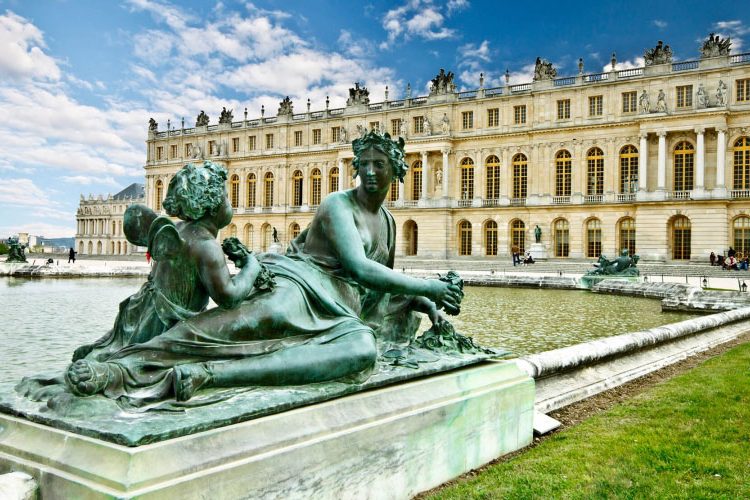
<p><img loading="lazy" decoding="async" class="alignnone size-full wp-image-9344" src="https://europescastles.com/wp-content/uploads/2024/05/chateau-de-versailles-2-1.jpg" alt="famous french castles" width="900" height="500" srcset="https://europescastles.com/wp-content/uploads/2024/05/chateau-de-versailles-2-1.jpg 900w, https://europescastles.com/wp-content/uploads/2024/05/chateau-de-versailles-2-1-300x167.jpg 300w, https://europescastles.com/wp-content/uploads/2024/05/chateau-de-versailles-2-1-768x427.jpg 768w" sizes="(max-width: 900px) 100vw, 900px" /></p>
<p>The <a href="https://europescastles.com/castle/chateau-de-versailles/">Château de Versailles</a> is perhaps the most famous of all French castles. Versailles features opulent architecture and vast gardens. It served as the principal royal residence of France from 1682 until the start of the French Revolution. Visitors can explore the Hall of Mirrors, the Royal Apartments, and the meticulously landscaped gardens. The palace is a symbol of the absolute monarchy of the Ancien Régime and is renowned for its grandiose design and historical importance.</p>
<h3>2. Château de Chambord</h3>
<p><img loading="lazy" decoding="async" class="alignnone size-full wp-image-9345" src="https://europescastles.com/wp-content/uploads/2024/05/Chateau-de-Chambord.jpg" alt="Château de Chambord" width="1600" height="900" srcset="https://europescastles.com/wp-content/uploads/2024/05/Chateau-de-Chambord.jpg 1600w, https://europescastles.com/wp-content/uploads/2024/05/Chateau-de-Chambord-300x169.jpg 300w, https://europescastles.com/wp-content/uploads/2024/05/Chateau-de-Chambord-1024x576.jpg 1024w, https://europescastles.com/wp-content/uploads/2024/05/Chateau-de-Chambord-768x432.jpg 768w, https://europescastles.com/wp-content/uploads/2024/05/Chateau-de-Chambord-1536x864.jpg 1536w" sizes="(max-width: 1600px) 100vw, 1600px" /></p>
<p>The <a href="https://europescastles.com/castle/chateau-de-chambord/">Château de Chambord</a>, a masterpiece of the French Renaissance, is another must-visit. Commissioned by King Francis I as a hunting lodge, Chambord is famous for its distinctive French Renaissance architecture, which blends traditional medieval forms with classical Renaissance structures. The double-helix staircase, attributed to Leonardo da Vinci, and the stunning rooftop terraces offer a glimpse into the ingenuity of its design. Surrounded by extensive woodlands, Chambord provides a majestic experience for visitors.</p>
<h3>3. Château de Chenonceau</h3>
<p><img loading="lazy" decoding="async" class="alignnone size-full wp-image-9346" src="https://europescastles.com/wp-content/uploads/2024/05/Chateau-de-Chenonceau.jpg" alt="Château de Chenonceau" width="800" height="502" srcset="https://europescastles.com/wp-content/uploads/2024/05/Chateau-de-Chenonceau.jpg 800w, https://europescastles.com/wp-content/uploads/2024/05/Chateau-de-Chenonceau-300x188.jpg 300w, https://europescastles.com/wp-content/uploads/2024/05/Chateau-de-Chenonceau-768x482.jpg 768w" sizes="(max-width: 800px) 100vw, 800px" /></p>
<p>The <a href="https://europescastles.com/castle/chateau-de-chenonceau/">Château de Chenonceau</a>, known as the &#8220;Ladies&#8217; Castle&#8221; due to the notable women who owned and renovated it, spans the River Cher and is celebrated for its unique location. Its arches, reflected in the water below, create a picturesque and serene setting. Influential women such as Diane de Poitiers and Catherine de&#8217; Medici intertwined their histories with Chenonceau, leaving their mark on its architecture and gardens. The beautifully furnished rooms and lush gardens make Chenonceau a beloved destination for visitors.</p>
<h2>Famous French castles in popular culture</h2>
<p>Famous French castles have not only served as historical landmarks but also as sources of inspiration in popular culture. These castles have been featured in numerous films, novels, and television series, captivating audiences with their majestic presence. The Château de Chambord, with its distinctive French Renaissance architecture, has appeared in various films, underscoring its iconic status. Similarly, the Château de Pierrefonds has been immortalized in popular TV series, bringing its medieval charm to a global audience.</p>
<h2>Visiting frenowned French castles</h2>
<p>For those who seek to experience the grandeur of famous French castles firsthand, numerous options are available. Indeed, many of these castles are open to the public, offering guided tours that delve into their rich histories and architectural intricacies. Furthermore, visitors can explore the opulent halls, vast gardens, and hidden passages that define these historic sites. Notably, the Château de Versailles, perhaps the most famous of all, provides a comprehensive glimpse into the extravagance of French royalty.</p>
<h2>Preservation and restoration of famous French castles</h2>
<p>The preservation and restoration of famous French castles are of paramount importance. Indeed, these efforts ensure that the architectural and historical integrity of the castles is maintained for future generations to appreciate. Moreover, organizations dedicated to the conservation of these landmarks work tirelessly to restore and preserve the castles&#8217; original splendor. Consequently, their continuous efforts help maintain the historical accuracy and beauty of these iconic structures. The meticulous restoration of the Château de Chambord, for example, has involved extensive research. Skilled craftsmanship has been employed to maintain its historical accuracy.</p>
<h2>The Role of renowned French castles in education</h2>
<p>Educational programs centered around famous French castles play a crucial role in promoting historical awareness and appreciation. Consequently, schools and universities often organize excursions to these castles, thereby providing students with an immersive learning experience. By studying the architectural features and historical contexts of these castles, students ultimately gain a deeper understanding of France&#8217;s cultural heritage.</p>
<h2>The lasting Impact of renowned French castles</h2>
<p>In conclusion, famous French castles stand as enduring symbols of France&#8217;s rich history and architectural brilliance. These castles, with their timeless charm and historical significance, continue to captivate and inspire. Whether through visiting these majestic structures or exploring their stories from afar, the legacy of famous French castles remains a testament to the splendor of France&#8217;s cultural heritage. By preserving and celebrating these iconic landmarks, future generations will cherish their beauty and historical importance.</p>
<p>The post <a href="https://europescastles.com/exploring/famous-french-castles-exploring-a-journey-through-history/">Famous French castles: Exploring a journey through history</a> appeared first on <a href="https://europescastles.com">Europe&#039;s Castles</a>.</p>
]]></content:encoded>
					
					<wfw:commentRss>https://europescastles.com/exploring/famous-french-castles-exploring-a-journey-through-history/feed/</wfw:commentRss>
			<slash:comments>0</slash:comments>
		
		
			</item>
	</channel>
</rss>